
‘Passenger’ Review
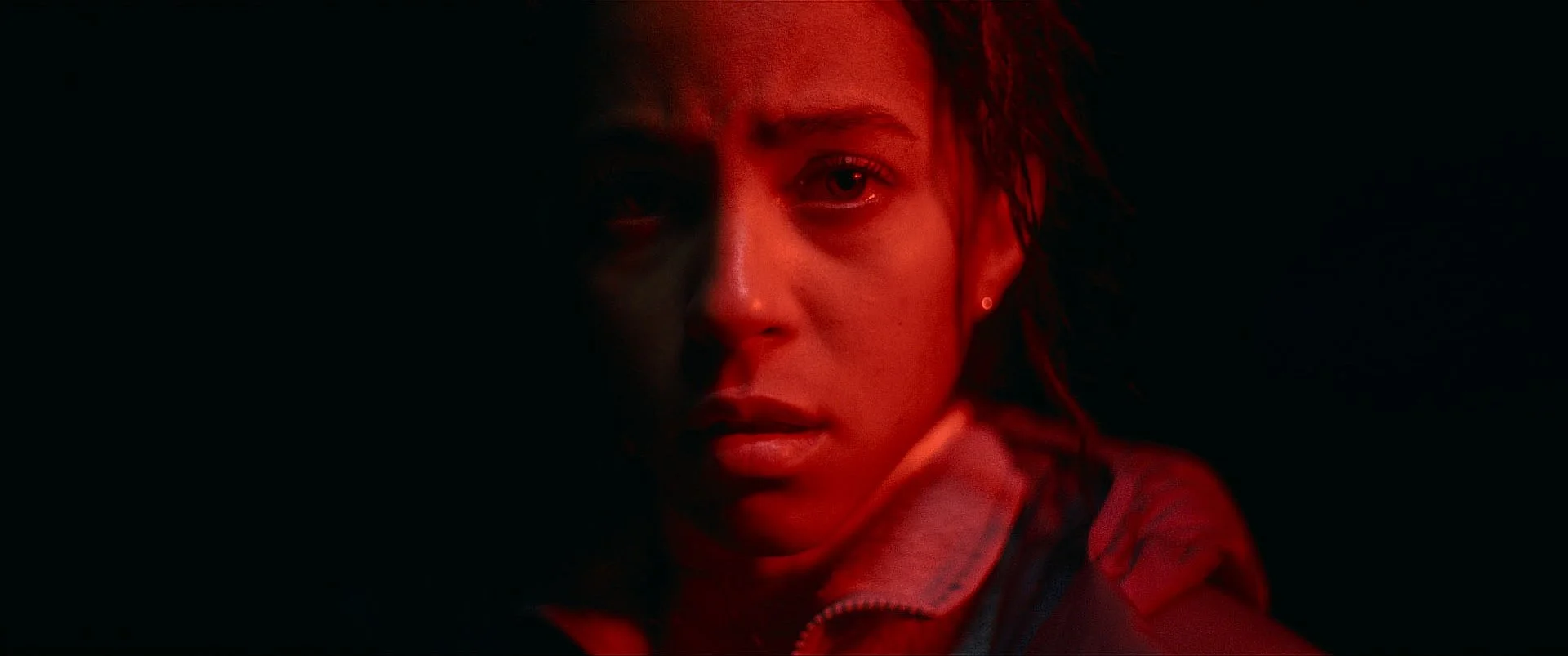
Driving through endless stretches of highway at night can be its own form of atmospheric horror. Exhausted from the monotony of the constantly scrolling yellow and white lines and encroaching trees bordering the established path, which hide a vast natural landscape, the imagination can run rampant with thoughts of the worst possible nightmare lurking in the darkness. Monsters, predators, humans, or nothing at all—it all preys on isolation and the feeling that there is no escape from the journey. No destination to be found. Just an infinite nothingness paved through by people desperately seeking a way from one point to another.
The opening moments of André Øvredal’s latest film, Passenger, invite the limitless possibilities of what horrors await its pair of unsuspecting drivers. The road itself starts as a haunted house, but quickly narrows its terrors to an unshakeable figure on the roadside who is anything but lost. An effective vignette of two people unknowingly thrust into a chain of events beyond their control, Passenger opens strong with a sequence of events shot within an inch of its life and sound design that plays to the frightening creations of the mind. It’s a scene that is neither revolutionary nor surprising, but it demonstrates a skill that Øvredal has honed over the years since his breakout hit, Trollhunter. He’s got an unwavering commitment to tension and no qualms with breaking out easy scares if it serves the atmosphere.
It’s all familiar territory for Øvredal, who has turned ships and morgues into a playhouse for things that go bump in the night. However, Zachary Donohue and T.W. Burgess’s screenplay quickly removes much of its potential for a run-of-the-mill supernatural horror, playing out closer to a creature feature than anything paranormal. Tangled up in a couple’s desperation to find the right path for themselves as they begin a nomadic lifestyle, Passenger plays to Øvredal’s strengths as a horror director. However, much like his previous feature, The Last Voyage of the Demeter, it stretches itself thin with a simple premise rather than forging its own path.
A modern story of seeking to disconnect from the stresses of the world, Passenger follows Maddie (Lou Llobell) and Tyler (Jacob Scipio) as they break free from the hustle and bustle of New York by purchasing a van and heading out to live on the open road. While Tyler finds himself at home as a vanlifer, Maddie’s desire for stability is pushed to the side to commit to Tyler and his dreams. The two find their relationship tested, though, when they stop at night alongside the road to help a car crash victim, only to unknowingly pick up a demon referred to only as “The Passenger” (Joseph Lopez). However, the demon seems to only surface at night and for Maddie’s eyes only, creating a rift between her and Tyler that strains their slowly crumbling bond.
Screenplay-wise, Passenger plays out pretty much exactly as you expect. While the film occasionally tries to reach into more religious territory with its frequent references to Saint Christopher, the patron saint of travellers, it too often falls back on clichéd relationship tropes found in too many horror films of this ilk. Tyler almost never believes Maddie’s raving claims of someone—or something—stalking them, despite there obviously being something going on. The aloof boyfriend and the inability of people to convey their thoughts without sounding like a madman are only some of the generic screenwriting techniques used to milk tension. Little needs to be said about Melissa Leo’s appearance as Diana, a fellow nomad, who the film takes way too long to let fulfill her role as demon-splainer.
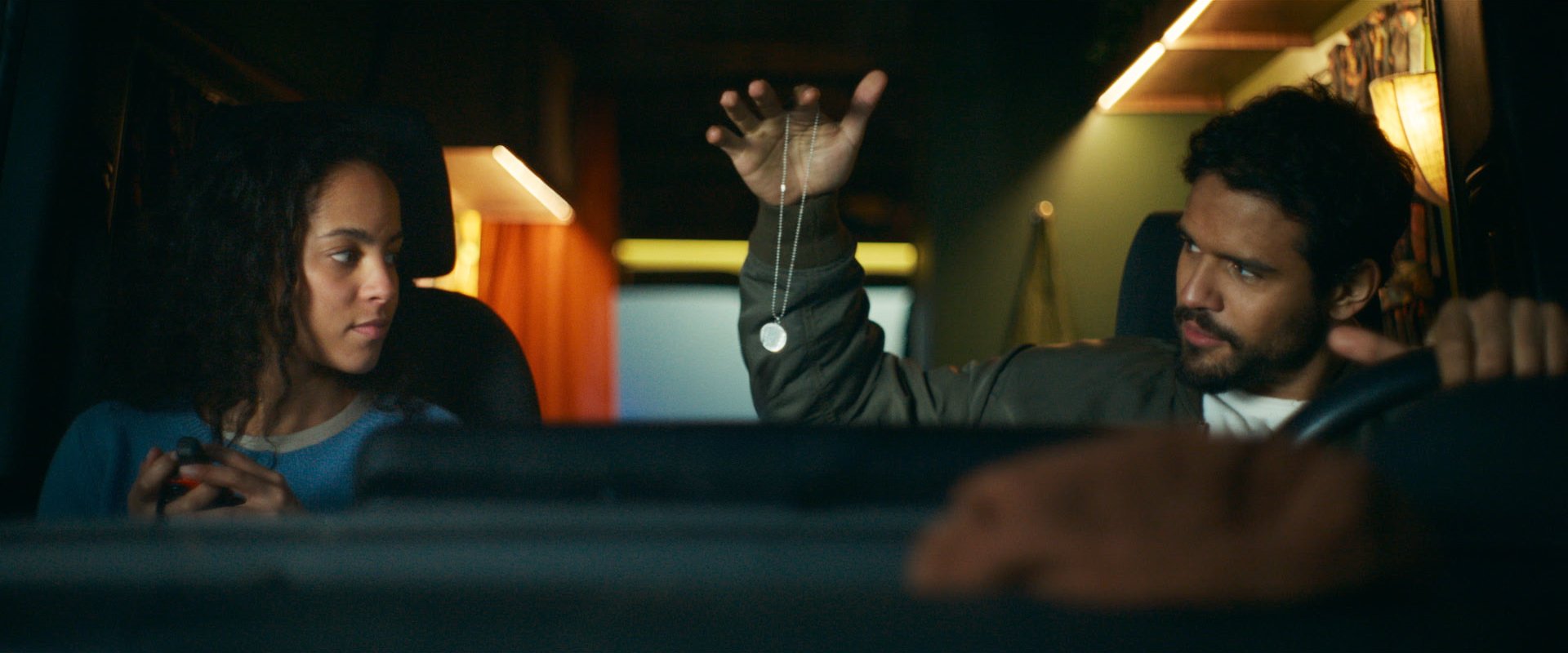
It’s all in service of Øvredal’s dedication to atmosphere and tension. Though occasionally undercut by obvious CG effects that have always plagued his films, giving them a certain artificiality, Passenger features some striking images and effective horror beats sprinkled throughout. They aren’t going to make up for the underwhelming climax, but when Øvredal is simply working a scene towards something frightening as opposed to narratively satisfying, he often hits his mark. Some beats get dragged out a little too long in the attempt, and the scare itself is never surprising, but the commitment to immersing audiences in the quiet of the moment or disorienting them during stressful sequences is when Øvredal fires on all cylinders. He’s great at surface-level tension, and Passenger treads heavily on the simple act of being unsure when the nerves will settle.
Unfortunately, nothing beats that opening sequence, which is so effective at what it does that it served as the film's promotional trailer. A little expansion on that would have made for an intense and terrifying short film. Instead, it stretches both believability and premise to suggest a larger universe of roadside terrors driven by malevolent forces. Characters make inexplicable leaps in logic to define their own situation, and the film’s handling of that information is disseminated clunkily to the viewer—almost like someone forcing you to finish your meal so you can have dessert. The problem is that the dessert isn’t worth writing home about and almost makes you question whether the investment was worth it in the first place.
With better characterization that makes them feel less like caricatures or mere means to an end, Passenger might have found a clever way to explore its central relationship drama and elevate its generic narrative. Øvredal makes the scares look easy, though, even when audiences know what the scare is going to be and how it’s going to be employed. It’s the kind of horror that general audiences can exclaim, “Don’t go in there,” to the character while knowing full well they will. The intent is not to surprise the audience but to give them exactly what they want, and Passenger is that kind of palatable horror that doesn’t quite set the world on fire like James Wan’s brand of similarly crafted horror, but it also doesn’t make you regret spending 90 minutes hunkered down with underdeveloped characters and predictable outcomes. It’s an enjoyable enough ride in the moment, but fails to find something remarkable to give it substance.
