
‘Disclosure Day’ Review
Structurally simplified to a chase movie, it’s easy to watch Steven Spielberg’s latest science fiction blockbuster and see a director lost within the minutiae of the action-adventure film he’s so effectively crafted many times over a lengthy career. In fact, Disclosure Day poses so many questions within those thrilling 145 minutes that it’s unsurprising how much is left on the floor by the time the tension has been released and David Koepp’s screenplay bows to the emotional storytelling Spielberg has been building throughout the film. The idea that aliens may be among us is not breaking new ground, even for the prolific director, but Disclosure Day is less interested in disclosing facts than in conveying the importance of awareness and accountability in an era of constant global conflict and government oppression. In an expectedly breezy piece of science fiction cinema, Spielberg overcomes a clunky screenplay with a gripping conversation about our capacity to understand pain and the empathy that drives us to help those who are suffering.
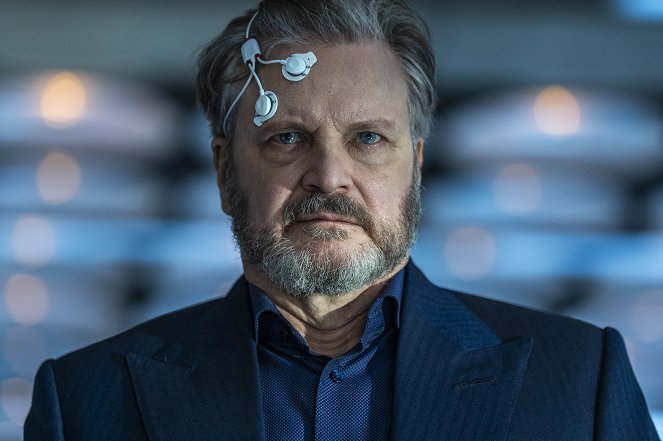
Very few directors successfully blend popcorn entertainment with philosophical musings as effectively as Spielberg does. For a movie that seems to have a lot of ideas, it’s actually a fairly straightforward narrative with a couple of extraterrestrial flourishes to keep audiences invigorated by the magic of cinema. Thrust immediately into the fray, Disclosure Day begins with the theft of government documents by cybersecurity specialist-turned-traitor Dr. Daniel Kellner (Josh O’Connor) at the behest of fellow defector Hugo Wakefield (Colman Domingo). Advised to hold on to the documents and bring them to Hugo, Daniel is chased by the Wardex Corporation, which is in charge of keeping the documents Daniel has stolen secret and is led by Noah Scanlon (Colin Firth). Accompanied by his girlfriend, Jane (Eve Hewson), the two must get the documents to safety so their contents can be properly disclosed to the rest of the world.
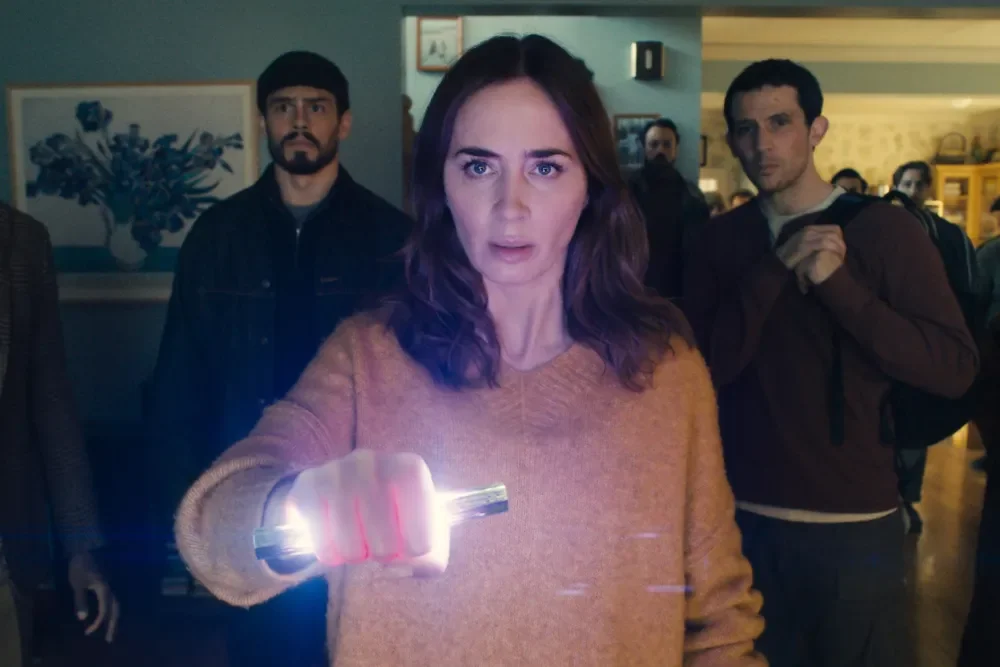
A new wrinkle forms for Wardex when meteorologist Margaret Fairchild (Emily Blunt) appears on TV and, unbeknownst to her, begins speaking in a language not of this Earth. As the spotlight suddenly shines on her as well, Margaret’s journey and safety become integral to both her and Daniel understanding the responsibilities they have been tasked with. Disclosure Day primarily centers on Daniel and Margaret’s roles in the film’s events. Two people who have never met each other before but are both imbued with talents far beyond their understanding, they become crucial components of the mystery woven in Koepp’s screenplay.
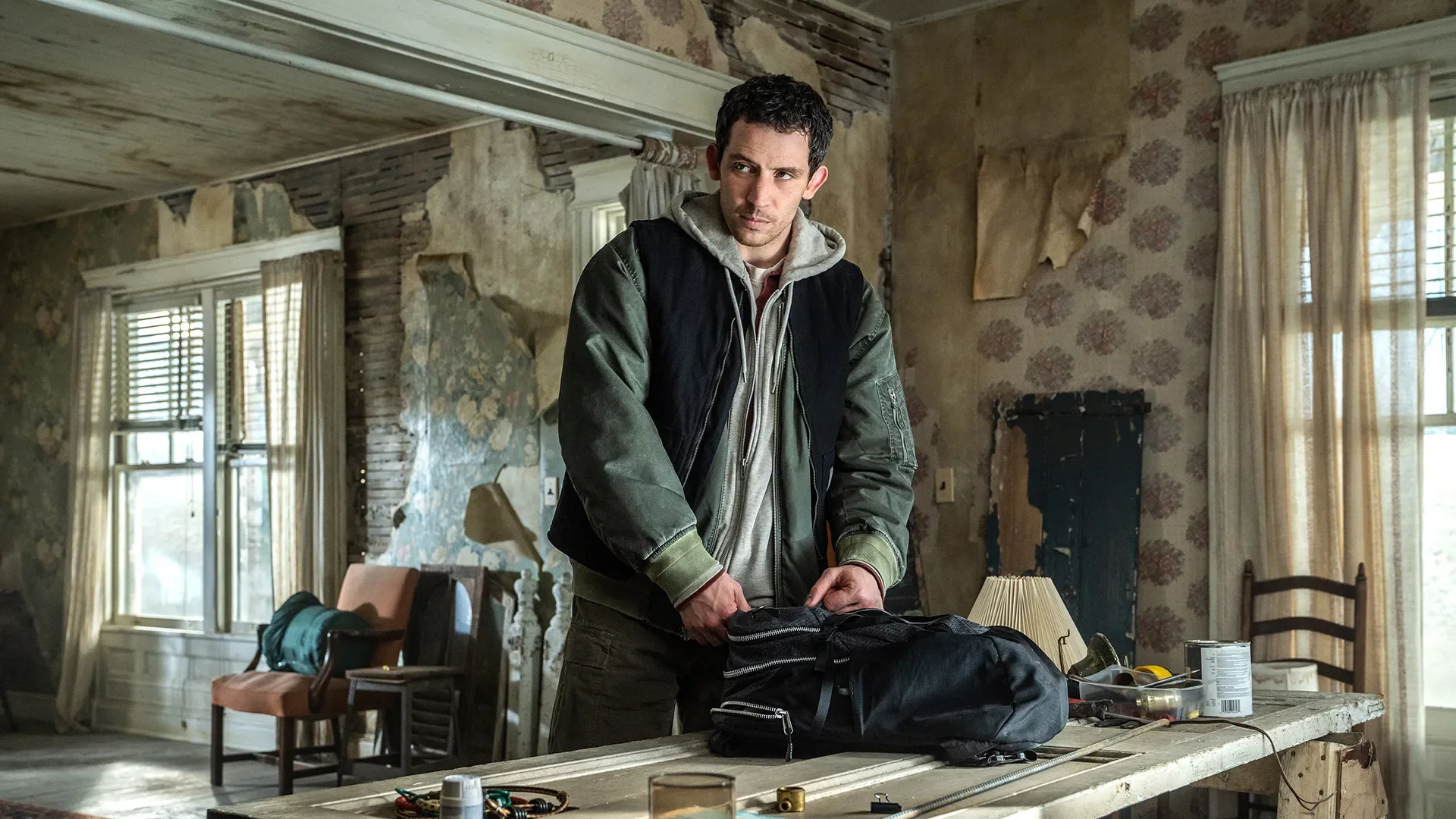
The care and attention given to Daniel and Margaret’s characters is essential to Disclosure Day’s emotional appeal, underpinning its more introspective discussions on the foundations of a functioning society. They are characters bound by some duty that weighs on them in ways that are beyond their comprehension. Margaret suddenly becomes a font of empathy, immediately burdened with an individual’s entire pain upon looking at them, while Daniel can solve the most impossible equations and understand anything without breaking a sweat. They are personifications of tools necessary for humanity’s survival. More aptly, though, they are evidence of the unbelievable.
For as much focus as is placed on ensuring Daniel and Margaret’s characters are clear, everyone else in Disclosure Day is far less interesting to be around. Everyone represents some conversation worth having about the repercussions of disclosing the truth about aliens and supreme beings to humanity. The most natural integration is Jane’s religious background, which invites discussion about how society will function peacefully if its core belief system is threatened. Unfortunately, while everyone delivers serviceable performances in their respective roles, it’s all for characters that are pretty bluntly underwritten or act more as stand-ins for ideas than human characters. Koepp’s screenplay hitches its wagon to Daniel and Margaret without paying much attention to those picked up along the way.
Where Disclosure Day might feel overextended at times, Spielberg has always been able to distill scenes down to their very essence and let the medium surface the emotions buried within otherwise clunky writing. It’s a film that, surprisingly, feels akin to M. Night Shyamalan’s approach to filmmaking, where the blocking of a scene and the moment's awe can smooth over an awkward script. Fantastical sequences are riddled with science-fiction gadgetry and jargon, spliced between inexplicable happenstance that gives Spielberg license to be mysterious in familiar ways. But it’s the performances that make or break the sentimentality that ripples through the screenplay, and fortunately, everyone elevates the material. Blunt, in particular, delivers one of the best performances of her career, which runs the gamut of emotions of a character wrestling with something she doesn’t truly understand. Roles like Firth’s and Domingo’s that feel like they once had more substance manage to still invite audiences into their character’s backstory thanks to endearing performances from the actors.
However, long-time collaborators are what make Spielberg’s films continue to feel familiar and comforting. Janusz Kaminski has done more interesting work in past science fiction films with Spielberg, but Disclosure Day’s gliding camera through kinetic action sequences remains exhilarating. Even when a scene seems narratively static, it has buoyancy thanks to Kaminski’s cinematography and electrifying editing by Sarah Broshar—who, along with former news anchor Courtney Grace, serves as the lynchpin of the film’s most impressive scene. All of this is backed by a score from one of Spielberg’s greatest collaborators: John Williams. There are moments that stand out in Williams’ thirtieth collaboration with Spielberg, but its effectiveness lies in its underscoring rather than in trying to lift it higher.
Endings can be difficult for movies that have ideas far greater than their scope seems capable of handling. Disclosure Day will undoubtedly ruffle feathers with its abrupt conclusion and a feeling like it ends where other science fiction films might have felt the need to continue for an entire act. However, Koepp’s screenplay makes it abundantly clear that the film is not about the repercussions of complete transparency, but more about whether it would matter if people knew the truth. That is emphasized by the film’s looming threat of World War III, which seems like background noise to those aware of Daniel's secrets. When all conversation is about whether society will crumble when the truth is revealed, against the backdrop of society literally under threat of destruction, it becomes evident that Disclosure Day is far more effective when it is introspective rather than extrapolating some fantasy repercussions. After all, we can already see what people do when faced with unimaginable truths of atrocities taking place around the world.
Spielberg manages to retain a hopefulness in the film despite working against a very bleak reality. Watching Daniel and Margaret’s journey throughout the film is illuminating because we see how easy it is to give in to the better part of humanity when we simply accept it. The friction is in whether information should be controlled, why it should be controlled, and contending with your own belief systems to find those answers. Disclosure Day is nowhere near Spielberg’s best, but it is one of his most thought-provoking. Strengthened by its craft, awe, and sentimentality, it’s a film that still delivers a comforting action-adventure romp while challenging its audience—as some of the best science fiction always has.
