
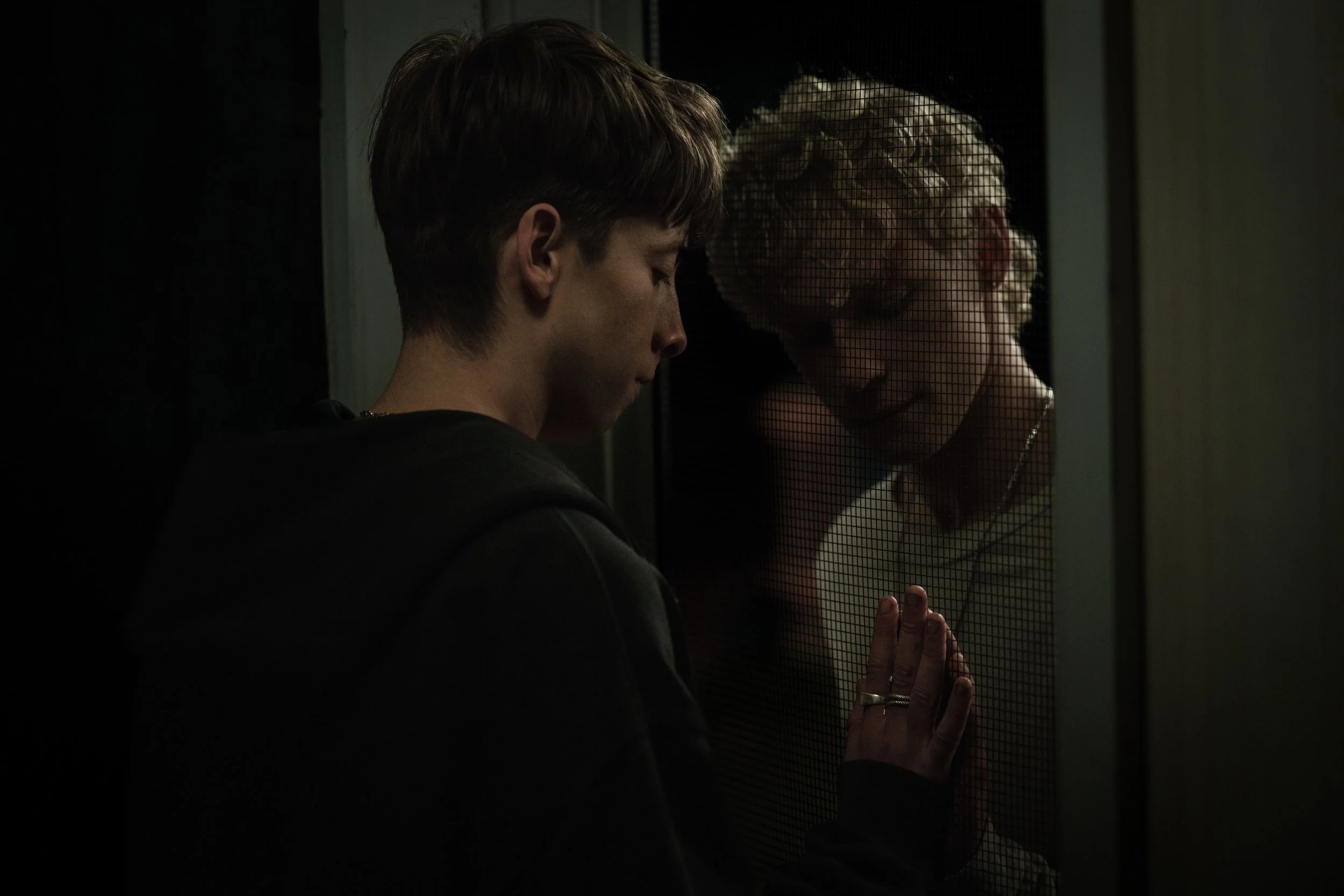
Conceptually meeting somewhere in the middle between the shapeshifting uncertainty of John Carpenter’s The Thing and the relentless malevolent presence haunting the teenagers in David Robert Mitchell’s It Follows, Adrian Chiarella’s Leviticus finds fresh horrors within its familiar foundations. Emotions run high throughout Chiarella’s impressive feature debut, which confronts the turmoil of trying to navigate your identity and insecurities alongside the person you love most. With a clever hook and visceral performances from its two lead actors, Leviticus conveys the increasing isolation and persecution that destroy confidence and heighten a sense of dysphoria.
The evil that threatens Naim (Joe Bird) and Ryan (Stacy Clausen) will push their newfound relationship to its limits. They’re young, and while Ryan’s confidence is clear from the outset as he plays with a snake on the outskirts of a small Australian town, Naim is decidedly less outgoing. There’s an insecurity eating away at him that quickly loosens its grip as he and Ryan fall in love with each other. It’s a beautifully edited sequence of events that slowly turns sour when Naim catches Ryan with another boy, and immediately outs them to their families. In a rural Christian town, this isn’t just a conversation; it’s an intervention. After a preacher (Nicholas Hope) is brought to the town to aid in “curing” the two boys, they both begin acting strangely and become a danger not only to themselves but also to the ones they hold dear.
Conversion therapy has been explored in the past and specifically employed as a tool for horror, but not quite in the way that it is here. Chiarella’s screenplay makes the haunting decision to treat the pseudoscientific practice as akin to exorcism. A presence invisible to everyone but the one “exorcised” stalks its prey and takes the shape of the person they love the most, quickly learning their intricacies from each interaction made with the real-life person. Leviticus is not too mechanics-heavy and quickly explains its rules and what they mean for its characters. Instead, it focuses on why such a manifestation is nothing short of tragic. It’s an unbearable sight to watch the one you love torn in two, and both Naim and Ryan become victims of this, mostly seen from the perspective of the former. The sense of dysphoria that it creates is chilling as its characters withdraw into themselves to avoid harm and are visibly shaken at the sight of what should make them happy. There’s a torment that breaks through Bird and Clausen’s emotionally raw performances, taking the few fragile, fleeting interactions they can muster with each other and imbuing them with a devastating heartache.
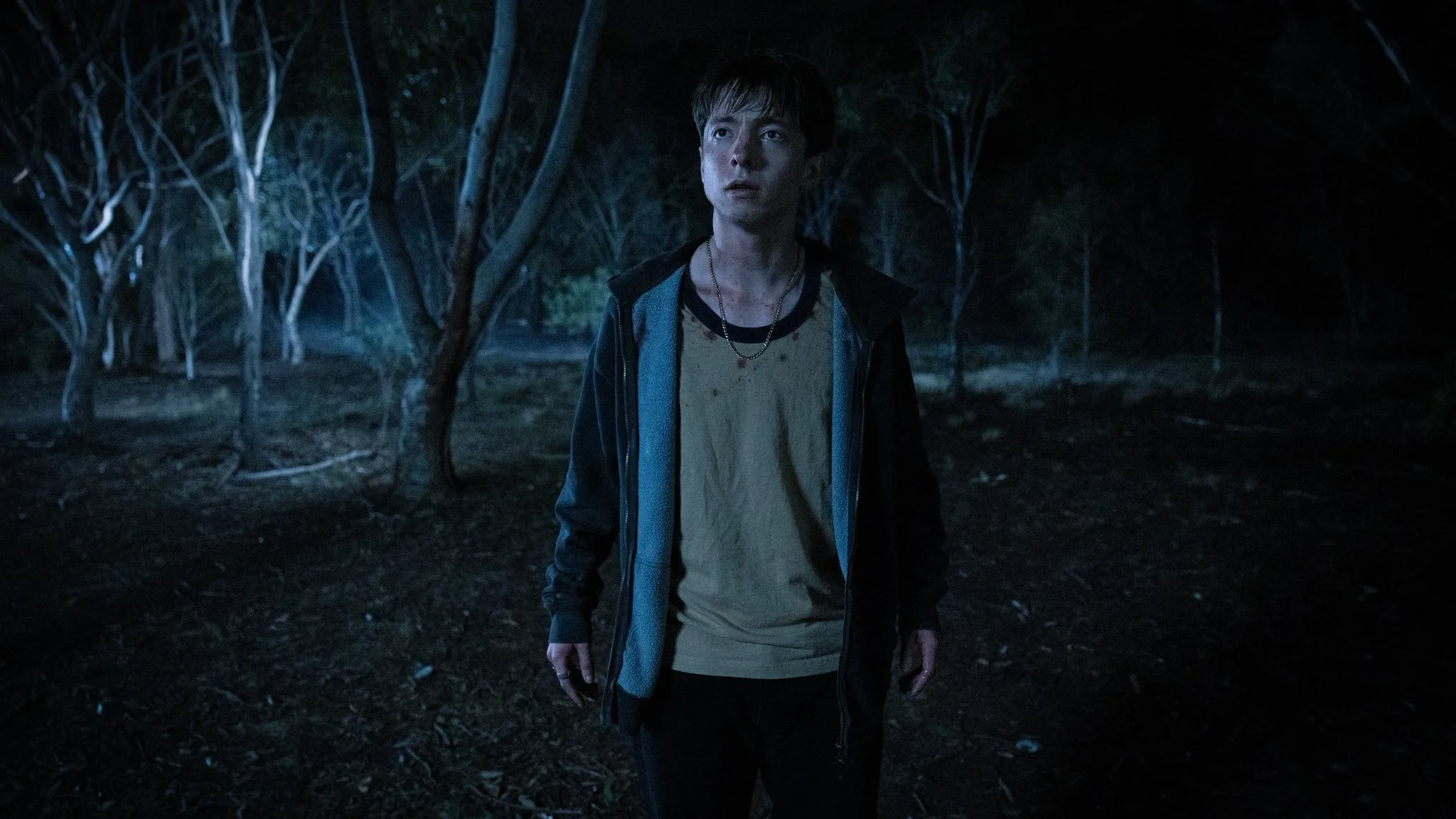
The other depressing reality of Naim and Ryan’s plight is that no one else really understands the pain they’re going through. You can only truly understand it if you’ve been subjected to it, and even people close to the characters, such as Naim’s mother (played by Mia Wasikowska), simply write off their fear as a vital component to “getting better.” As they look visibly frightened, their support systems turn towards God and religion to resolve what they see as an issue, not understanding that they are making things so much worse through their lack of support. It’s a film anchored by devastating performances, cutting through a cavalcade of poorly justified actions by everyone around Naim and Ryan to reveal the trauma inflicted on them.
Of course, manifesting itself as a shapeshifting demon makes the film’s tension all the more palpable. Leviticus rests comfortably on the uncertainty of whether the person you’re talking to is the one you love or the one determined to kill you. It’s a well that it draws from a few too many times, but each time is still potent and slowly takes its toll on each character. Jed Kurzel’s score is particularly effective at enveloping the audience in a dreamy fugue while darkness looms large over every interaction. The sudden realization that a beautiful moment has been soured frequently threatens the characters, forcing Kurzel’s score to carry with it an unease.
Leviticus does tend to go in circles a few times too many, but it all builds towards an exhaustion for the characters as they navigate the Hell they’ve been forced into. As Naim and Ryan’s relationship becomes further strained by demonic forces and external pressures, it’s the realizations that blossom out of that which makes Chiarella’s screenplay so devastating. While Chiarella’s feature directorial debut is a tense exercise that shows plenty of promise for the Australian horror director, the standout in Leviticus is undeniably Bird and Clausen’s portrayals of two teenagers rapt by something profoundly beautiful that is being excised and targeted by everyone around them. The pain ripples throughout, but it’s the sadness behind every interaction that sells the horrors inflicted.
