
‘Beast’ Review
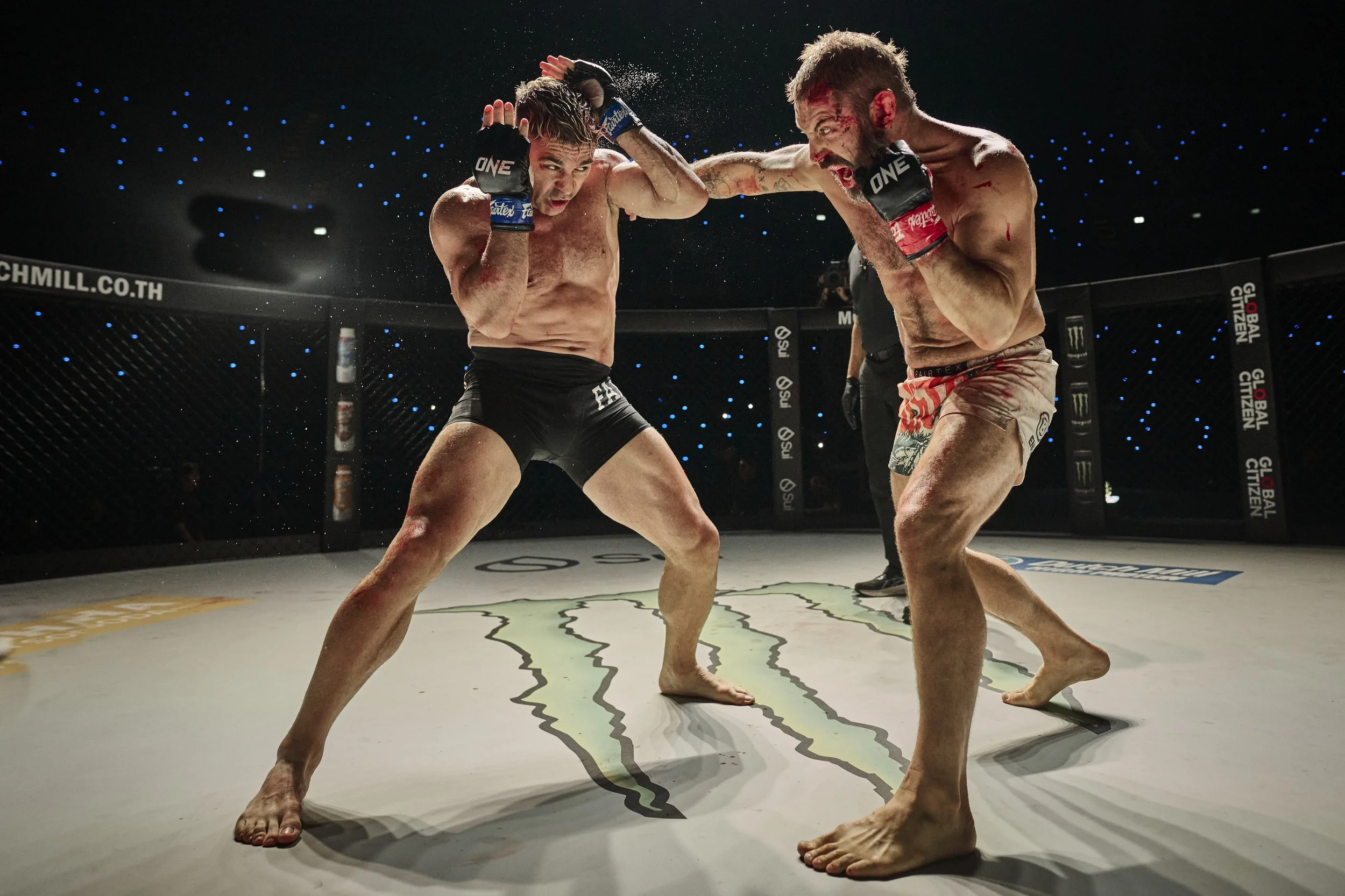
A retired MMA champion brought back into the ring for one last fight might not be the most original concept, but it’s usually a safety net for action fans. At the very least, the final brawl should make it easier to forgive any missteps along the way. Throw an accomplished martial artist like Bren Foster in the ring—who's having his own moment in the action limelight—and a grouchy Russell Crowe in the corner, and a movie like Beast should be able to satisfy some primal urge to watch two grown men beat each other to a pulp. Unfortunately, director Tyler Atkins falls into that safety net too comfortably. While its final fight is the culmination of some raw emotion that eventually bubbles to the surface in surprising ways, Beast wastes a lot of its potential with a boilerplate screenplay that never quite captures the essence of its sport or its characters.
“If I can breathe, I can think. If I can think, I can win,” repeats throughout Atkins’ film as MMA champion Patton James (Daniel MacPherson) reflects on the teachings of his coach, Sammy (Crowe), before heading out for another fight. It’s a concise explanation of why training is important for fighters beyond just strength. However, it also serves as a mindset that the film can explore through its various characters, if it so desires. Flash forward a few years, and Patton is barely breathing. He’s struggling to provide for his family financially as a commercial fisherman; he and his brother, Malon (also a fighter, played by Mojean Aria), are estranged; and his wife, Luciana (Kelly Gale), has just found out they're expecting another child.
Everything comes to a head when his brother ends up in the hospital following a nasty blow from the current MMA champion, Xavier Grau (Foster), who is now neck-deep in debt following the loss. Meanwhile, Xavier targets Patton for a rematch after being defeated a year ago by the retired champ in a quick knockout. It’s all pretty standard testosterone-fueled catnip for action fans as financial stress leads to an offer Patton can’t refuse and a realization that the only thing he knows he can do is fight. Unfortunately, that realization does not come included with actual fights, leaving most of Beast in training mode as Patton returns to his old coach, only for him to resent the former champion and reluctantly allow his daughter, Rose (Amy Shark), to coach him instead. This also means Crowe is largely pushed to the sidelines of the film (which he co-wrote with David Frigerio). When he shows up, he’s delightfully curmudgeonly, but it’s a rare occurrence.
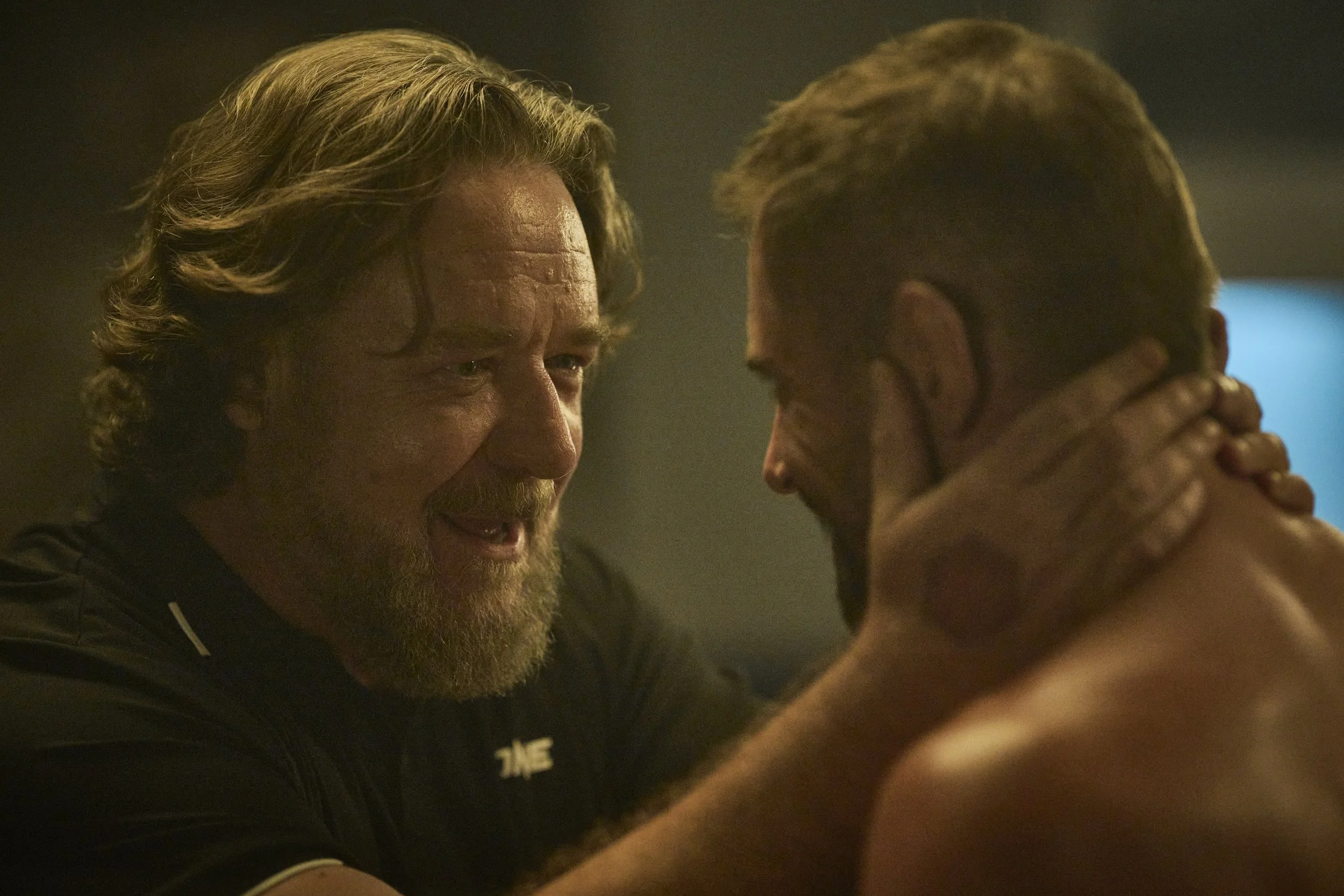
The glaring issue with Beast is that it spends more time on the complicated relationship between Patton and his brother, as opposed to Patton’s past relationship with Xavier and the uphill battle allegedly ahead of him to beat Xavier again. There is simply no chemistry between Aria and MacPherson, and the feelings each character is supposed to be burdened with about the other are jarringly interjected whenever the narrative calls for them. Nothing feels natural, and even less motivation is given to Xavier’s unrelenting desire to beat MacPherson beyond him just being bitter about having been defeated so easily in the past. Moments of vulnerability offer a glimpse into characters' headspace and are examples of the characters finally coming up for air, but they provide more of a showcase for the performances than for fleshing out relationships.
The real standout continues to be Foster, who's been quickly getting a name for himself since his directorial debut, Life After Fighting. That film served as a showcase of what Foster is capable of as an action star, and it’s not difficult to see how Beast might have been an opportunity for MacPherson, as well. Those vulnerable moments peppered throughout the film demonstrate someone capable of potentially carrying a film with more than just a physical presence. However, the screenplay simply isn’t there to support MacPherson. The reality is that Foster’s role fits better with how limited his character work is, whereas MacPherson has to shoulder a lot more and then also try to hold his own against a more charismatic and assured fighter like Foster. It results in MacPherson’s dramatic performance being notable enough, but everything else feeling less than impressive.
On the bright side, the climactic fight, which is why anyone has bothered with Beast, is an immersive, visceral experience where you can see and feel the blood and sweat drenching each fighter. The physicality of the performers and the camerawork from Thomaz Labanca put audiences in the middle of the ring. It’s not worth the price of admission, but it helps soften the blow of realizing that the past 90 minutes weren’t as hype-inducing as they should be for a movie dependent on getting viewers to the climax. That’s the crucial flaw of Atkins’ film and what wastes its reliable premise: there’s just no desire to stick with the movie. When nothing feels original, everything has to do extra work to be captivating. Beast can occasionally deliver a rawness thanks to MacPherson’s performance, and its action is occasionally engrossing when Foster leans into his villainous role. Too often, though, the film settles back into familiar tropes without enough meat on its bones to satisfy even the most basic of cravings.
