
TIFF 2026: ‘The Last Photograph’ Review
There are many reasons why Zack Snyder’s The Last Photograph had the potential to be interesting. As an independent production, it felt like a chance for Snyder to prove that when left to his own devices, he can deliver something with the magnitude of the Snyder Cut of Justice League. As something a little more stripped-down scale-wise, it also means that Snyder’s working closer to Dawn of the Dead remake territory than something as gargantuan as Rebel Moon or 300. While not a director who has shied away from original ideas, his best films build from established source material, so The Last Photograph also felt like an opportunity to reaffirm Snyder’s storytelling abilities without any of the extra help from comic books and graphic novels. Plenty of directors would kill for an opportunity like Snyder's and to make something truly visionary after becoming one of the most hyped directors in modern cinema.
However, for every hopeful aspiration of what The Last Photograph could have been, Snyder almost instantly turns it into a farce. Leaning into his worst storytelling tendencies and eschewing almost all visual flavour, the director’s latest is a complete misfire. Joe Wallace (Fra Fee)—a drug-addicted photographer living in South America—takes a photo of a brutal massacre at a soirée that makes its way to retired DEA agent Ethan Black (Stuart Martin). The woman caught on film being executed is Ethan’s sister-in-law, and while his brother and her are confirmed dead, his niece and nephew remain missing, compelling Ethan to recruit the reluctant Joe’s help to navigate treacherous terrain and confront hostile forces to rescue them. As they trek deeper into the jungle and mountainous regions of South America, the two men's ideologies gradually emerge—forcing them to confront demons that constrict their every move.
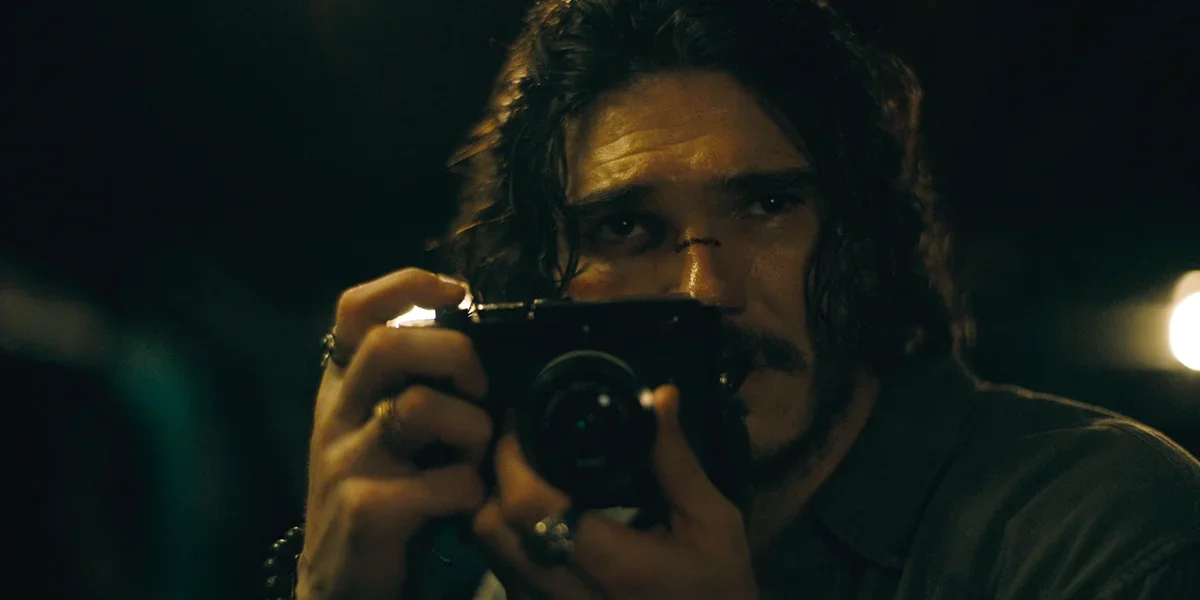
While not a director known for tact, Snyder’s vision of a descent into Hell is surprisingly paper-thin even by his standards. All texture added to the film is in random asides that paint South America as a land of savages holding onto brutal traditions that often involve harming women, or the pair of white men sharing haunting dreams that only highlight them as tortured souls hollowed out by witnessing or inflicting violence. The opening massacre is prefaced with Joe fixating on a butterfly fluttering by a bright fluorescent light, keeping his view within the camera lens he won’t relinquish, while an unnamed woman strips and has sex with him while he remains apathetic to it all. When he finally clues in to the massacre happening outside his room, he takes a bunch of photos that no one notices until the very end, when someone fires a gun point-blank at his face, and he blocks the bullet with his camera as he raises it to take a photo. I mention all of this because it’s the kind of vapid imagery and character work that is par for the course with Snyder, but has never felt more laughably pointed than here.
It’s also extremely shallow in what it is trying to say. Ethan is portrayed as a man of action, while Joe, a conflict photographer, is portrayed as passive. It takes plunging into the heart of darkness for Joe to start reacquiring some shred of humanity so he can put his camera down and actually try to help those in need. However, conflict photographers are vital components of the news cycle and bring awareness to atrocities happening around the world. Without Joe’s photo of Ethan’s sister-in-law being executed, Ethan would have had less help to deliver vengeance. It feels weirdly tone-deaf to release a film about wartime photographers being babies compared to burly men wielding guns and taking matters into their own hands, when there’s so much conflict happening around the world that no one will even see or acknowledge. Let alone the tensions exacerbated by people taking up arms simply because they can. Kurt Johnstad’s screenplay devalues Joe’s profession and only gives him humanity once he trades his camera for a gun. If there’s something poignant within that, it’s muddled by the fact that Ethan is also hollowed out to the point of having no real personality.
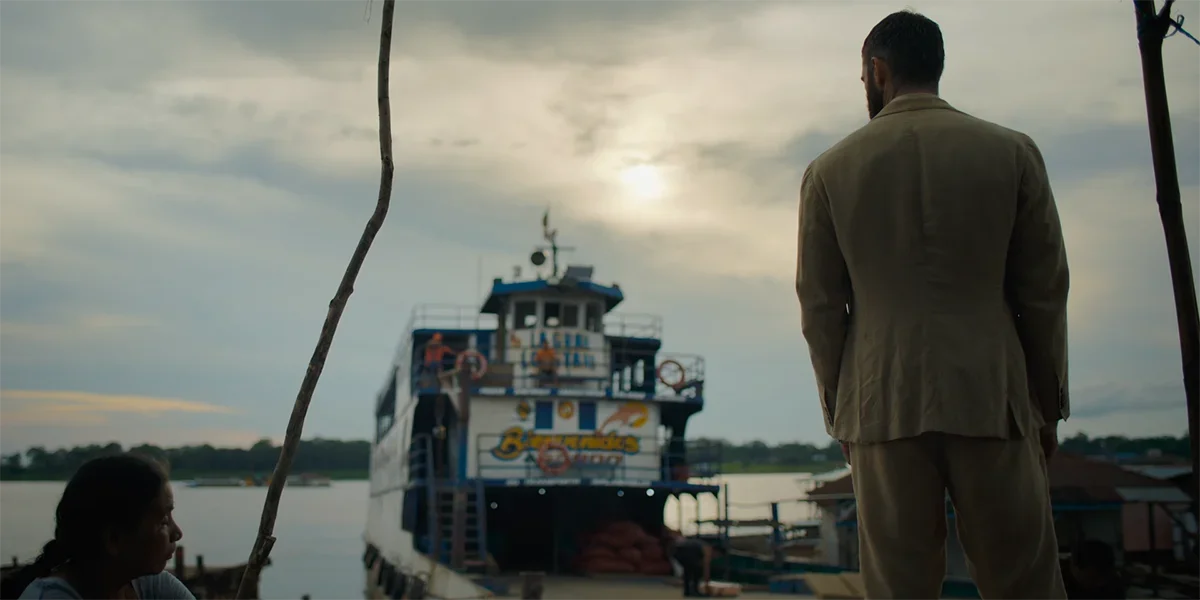
What should have been a slam dunk for a revenge film like The Last Photograph is its action. Leaning into its brutal violence and unflinching gaze of depravity, it delivers a solid number of tactical shootouts that could have been impressive. Unfortunately, the only element of any action sequence that works is the sound design, which carries the deafening qualities intrinsic to Snyder’s maximalist style. Every shootout is surprisingly bland in presentation, which continues throughout the film, with Snyder’s cinematography appearing flat, muddied, and filtered through a drab colour palette. Having appreciated the look of Snyder’s blockbusters in the past, it’s disappointing how little Snyder’s own cinematography has managed to replicate what cinematographer Larry Fong established as Snyder’s visual sensibilities in movies like 300, Watchmen, and Sucker Punch. Everything is muted to the point of mirroring its protagonists, leaving an uninteresting film with uninteresting ideas to attempt to compensate.
With a much smaller scale to work with, The Last Photograph is also forced to lean on its performances, which are mostly terrible. The exception is Martin, who does seem to fit within the testosterone-fuelled odyssey laid out for his character. A muscle-bound commando with a soft spot isn’t exactly unique in any film, but Martin wears it well. However, Fee’s performance buckles so hard under the weight of Snyder’s vision that it creates unintentional hilarity in the line deliveries. When your film struggles to hold its own in every other department, a serviceable performance can at least keep the train rolling. Fee never feels attuned to his character, and Snyder’s direction seems to intentionally place Joe at odds with the world around him. Unfortunately, if there’s intent, it doesn’t land (for context, people audibly laughed at serious lines of dialogue from Joe’s character at the public screening I attended at TIFF).
There is likely no world in which the cut of The Last Photograph that premiered at this year’s Toronto International Film Festival sees the light of day. Unlike the Snyder Cut of Justice League, this is probably a good thing because what was presented was one of the most racist, misogynistic, unnecessarily brutal, vapid, and boring films that has screened at the festival. It has brief moments you hope feel like a diamond in the rough, but they quickly reveal themselves as nothing more than a cheap facade. Snyder can make good movies, but The Last Photograph is tedious and unimaginative in ways that make his underwhelming direction feel like he’s unsure why he’s working on it. A movie that is never exceptional and always disappointing, The Last Photograph stands to be one of Snyder’s worst films that can’t even meet the lowest of expectations.
The 51st Toronto International Film Festival took place between September 10th and 20th. The Last Photograph celebrated its World premiere on September 13th as part of TIFF’s Special Events program. You can find the full list of films selected for the festival here.
