
TIFF 2026: ‘Bad Lieutenant: Tokyo’ Review
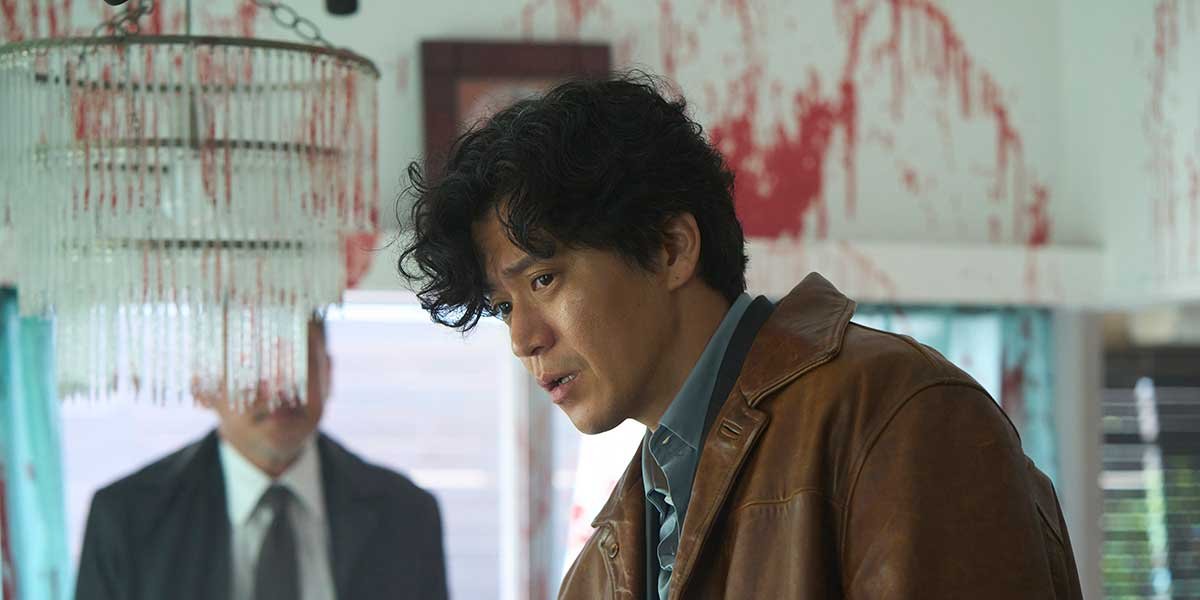
While it seems promising that a prolific director like Takashi Miike is putting his stamp on the most surprising franchise in cinema, those coming to Bad Lieutenant: Tokyo for a fresh spin on the depraved crime saga might be a little disappointed. Even Miike devotees will undoubtedly feel like they’re treading familiar territory. No stranger to crime dramas or Tokyo's seedy underbelly, the Japanese director tends to use those settings and characters as playgrounds for violent spectacle and debaucherous misadventures. Bad Lieutenant: Tokyo fits neatly within Miike’s expansive filmography, thanks to its more inspired flourishes on an otherwise standard serial-killer procedural. However, as a Bad Lieutenant movie, it’s easily the blandest of the bunch.
A tinge of Abel Ferrara’s 1992 film colours the outset of Miike’s vision, but it quickly settles into the auteur’s wheelhouse. Kyoji Yabuki, a hardened police detective (played by Shun Oguri), investigates a string of killings—where bodies are ground up into meatballs and left for the crows—which is interrupted by the arrival of an overseas FBI agent, Nguyen (Lily James), who is pursuing a politician’s daughter (wrestler Gionna Daddio) who has gone missing in Tokyo. As their investigations align and they see the value in working together, the two form an unlikely alliance that guides them through Tokyo’s criminal underworld. However, the motivations behind each person’s pursuit of justice may be as murky as the world they’re navigating.
Those familiar with Miike’s crime thrillers will immediately find themselves intrigued by Bad Lieutenant: Tokyo and how quickly it surfaces the director’s signature charms. It’s violent in a kind of grotesque way, though a lot of the ick is shaved off to be more palatable to a more international audience. Character traits like Kyoji’s gambling addiction leave him constantly scrounging up money from criminals and shadier sorts only to immediately lose the money again, and time spent with his children often puts them in situations that would immediately have social services called on him. In fact, the closest thing he has to family at this point is the two sex workers that he plays billiards with between having sex. He’s not just made a home out of rock bottom—he’s made it a destination. The occasional blood splatter and seedy characters he frequently interacts with aren't quite a dopamine hit, but more of a tranquillizer to dull the senses. He’s a very good detective, plagued by his vices. In other words, he’s a perfect Miike protagonist.
The flipside is Lily James and her performance, which doesn’t balance tones so much as revel in the silliness of Miike’s film. Sporting a southern drawl that never fits, James fully leans into a wild, chaotic performance meant to shake the audience out of the doldrums created by Oguri’s sedated detective. When she’s in the film, there’s no safety net, and it truly feels like it could go anywhere. It’s not necessarily a great performance, but it’s a fun one that lets James diversify her portfolio while standing out in one of the film’s few action-heavy scenes. When most of Miike’s film feels weirdly restrained for a director known for gonzo violence and unabashed silliness, James is the only element that remains unfiltered. Oguri’s performance is a bit more of a tightrope and helps keep the film grounded. He does some great comedic work in the depressed-cop routine, but it pales in comparison to how outlandish James feels in every moment.
With a screenplay penned by Daisuke Tengan—who has worked with Miike on only three other films, including the impressive 13 Assassins and iconic Audition—there’s something undeniably underwhelming about Tengan’s script, which features so many dangling narrative threads that the film rightfully just lets them dangle. It all gets unwieldy when you consider how much is going on, from internal demons to personal histories and political machinations. The film still has an energy that keeps the director’s latest on your toes and immersed in the seediness of it all. However, for how inspired some moments feel, Bad Lieutenant: Tokyo is lesser Miike done with a little class. Everything feels familiar from his previous work, including the stylistic choices, but it’s slightly dampened in an attempt to capture an international audience rather than letting Miike’s freak flag fly.
The 51st Toronto International Film Festival took place between September 10th and 20th. Bad Lieutenant: Tokyo celebrated its World premiere on September 14th as part of TIFF’s Special Presentations program. You can find the full list of films selected for the festival here.
