
VIFF 2026: ‘Fjord’ Review
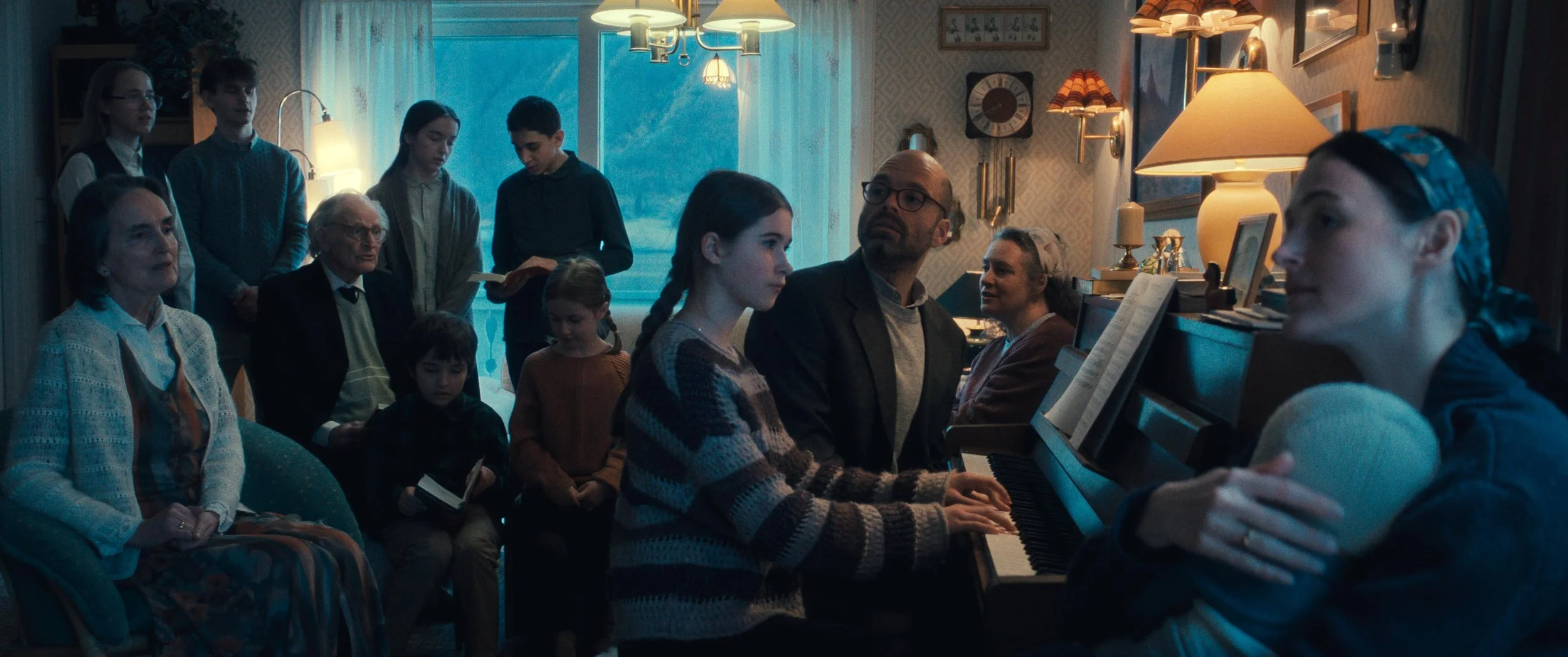
A clash of cultures positions children in the middle of a hostile battleground where a religious upbringing leaves a family on the verge of dissolution in Cristian Mungiu’s prickly legal thriller, Fjord. Approaching its thorny conversation from both sides, the Romanian writer-director’s latest will leave audiences rapt by the ensuing fallout from child abuse allegations that put a conservative Romanian-Norwegian family in the spotlight as they attempt to navigate the intricacies of Norwegian Child Services while still holding onto their traditional beliefs. Putting his hand on the scale to provoke further conversation, Fjord walks a precarious line. However, Mungiu’s blunt confrontations of persecution and prejudices leave no stone unturned in an ultimately satisfying but frustrating examination of a fractured society.
When Mihai and Lisbet Gheorghiu (Sebastian Stan and Renate Reinsve) leave Romania to live closer to Lisbet’s family in Norway, their Christian lifestyle is challenged when their oldest daughter, Elia (Vanessa Ceban), arrives at school with bruises of unknown origin. After a few other pieces of circumstantial evidence emerge, her school teachers report the bruises to Child Services. What follows is a legal dispute where it’s not just the question of whether the bruises are from Elia’s parents, but whether a religious upbringing is in itself harmful to children. By placing the Gheorghiu family (whose case is inspired by the real-life Bodnariu family) at the center of a maelstrom of heated debate, Mungiu invites viewers to see the case through a more conservative lens and find a shred of understanding within those parameters. The ask might be a hard pill to swallow for some, but it leaves a much richer conversation in its wake—especially compared with other politically charged commentaries on religious discrimination that play to their audience rather than challenge them.
As the film plays out and the Gheorghiu family’s five children are taken away from them until a decision is made, Fjord unravels prejudices that are not so hidden and are increasingly commonplace in more progressive countries. Some of it manifests in legal proceedings that feel closer to Justine Triet’s Anatomy of a Fall—though admittedly more sterile—and much of it is revealed through how the parents are treated outside their congregation. This is most evident in the relationship with their neighbours: the headmaster of the children’s school, his attorney wife, his ailing father, whom Lisbet helps care for, and their daughter Noora (Henrikke Lund-Olsen), who has a close relationship with Elia. The closeness the families share highlights how easily people ignore their personal experiences with someone in the face of controversy. Mungiu clearly tips his hand a little on how easily these alliances break down, but the screenplay also allows nuance to creep in gradually and forces both characters and audiences to second-guess their assumptions.
Part of that also lies in how Stan and Reinsve’s characters maintain a calmness throughout, which breaks only when they are directly confronted by opposing ideals meant to assimilate them rather than challenge them. Reinsve’s performance as a native Norwegian mother whose country turns on her shortly after she returns home because of her beliefs offers necessary empathy against the anger simmering beneath the surface of Stan’s performance. His character is designed to be suspicious and potentially dangerous, while Lisbet is a mother simply trying to weather the storm. Each actor brings nuance that elevates the characters, but Fjord contains one of Stan’s best performances, with his quiet reserve conveying frustration, conviction, and sadness that permeates throughout Mungiu’s film.
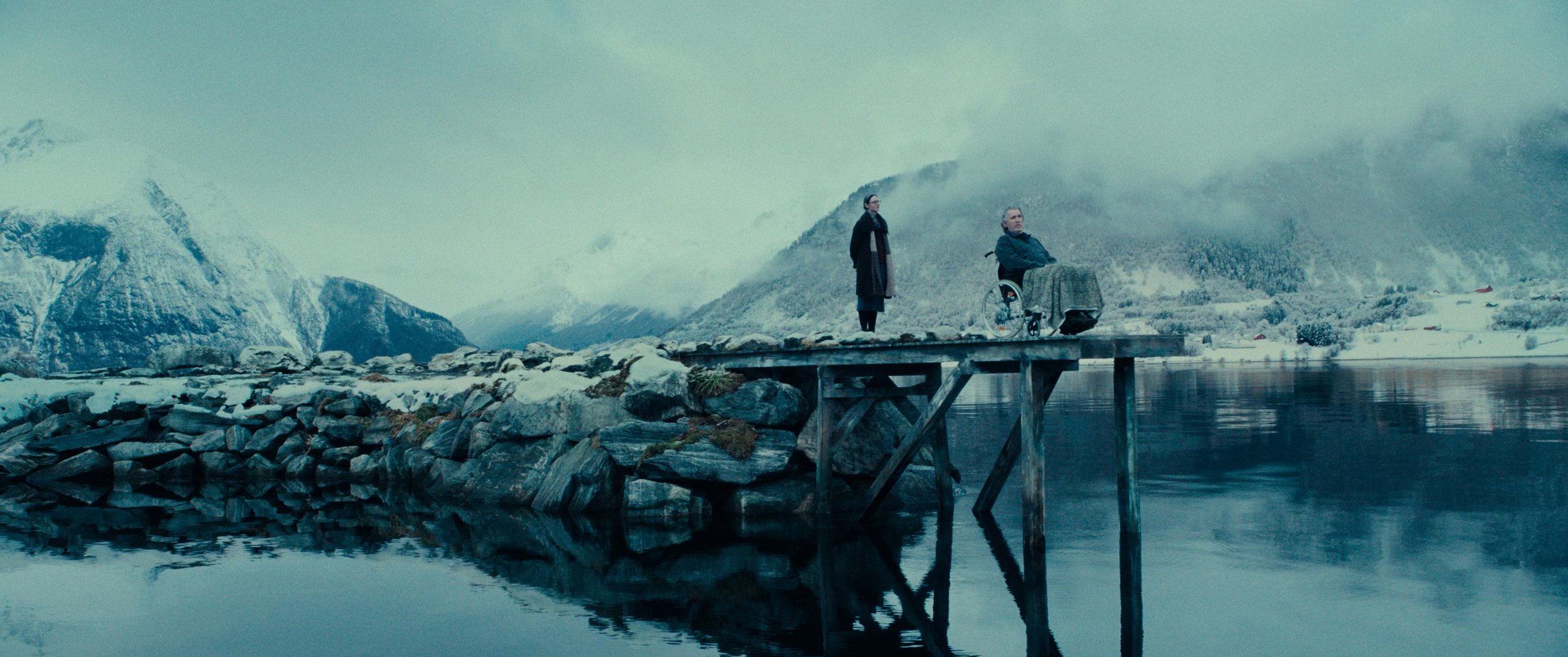
Set within the remote, beautiful Norwegian landscape, Fjord’s undercurrent of darkness and contempt for its protagonists is mirrored in Tudor Vladimir Panduru’s luscious photography. A grayer colour palette washes over every breathtaking vista, muting the beauty just enough to make something feel off about the pristine coastal town. The school sits auspiciously at the base of a mountain where avalanches periodically occur—their proximity and the school’s vulnerability reflect a similar darkness looming over the town. Seemingly walled off from civilization, this progressive village seems inhospitable to outsiders in more ways than just culturally.
What gets lost in the shuffle of right and wrong is the truth, which Mungiu’s script obscures with red herrings and threads left unpulled. The school residing at the bottom of a volatile mountain is a cleverly constructed metaphor that places children in the crossfire of forces beyond their control. While Elia and her brother, Emmanuel (Jonathan Ciprian Breazu), are separated from their parents, they are also separated from their other siblings and effectively disconnected from everyone they love. What happens to them, and the lingering effects of this trial and its outcome, seems secondary to the adults involved, who firmly believe whatever decision is made is in the kids' best interests. However, that truth about the bruises also feels secondary, and what emerges is a blunt condemnation of someone else’s belief system as those who don’t share the same values try to make it fit their established norms. They feel incongruous, leaving adults fighting over convictions while children wait to discover what their futures hold.
It’s impossible not to want to discuss the film with someone else afterwards, especially given its conclusion and the real-life story behind it. Mungiu’s legal thriller offers no easy answers, and the screenplay does a lot to obscure clarity whenever potentially present. This mostly works in the film’s favour, creating an immersively frustrating experience on multiple levels that forces viewers to poke at the film’s many thorny branches. The decision to depict both sides of the argument could have been catastrophic—leading to a film that doesn’t quite know what side of the equation it rests on—but Fjord isn’t afraid to lean too far on one side or the other if it means audiences will think about its subject matter long after the credits roll. An admirably crafted screenplay that isn’t afraid to get its hands dirty, Fjord succinctly captures an all-too-common clash of ideals with a calm, icy demeanour.
The 45th Vancouver International Film Festival took place between October 1st and 11th. Fjord screened on October 2nd as part of VIFF’s Special Presentations program. You can find the full list of films selected for the festival here.
