
‘Project Hail Mary’ Review
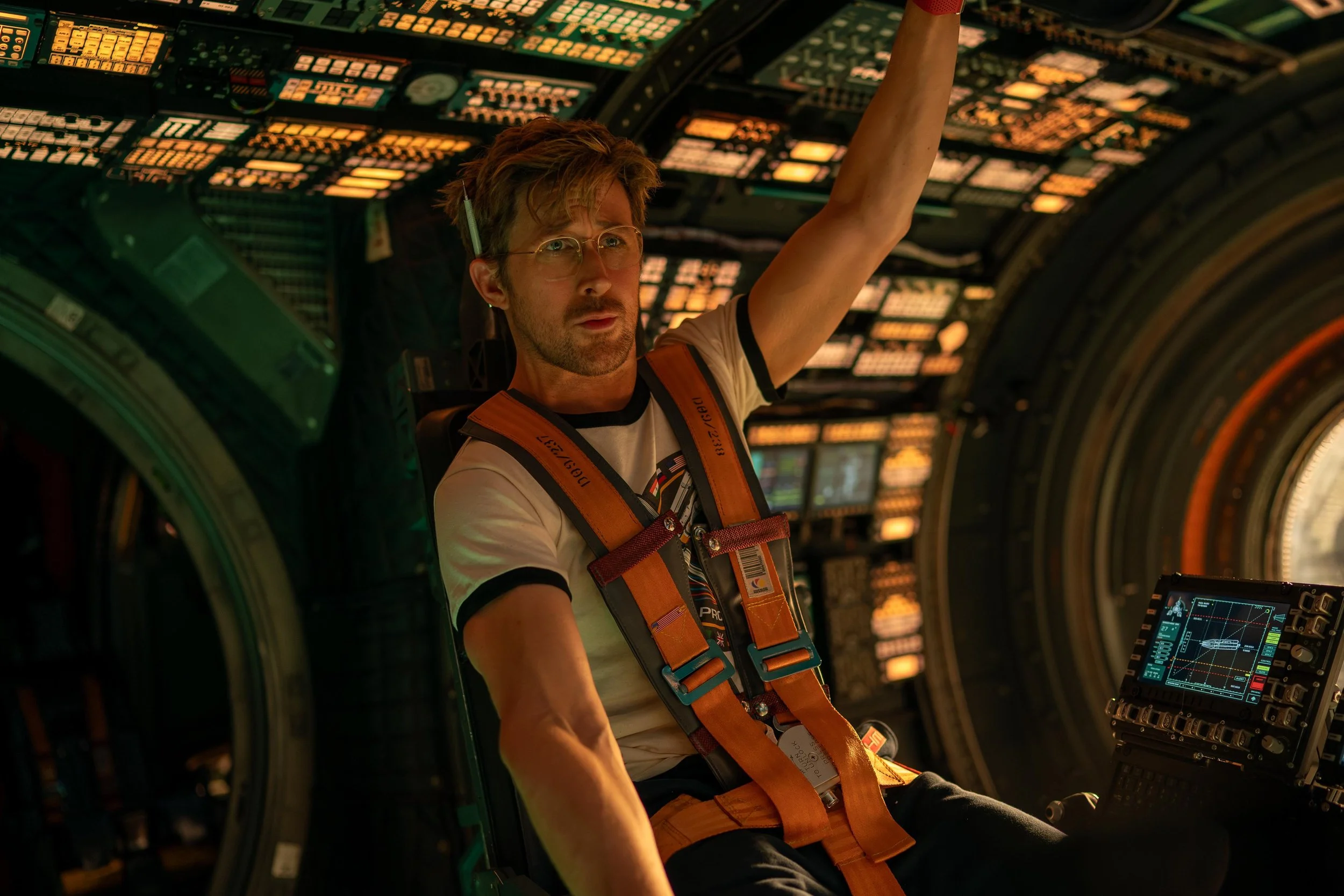
Travelling to distant worlds, whether out of desperation or curiosity, should always contain some semblance of wonder. Mystery has always pushed science forward because it is the pursuit of explanations for the unknown. The space movie delivers speculative science fiction that appeals to both humanity’s interest in what lies beyond our own planet and how humans can navigate the challenges impeding that journey through the cosmos. Phil Lord and Christopher Miller’s Project Hail Mary is another satisfying addition to that canon, distilling Andy Weir’s 2021 novel of the same name down to its emotional essence: that anything is possible when we work together. Weaponizing the starpower and charms of its lead, Ryan Gosling, and another smartly adapted screenplay from screenwriter Drew Goddard (who also adapted Weir’s The Martian for Ridley Scott’s film of the same name), Project Hail Mary streamlines its science-heavy narrative for a heartfelt and imaginative journey through the wonders of space.
Suddenly awoken in space as his ship nears the sun of a galaxy far from his own, Dr. Ryland Grace (Gosling) has no recollection of how he ended up on the spacecraft Hail Mary or what his mission might be. His memories are seemingly gone, but as he continues pursuing answers, they slowly flood back. He’s a middle school teacher who is now in a distant star system to save Earth from an unknown alien lifeform that’s dimming the sun and will cause the planet’s population to die off quickly. The only problem? His crewmates are dead. He’s a scientist, but not an astronaut. He’s light-years from home and has no way of communicating with Earth before dying in isolation. Goddard’s screenplay retains the flashback structure of Weir’s novel, recalling relevant memories leading up to Grace’s departure for the distant star system of Tau Ceti, while forcing its protagonist to continue his mission—one he already knows has a 0% chance of him returning to Earth.
The result is something propulsive and breezy, leaning heavily into the marvels of science in the earlier flashbacks, then trying to scrounge up more emotional stakes for Dr. Grace to create dramatic tension. Those emotional stakes come in the form of an alien whose ship Grace discovers lurking near his own. Seemingly made up of rock and spider-like in appearance, “Rocky,” as Grace refers to him (voiced by James Ortiz), is similarly without a crew and trying to solve his planet’s problems stemming from the same alien lifeform. Gosling’s comedic ability is cute at first, but his range opens up as Grace’s relationship with Rocky becomes more than just two lifeforms working together to solve a common problem. Gosling is most endearing when playing off others, and here he gets to do it in space with delightful puppetry for his alien co-star, and back on Earth with the severe but vulnerable Eva Stratt (Sandra Hüller), who recruits Grace into Project Hail Mary and leads Earth’s attempts to save itself.
Lord and Miller keep Project Hail Mary gliding to its endpoint, and Goddard’s script makes some extremely wise decisions on what science to cut out from Weir’s novel and what to abbreviate to keep audiences entertained without feeling like they need to understand certain scientific principles. It’s a tricky balance that Goddard achieved with Scott’s The Martian and mostly succeeds here as well. The film is light, and dramatic tension is almost always an aside rather than a roadblock, which prevents it from ever feeling like it needs to “Science the shit out of this,” as Mark Watney (Damon) memorably exclaims in Scott’s film. Things that are major problems to solve in the book are minor problems to solve here, which makes sense given how dense the book can feel at times. The mechanics of solving a problem are gripping and exhilarating in the novel, but it’s merely fuel for the soul of Lord and Miller’s film. They’ve kept things boisterous, and it means they don’t need to try to convince audiences that Gosling can pass as a scientist.
However, it also means Project Hail Mary struggles to get its feet on the ground. Colourful space imagery, a kinetic, sweeping score from Daniel Pemberton, and a refusal to slow the momentum, even for a few minutes, leave a film clinging to relationships for emotional resonance rather than to character motivations. It’s epic science fiction told neatly. Clean storytelling with an eye towards striking visuals and whimsy makes the film reminiscent of a Jim Henson production—an emphasis on practical effects and puppetry confirms that evocation—with the grandeur and spectacle of some of the most popular science fiction films serving as obvious influences. While the novel might feel like hard sci-fi pretty often, Lord and Miller’s adaptation is undeniably flashier and wide-eyed at the limitless potential working together elicits. The nuts and bolts of space travel are less exciting to them without the ability to share that wonder with someone else.
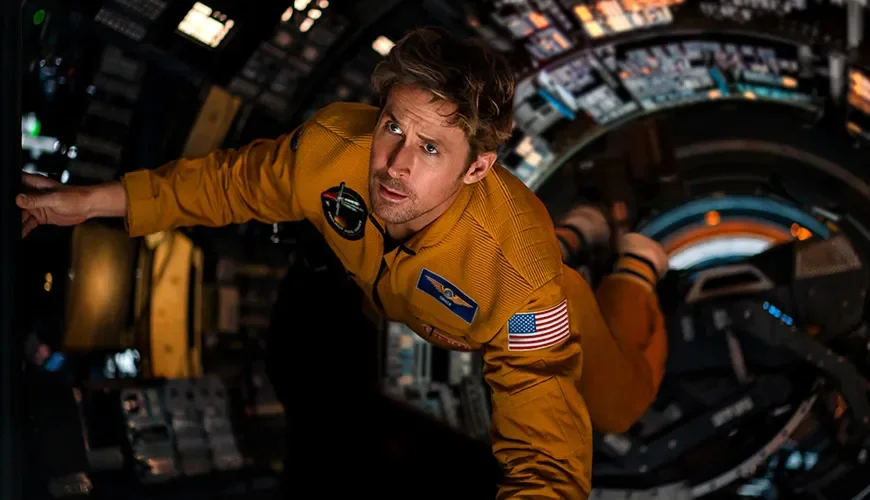
As someone who adored the novel and revelled in its gradual unearthing of emotions through methodical problem-solving and intelligent discussions, there’s something undeniably lacking in Lord and Miller’s approach to the material. There’s an effortless way in which Goddard and Weir can simplify and present complicated matters that is present in the opening scenes of Project Hail Mary. Then, once Rocky is introduced, the film shifts from its establishing science to a propulsive, enchanting buddy-comedy adventure through space that is only occasionally intellectually stimulating. What’s most surprising is that it works. Every complaint of plot points being cut or smoothed over can usually be explained away through the feeling the film retains throughout. It sweeps you up.
Project Hail Mary somehow remains faithful to the essence of the text while shedding tense sequences and glossing over massive concerns to its benefit. Gosling’s rapport with both Ortiz and Hüller keeps the audience engaged while Lord and Miller are in the background, turning Earth’s impending doom into an interstellar symphony of colours and sounds. There’s a sense of hope and optimism in Grace’s mission that is only palpable when he’s sharing the burden with someone else. It fumbles the ending a bit with how much the film avoids conflict, making its obvious wind-down feel excessive when it stretches itself longer than it needs, but everything prior is pure, unfiltered creativity run rampant through the galaxy. Project Hail Mary might be a bit too hopeful and neatly packaged for its own good, but its wonder and excitement are intoxicating cinema at its most spectacular.
