
‘Good Luck, Have Fun, Don’t Die’ Review
It has been too damn long since Gore Verbinski directed a film. While his latest movie, Good Luck, Have Fun, Don’t Die is not necessarily an earth-shattering return to the director’s chair since 2016’s A Cure for Wellness, Verbinski weaponizes Matthew Robinson’s AI-fearing, Black Mirror-adjacent screenplay as a reminder of how strong his visual direction can be in elevating a film. He’s an artist capable of making something entertaining out of a few simple ingredients. In this case: a charismatic cast, a topical premise, and a constant feeling that everything can go sideways at the drop of a hat. Good Luck, Have Fun, Don’t Die is a chaotic cocktail of modern-day anxieties that revels in its depiction of a technology-focused society hurdling towards extinction and the ramshackle attempts to evade an almost-certain doom.
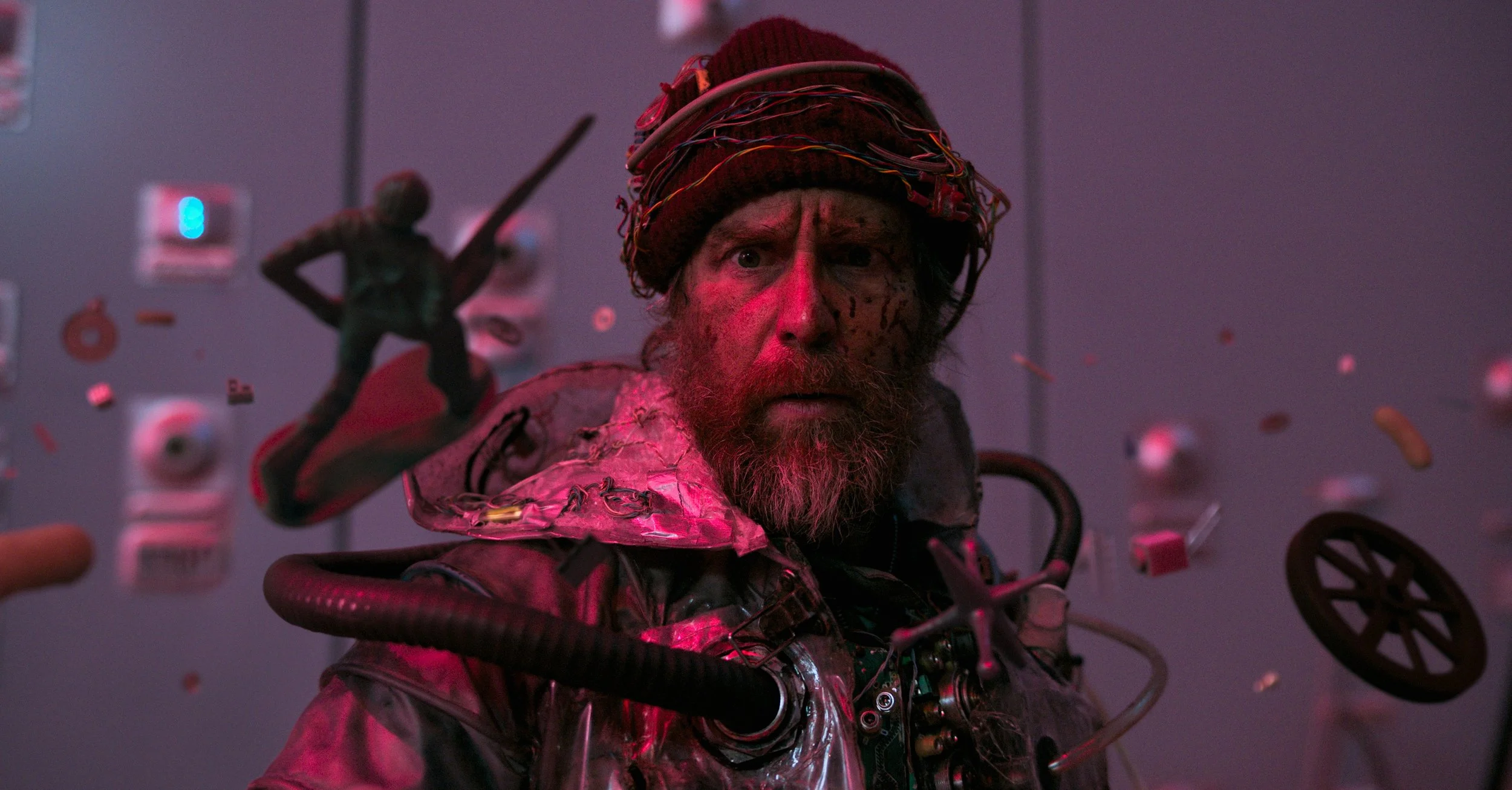
The fear of a dying planet and humanity’s impending collapse has given science fiction an immense boost in relevancy that can take even the most simple idea—say, someone traveling back to the past from the future in order to save mankind—and make it feel like a vital commentary on how accepting we are of the gradual march towards our demise. When a man from the future (Sam Rockwell) walks into a diner proclaiming that the world is going to end, it’s unsurprising that it’s sold as a laugh in Robinson’s screenplay. After all, what are the chances a random stranger will walk into the same location you’re sitting and deem you crucial to the survival of humanity? And what are the chances that same person, appearing unhoused with a random assortment of wires spliced in between garbage affixed to a trench coat, might just be unwell? No amount of shouting about needing to get the right combination of people to save the world and it being his 117th time traveling back to this particular point in time will make that man seem any more convincing. Sometimes, though, you just have to go with it…
Everything in Good Luck, Have Fun, Don’t Die has that same improvised structure to it, but much like the man’s plan to save the world feeling disorganized, it’s all built upon the foundations of previous struggles. What essentially amounts to an anthology film that coalesces into a larger narrative about the destruction that awaits humanity in the face of artificial intelligence, Robinson’s screenplay is cleverly constructed to nuance its haphazard assortment of characters tasked with helping Rockwell’s character save civilization. So while the diner patrons that decide to join a seemingly suicidal conspiracy theorist on his quest might seem like a random assortment of people, the paths that led them to that moments are gradually expanded upon over the course of the film.
While there’s a zany energy to Verbinski’s direction—amplified by Geoff Zanelli’s offbeat score of science fiction symphonies filtered through epic orchestrations and discordant rhythms—a lot of it is contained to Rockwell’s character and the unknown path the characters are walking. Flashbacks for each set of characters provide the heartbeat that keeps the entertainment from slipping into vapid territory. The Black Mirror comparisons are unavoidable as each person is faced with a premise that conveys a bleak future where technology chips away at what little humanity is left in society. They can range from escapism to assimilation, but what is ultimately presented is the depressing reality of how easily individuals accept new technology without considering the ramifications. Some characters feel more caught up in the downfall—such as two high school teachers, Mark (Michael Peña) and Janet (Zazie Beetz), facing a growing cellphone problem in their school—than explicitly impacted by it, like Susan (Juno Temple) and Ingrid (Haley Lu Richardson), but that more explains why specific segments of the film carry more weight than others.
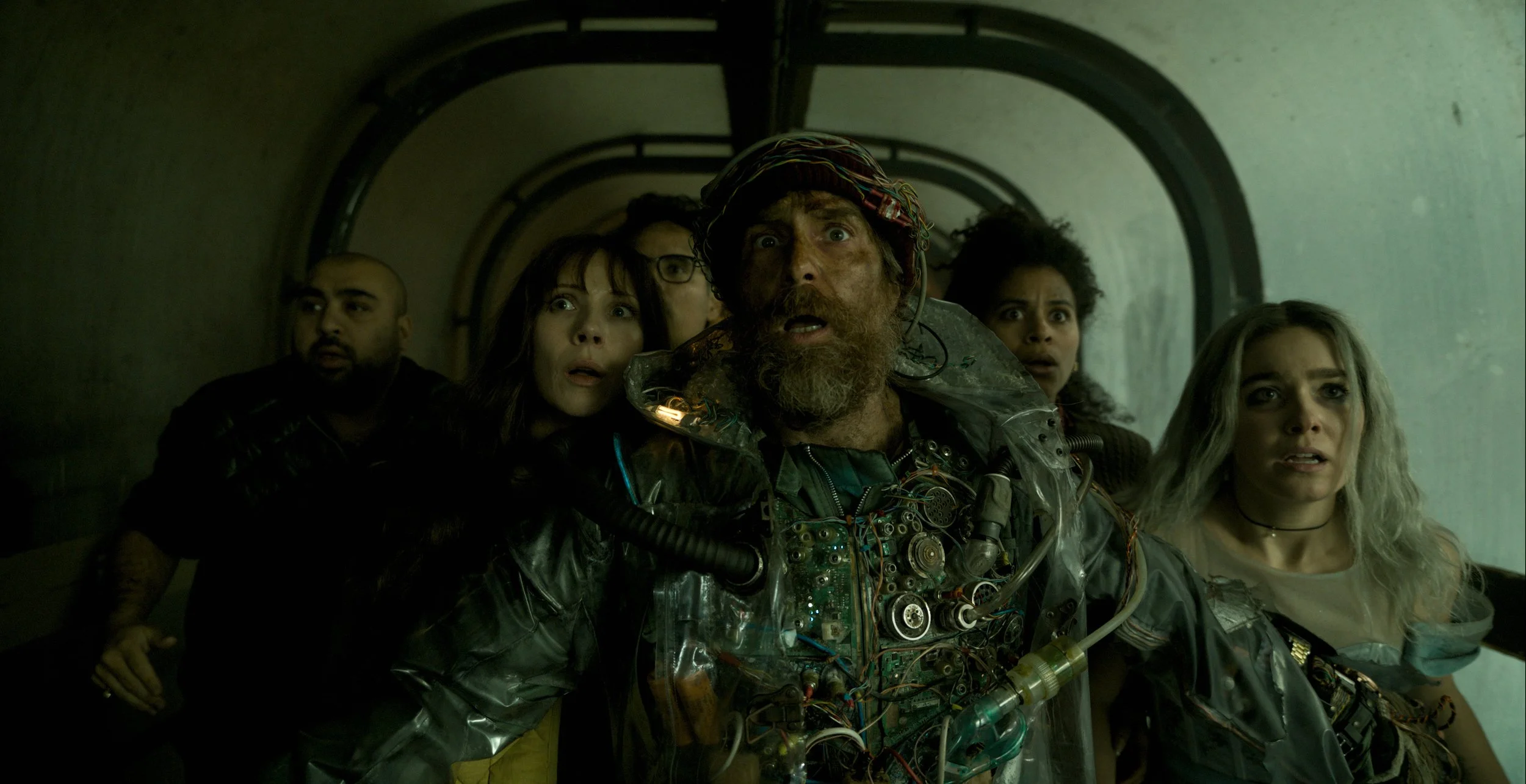
Where Good Luck, Have Fun, Don’t Die differentiates itself from Charlie Brooker’s hopeless depictions of our future is that Verbinski and Robinson still cling to a sliver of optimism that motivates Rockwell’s character. It might be a little naive to believe there’s hope when you’re on your 117th attempt to save humanity because you can’t find the right combination of people capable of helping you achieve your goal, but Verbinski’s focus on entertaining set pieces keeps the whole film light on its feet enough to feel like there’s a chance things might all work out. Rockwell’s performance plays a significant role in keeping things moving at a frenetic pace while balancing the human despair with plenty of comedy. Rockwell has become dependable in roles like this where there’s a shred of humanity somewhere deep inside the glib demeanor, but Richardson also stands out amongst a very capable ensemble.
There’s an “old man yells at clouds” vibe that can’t really be avoided with a film that is bluntly stating the world is already spiraling because of technology. Robinson populates the film with cautionary tales and outright resistance to technological advancements, but the reason Good Luck, Have Fun, Don’t Die still works is because those reservations are interrogated and also accepted as minor quibbles in the grand scheme of a larger concern. Verbinski portrays the fight against progress as more of a fight against accepting something as inevitable. Being able to step back, re-evaluate what is contributing to a problem, and then assess whether it really is inevitable is what makes the man from the future’s quest that much more important to attempt. By approaching the subject with Verbinski’s lighter touch and kinetic filmmaking style, it makes an inevitable danger feel preventable because it’s not laced with fatalism but rather hope.
