
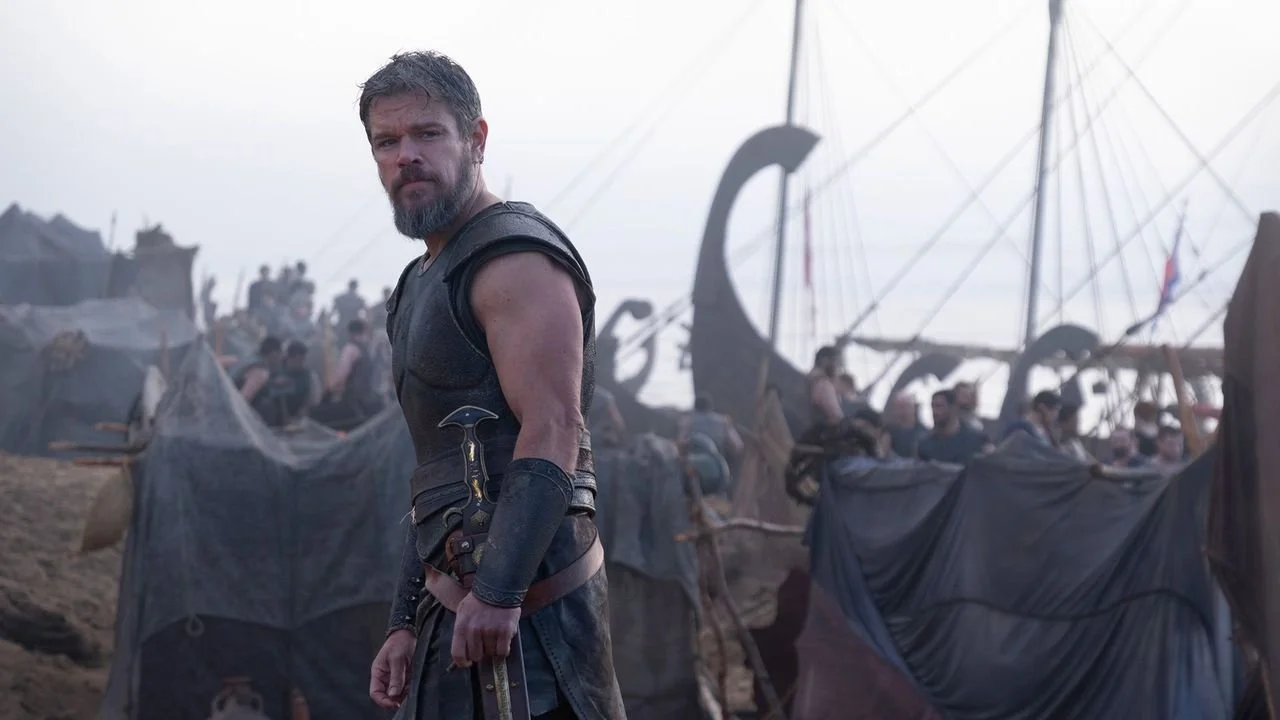
However one feels about Christopher Nolan, there’s no saying that he rests on his laurels. Crafting cinematic achievements that have received widespread critical and audience acclaim, he’s not just one of cinema’s most dependable auteurs but also one of its most bankable. However, it’s his pursuit of increasingly ambitious material that has kept eyes on his work. None of his past projects, though, have come close to the daunting task of adapting Homer’s ancient Greek epic The Odyssey. A staggering achievement in scale, scope, and length, Nolan takes Homer’s epic poem and—with heavy lifting from Emily Wilson’s translation—drills into the myriad stories it tells to find a common, relevant thread that echoes through eternity.
While screenwriting credit is attributed to Nolan alone for The Odyssey, he is adapting based on Emily Wilson’s 2017 translation, which provides thematic threads and interpretations of Homer’s original work that Nolan clearly admires and does not seem inclined to stray from. The core story remains the same: Odysseus (Matt Damon) has not returned home with his fellow soldiers after successfully winning the Trojan War. Years have passed; Ithaca’s throne remains vacant, and no one can tell his wife or son, Penelope (Anne Hathaway) and Telemachus (Tom Holland), whether their King is alive or dead. His absence prompts suitors from all over to stay in Ithaca and attempt to gain Penelope’s hand in marriage, all believing Odysseus to be dead. Among the suitors is Antinous (Robert Pattinson), whose antagonistic behaviour towards Telemachus and the half-blind swineherder Eumaeus (John Leguizamo) represents a larger growing resentment towards what is left of Ithaca’s civility and an impatience for Penelope to choose him and let the new world order begin.
At the heart of Christopher Nolan’s The Odyssey is the corruption of civilization by the hubris of man. Antinous is merely one of many who have written off Zeus’s law—the notion of treating guests and outsiders with hospitality and kindness—in the wake of the Trojan War. People from the sea are apparently breaking Zeus’s law, and it’s only a matter of time before they break the rest of Greece. While Penelope reluctantly continues to house and provide for the many suitors and their entourages, her husband Odysseus remains lost and unaware of his past and the fate of his soldiers. This is where The Odyssey truly begins, as the songs of Odysseus’s heroics clash with his recollection of events, told through flashbacks to Calypso (Charlize Theron), who helps him recall his memories. It’s a bit of a clunky start that slowly smooths out as Nolan hands the film over to Homer’s grandiose tales of soldiers confronted with unimaginable horrors and sights on a singular quest to get home.
It’s only in the framing device that the clunkiness rears its head, but when the film is moving from story to story, it’s propulsive entertainment. While the tales play out like vignettes, they are significant parts of Odysseus’s story and flesh out the protagonist as more than just a myth. In fact, Nolan continues Wilson’s interpretation of Odysseus’s actions throughout The Odyssey as the sign of a man who believes himself above all else in the wake of his successful subterfuge during the Trojan War. Nolan’s films often have a lynchpin that cracks the whole film wide open. For The Odyssey, it is the Trojan War. A brutal assault on the city of Troy that occurred because deception and cunning are believed to be the only path forward, the iconic Trojan Horse scheme is the key to almost every theme explored in Nolan’s film. It’s also a victory placed squarely at Odysseus’s feet.
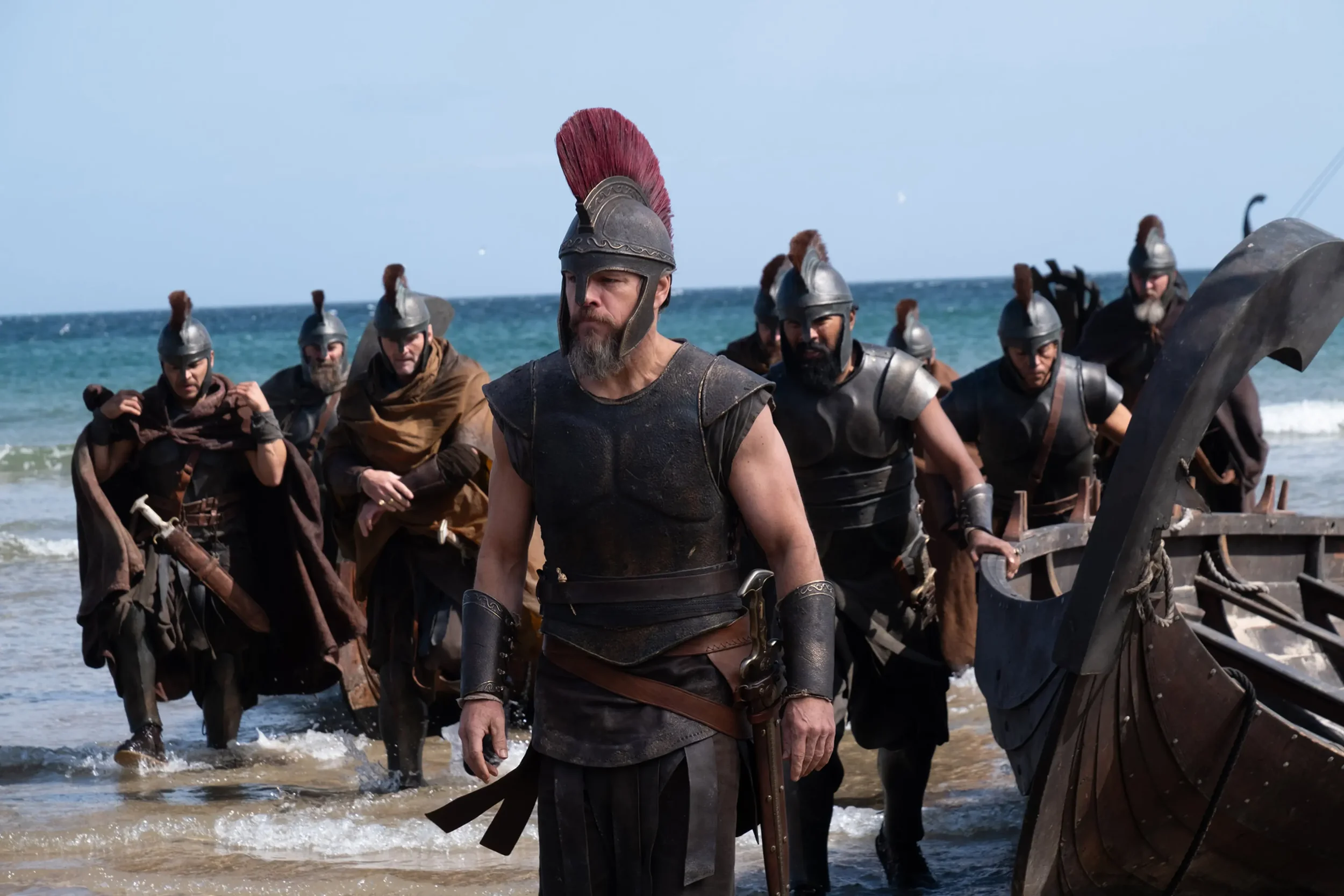
The Battle of Troy is one of many scenes that will leave audiences completely gobsmacked, though it is arguably less impressive than the more creative sequences throughout The Odyssey. It’s a massive siege that fully immerses audiences in the chaos and sweatiness of the task at hand, but it’s also a case of a visionary director realizing a scene without much of a personal stamp on it. Of course, it still astounds—and Nolan’s approach, being more of its thematic importance than the mechanics of it, is what gives it weight—but those coming to The Odyssey for a creative approach to its technical side as well will find far more content to admire in the many other encounters Odysseus and his men find along the way.
As Homer’s ‘The Odyssey’ is told in parts, there’s a lot of room for Nolan to settle into a scene’s minutiae and lose audiences in another world within their own. “A time of apparent magic…” is the opening text that introduces viewers to The Odyssey and for good reason. Each encounter along Odysseus’s journey home is tinged with magical properties of some sort, whether simply fantastical creatures or literal sorcery. It’s a subject that Nolan has rarely touched upon, but the comment “Don’t try to understand it. Feel it.” from 2020’s Tenet rings true with the God-fearing world of The Odyssey. Mystical occurrences will accompany visceral images that must be seen to be believed, but understanding them requires belief in the Gods more than reason alone.
One such scene features an incredible display of body horror, led by Samantha Morton’s stellar performance as Circe. One of the most notable characters from Homer’s epic is brought to life by Morton with such fear and rage that it is a shame that it is only a blip in Odysseus’s journey home. It is such a memorable sequence because, like many other elements of Nolan’s film, it feels like a director stepping out of his comfort zone to make a decisive statement with something truly impressive. Morton’s performance, some incredible effects, and Jennifer Lame’s editing distinguish the scene as one of the most unique in Nolan’s entire filmography.
It’s also anchored by a strong female character—something Nolan has struggled with in past films. He doesn’t break the habit completely here, but characters like Circe, Penelope, Calypso, and Clytemnestra (Lupita Nyong’o in another impressive dual performance after Jordan Peele’s Us, this time also as Helen of Troy) have strength in their respective worlds but must wield it in different ways. They are women fueled to varying degrees by rage and discontent while trying to operate within a patriarchal society. That is not lost in Nolan’s films, and Wilson’s translation was singled out for its improved portrayal of women, but there’s some old-fashioned storytelling that is understandably untouched and occasionally executed with less subtlety and finesse. Calypso, in particular, is not really given much screen time for that character to be more than just another footnote in Odysseus’s life.
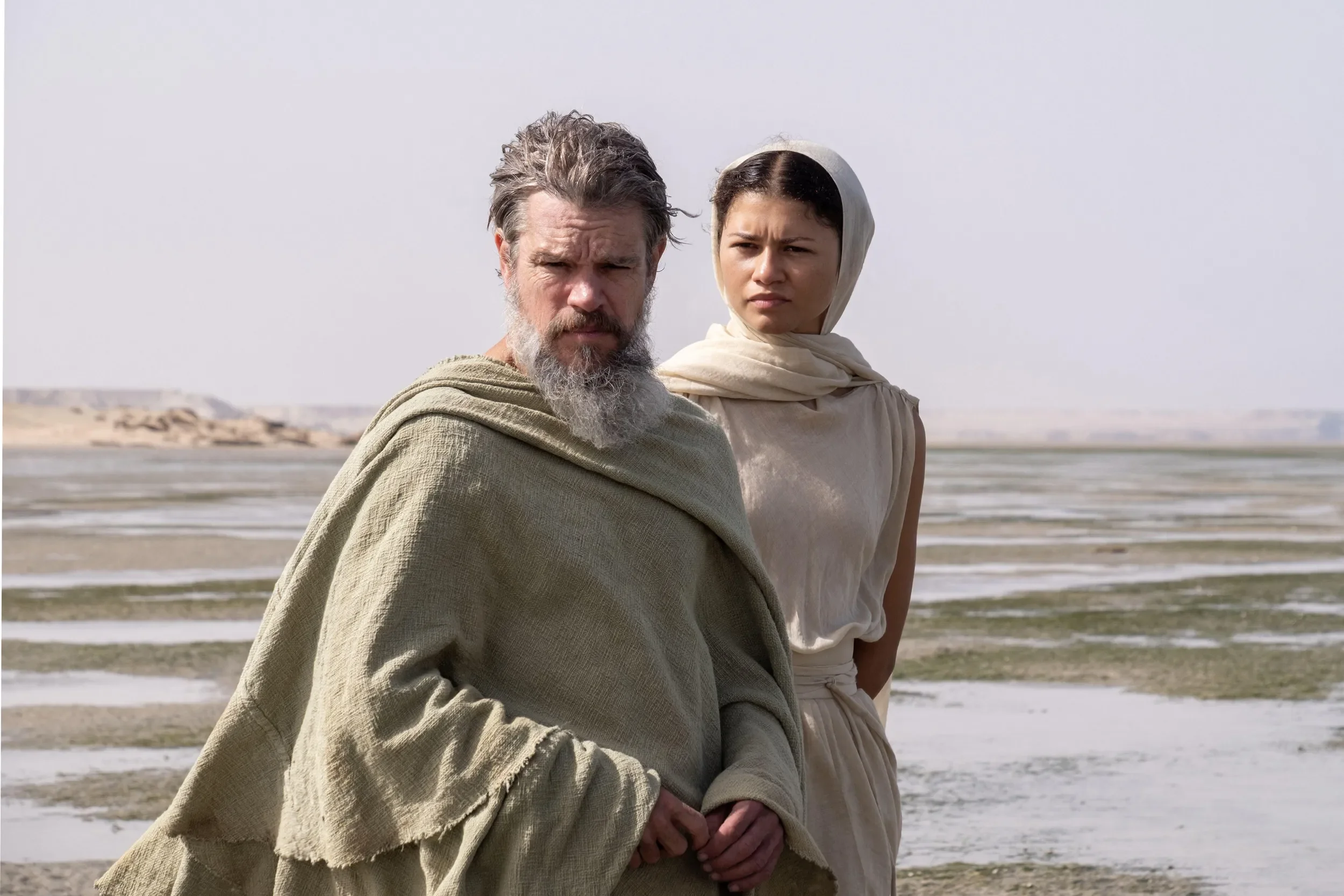
What makes any of the characters better than they may appear on page is the performances, and The Odyssey is stacked with a magnificent cast. Characters like Calypso or Circe may not be given too much screen time compared to those portraying Odysseus’s family, but the actors devour their roles entirely. What’s more surprising is that there aren’t really any missteps with the performances. Holland might be the odd man out because his character is a young boy trying to delay the throne being claimed by an outsider while he clings to the hope of his father’s return, but it’s a character that is written to be inexperienced and out of his element. As the character grows, Holland’s performance becomes much more impressive over time. However, it’s obviously eclipsed by many of the other members of the cast, including other notable standouts like Himesh Patel as Eurylochus, Zendaya as Athena, and Elliot Page as Sinon.
Strengthening every scene are two returning collaborators of Nolan’s: Ludwig Göransson as composer and Hoyte van Hoytema as cinematographer. Both won Academy Awards for their work on Nolan’s Oppenheimer, and they’re continuing to put in some of their best work here. Two early encounters for Odysseus’s crew are incredible highlight reels for what Van Hoytema can do to intensify a scene as the film shifts environments, light, and scale to capture a sense of control melting into fear. Vast, open landscapes feel just as daunting to traverse as dimly lit rooms and corridors. Göransson continues to be one of the most invigorating composers in Hollywood, cleverly bringing in various instruments befitting the Bronze Age to complement each scene. Odysseus himself has a unique sound associated with the plucking of his bow, which Göransson integrates seamlessly to create more memorable soundscapes that elevate the already epic material.
That Nolan successfully adapted Homer’s epic poem without losing much in the process is an incredible feat unto itself. However, The Odyssey is stronger than most adaptations because it conveys an idea that remains resonant today. What Odysseus’s actions wrought after the Battle of Troy is something that haunts the film from the very beginning. It paints his every move, and he fights against accepting responsibility for his mistake. His cunning is only outmatched by the hubris of man, and when defeated, it gives way to disorder and chaos. The very notion that he could defy the Gods in any way is challenged wholeheartedly by all around him, including his fellow soldiers, but he leads them through his defiance with barely an acknowledgement of the consequences.
As the film finally winds down in its electrifying final act and a sequence that pays off every last thread left dangling, The Odyssey establishes itself as a major work. There’s more than just the dissolution of civility contained within Nolan’s film, and it feels like a movie that will be pored over for decades in the pantheon of the auteur’s filmography. Characters are portrayed with such careful nuance so as not to paint them too broadly, leaving impressions from the performances that hint at more than what is said. It’s a colossal achievement in adaptation, but it’s also a spectacular feat of blockbuster filmmaking. The Odyssey may be mired in some growing pains when it first introduces itself, but its forward-moving momentum is nestled inside a character-driven storytelling framework that yields some of the most thematically rich content of Nolan’s career. The Odyssey is dense and accessible, staying true to Nolan’s ambitions while propelling him to new heights.
