
Fantasia 2026: ‘You Are the Film’ Review
Few people have the ambition and restraint that Makoto Ueda has. The Japanese screenwriter and playwright has been cutting his teeth on trippy time travel narratives and excelling in the genre. In particular, his time-loop comedies directed by Junta Yamaguchi (Beyond the Infinite Two Minutes, River) have masterfully wrung every drop from their simplistic premises without stretching beyond 90 minutes. Beyond the Infinite Two Minutes clocks in at only 70 minutes, has an extremely low budget, a single setting, a small ensemble, and a timely use of screens as a plot device during the COVID-19 pandemic. It’s a miracle of a film that knows exactly how much mileage it can get out of its premise in that specific setting. River ups the ante, but still knows its limits.
While Ueda’s continued to work within the science fiction genre outside of his work with Yamaguchi, those two films have captured the attention of movie lovers because they demonstrate how passion and creativity can yield something special. The same can be said about Ueda’s directorial debut, You Are the Film. Ditching the time-travel narrative altogether, Ueda has crafted another deceptively simple concept that escalates to its logical breaking point and mines more emotion from its premise than he has in the past. Another low-budget affair combined with an unabashed love for movies and cinemas themselves, You Are the Film is one of the most playful, satisfying, and intricate puzzles of Ueda’s career and another celebration of what makes movies endlessly enriching.
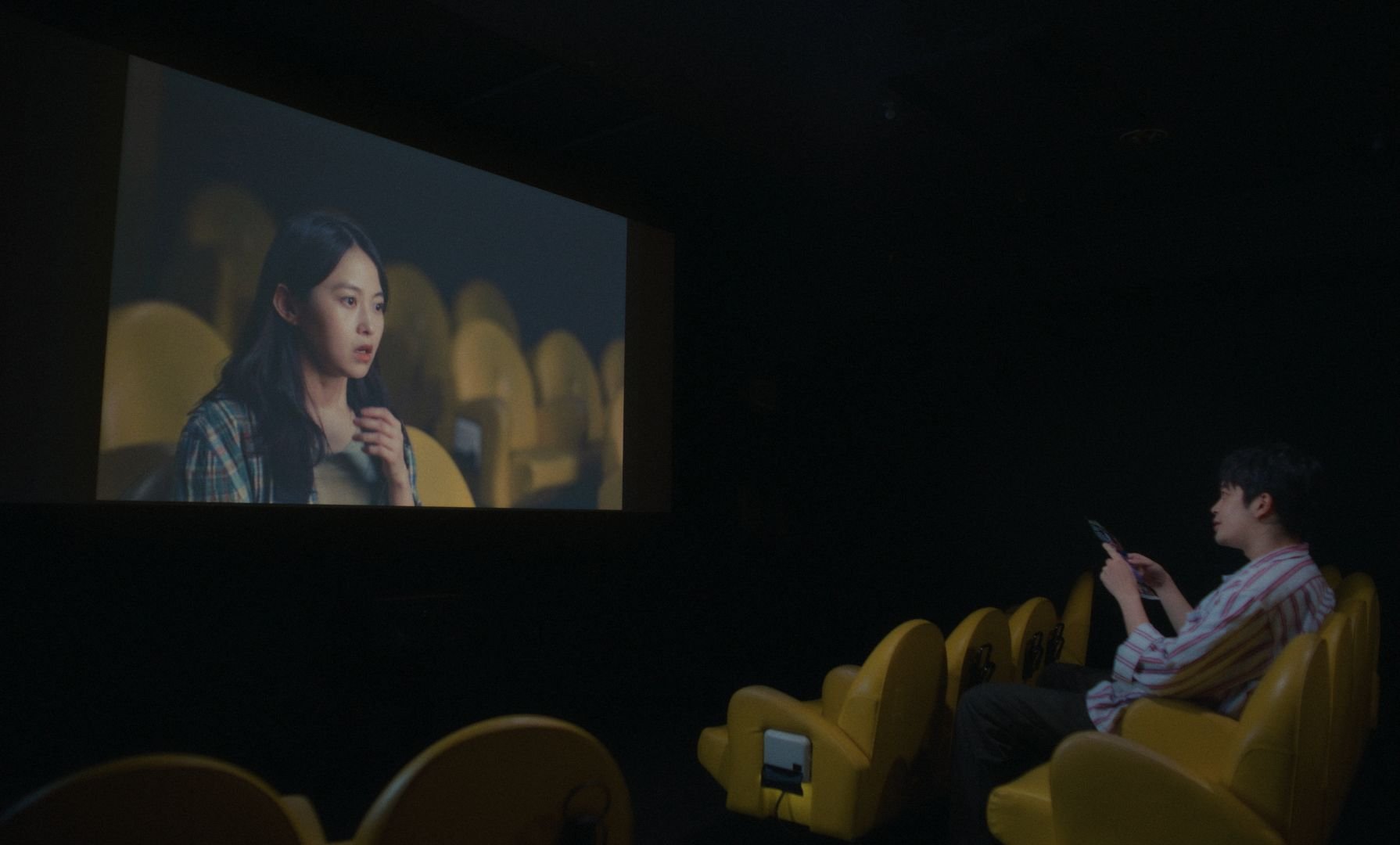
It starts with a trip to the movies to unwind. A small theatre troupe is about to embark on another play written by Madoka (Marika Ito), but there seems to be something off within the group that might make this more difficult than usual. Meanwhile, Kazuma (Kai Inowaki) is in a band struggling to sell tickets when a local gang’s money goes missing, and the band is accused of theft. The two are on the precipice of something monumental that could go either way, but knowing them, it’ll likely go one very specific way. However, they’re not as isolated as they believe when they both go into a microcinema alone to watch a movie about the other, unaware that such a movie exists and is in fact being written as they watch it—with the sole audience member a participant in the other’s film.
As with Ueda’s previous films, the screenplay slowly reveals its mechanics until everything clicks firmly into place. The two artists find they can communicate with one another in the cinema while occupying the same space at different times. They are seamlessly connected, but when one leaves the cinema, they can’t hear the other person, yet they can still talk to them, since they are continuing to live their own movie. If both leave, they’re completely disconnected until one of them returns. Ueda takes the idea of being the main character in your own life to its trippiest conclusion. It’s a bit of a meet-cute from a romcom where the two find they have a connection they didn’t expect while also discovering that they may hold the solution to the other’s personal struggles. However, that’s only part of the film’s magic, and as it starts diving deeper into its movie concept, it unveils a whimsical journey that transcends genre, time, and space.
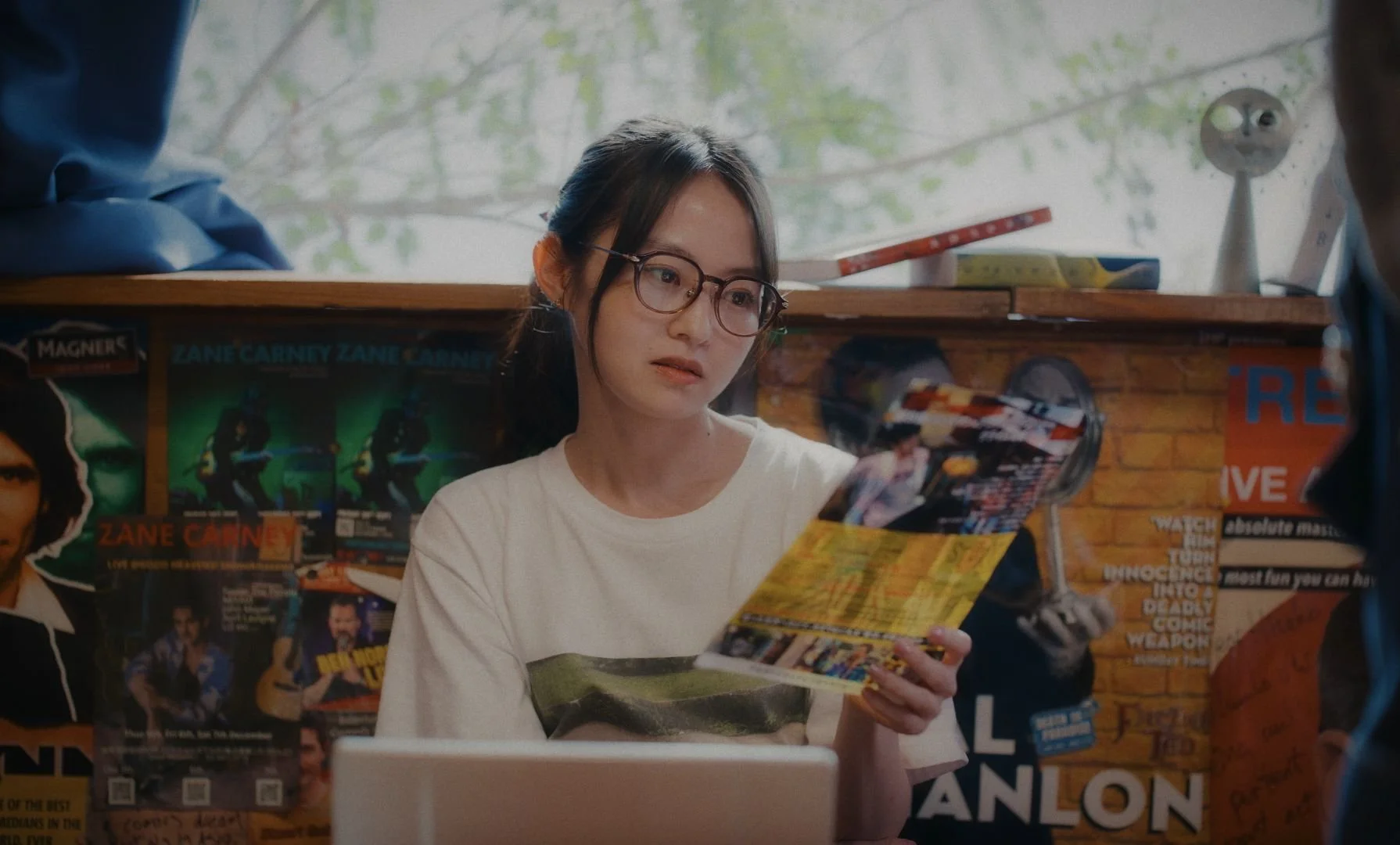
The most beautiful idea at the heart of You Are the Film is what art’s role is in everyday life. It can reinforce or challenge ideals, which will ultimately prepare you for the sudden decisions you may have to make in life; it enriches your character and can hone in on something intangible and make it feel realized; it also connects us in ways that we might not fully understand until later in life. Viewers of the same film might think the same thing, but to see a character do something differently than you imagined challenges you as an audience member. Ueda cleverly places an artist from another medium at the center of each person’s film, whose struggle is different but not that different. What differentiates them and relates them is imperative to resolving their respective films.
Much like Beyond the Infinite Two Minutes, everything in You Are the Film feels lovingly handcrafted. Yes, it is another low-budget film, but it is also one that is willing to reach dizzying, ambitious heights. There are some special effects that might turn off some audiences, but by the time they’re introduced, they mesh neatly with the final product. There’s an improvised rhythm to Ueda’s films that makes them seem like they could go off the rails at any point, especially as they build up to another major turn of the screw on the concept, but nothing actually feels out of place. Everything is logically plotted out, and because of the delirious reaction one might have at finding out their life is currently being filmed and watched by someone else, it moves so briskly that by the time you’ve adjusted to a new wrinkle, it finds another one.
However, every wrinkle in You Are the Film has a silver lining. It might not be clear without talking with someone else, and that’s precisely what makes the film’s collaborative premise an incredible achievement. Ueda has crafted another intricately wound science-fiction conceit with a narrative that is both relatable and emotionally potent. It’s a romantic film about humanity and what makes art so profoundly moving. When you see yourself in something, you feel connected. But when you don’t see yourself, there’s still a connection, and it opens you up to endless possibilities. Art can be the catalyst for change or the reminder that you are perfect the way you are. You Are the Film reminds us that everything we do or don’t do opens another door to another time and space.
The 30th Fantasia International Film Festival takes place between July 16th and August 2nd. You Are the Film celebrates its North American premiere on July 19th as Fantasia’s Horizon 2026 program. The full list of films selected for the festival can be found here.
