
NYAFF 2026: ‘Funky Freaky Freaks’ Review
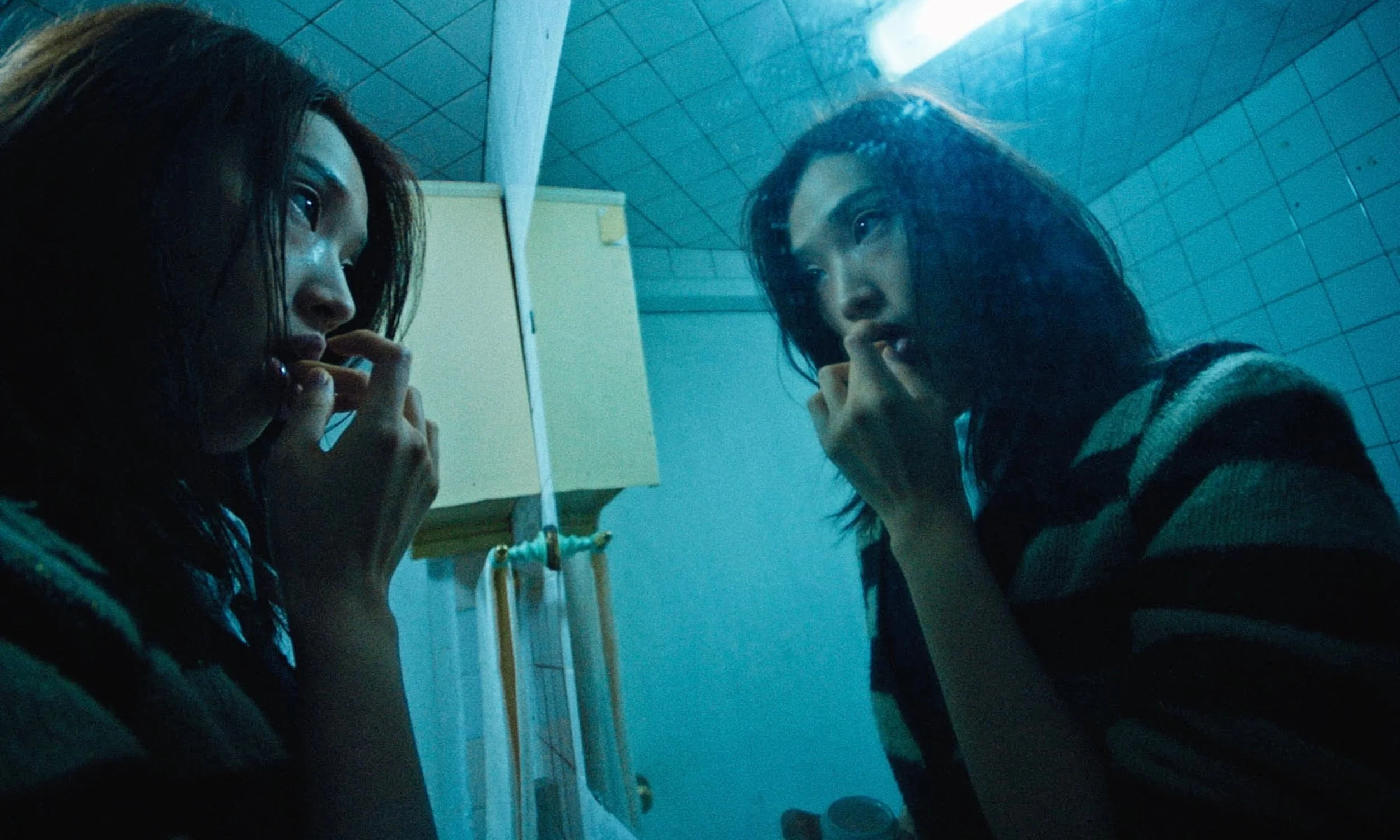
The malaise of the teenage years reaches violent depths in Han Chang-lok’s stylish, frantic feature directorial debut, Funky Freaky Freaks. Its title may suggest something a little more light-hearted, but Han’s film quickly encapsulates an unrest at a crucial age that escalates into something far more heartbreaking, frightening, and impossible to ignore. With a keen eye on technology’s role in shaping the next generation of adults, Funky Freaky Freaks juxtaposes its rough-and-tumble aesthetic with a desire to be validated and seen in a society that defines success by arbitrary metrics. The result is a harrowing reminder that social media, boredom, and a lack of support can stunt an entire generation’s chances of finding themselves.
High school has always been depicted as something you survive rather than enjoy. Self-consciousness about one’s body, interests, personality, upbringing, and myriad other traits can force even the best students to spiral. Add digital technology to the mix to see how endless doomscrolling on social media can exacerbate isolation and a desperate need to be seen in a sea of youth flailing toward some self-realization. That’s what it feels like when watching childhood friends Yong-ki (Joo Min-hyeong), Ji-sook (Baek Ji-hye), and Dumbo (Shin Jun-hang) toil their teenage lives away in spaces abandoned by society. They use these spaces to plot their next move in a town at a permanent standstill in development, with concrete buildings left empty around a wave of youth seemingly detached from all forms of support other than each other.
Grungy exteriors and barren interiors reflect a gradual decay taking hold in Yong-ki’s inner circle of friends. As they all gather together at Yong-ki’s place, which his mother has seemingly moved out of to be with a new partner, the trio attempts to accomplish individual goals. For Yong-ki, he’s an amateur filmmaker with dreams of being a superhero; Ji-sook exchanges used panties for pills to make herself thinner and more attractive; and Dumbo scams men out of their money by pretending to be a girl online. Things change dramatically when a new transfer student, Woo-ju (Jeong Soo-hyun), captures the attention of Ji-sook and threatens to undermine Yong-ki’s desire to be more than just friends with her.
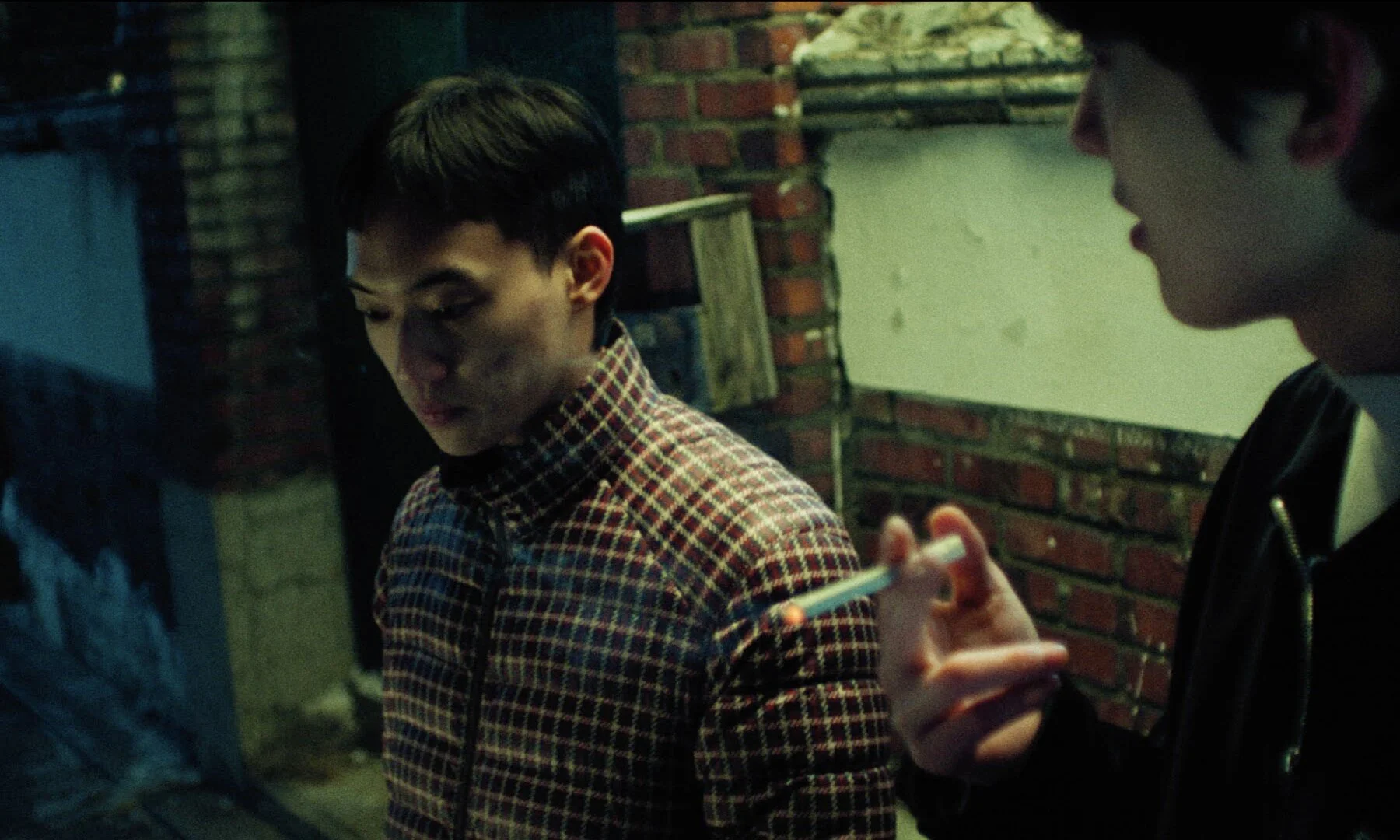
The love triangle and relationship dynamics at play in Funky Freaky Freaks serve as an impetus for all the characters to descend into self-destructive behaviour. Woo-ju’s popularity online as an influencer and proven strength as a member of the National Judo Squad in South Korea create a potent cocktail of privilege and adoration that allows for a certain level of violence to go unchecked. However, what becomes clear throughout Han’s film is something that creeps up in many East Asian films: teenagers provoking themselves and one another with violent actions to feel some sort of validation of their existence. Toshiaki Toyoda’s Blue Spring comes to mind frequently in the way teenagers seem to behave unscrupulously without any scrutiny from the adults in their lives. Teachers would rather ignore the problem than wade into conflict, as evidenced by outbursts that seem to perturb adults yet go unpunished. It’s a miserable time for teenagers, made worse by the feeling that there is no help to be found.
Writer-director Han immerses the audience in this despair a little too much to not feel a little manipulative, but the ways he commits to a suffocating atmosphere show someone working comfortably within the medium. Take the film’s handheld camerawork and frequent montages, sped up dramatically and presented through as many optical filters as possible, to create a disorienting momentum that demands the audience pay attention. Every little piece of the film’s surface-level DIY execution lends itself to its characters and provides a meaningful coalescing of emotion elicited by immersion. Rawness seems to govern the performances in Funky Freaky Freaks, as its characters wrestle with changes in their dynamic and struggle to stay afloat without losing themselves. No one performance is particularly memorable, but they play well off of each other.
Han successfully places the audience within the suffering of its characters, so much so that it’s hard not to want out of the ride. As everything starts to come off the rails and it becomes clear that the film is committing to the idea that the internet is its own form of violence, it becomes really difficult to bear. Han’s unflinching execution of the material, combined with an experimental use of the format, leaves a similar uneasy feeling that gave Blue Spring its visceral quality. It’s all made worse by the fact that these are people who have been left behind at a time when they need someone most. Whether it’s to shepherd them towards a better life or to channel an unwieldy ambition into something enriching, Funky Freaky Freaks emphasizes the role others can play in preventing those on the fringes from violently disintegrating.
The 25th New York Asian Film Festival takes place between July 10th and 26th. Funky Freaky Freaks celebrates its North American premiere on July 19th, as part of NYAFF’s Korean Horizons program. The full list of films selected for the festival can be found here.
