
‘Hokum’ Review
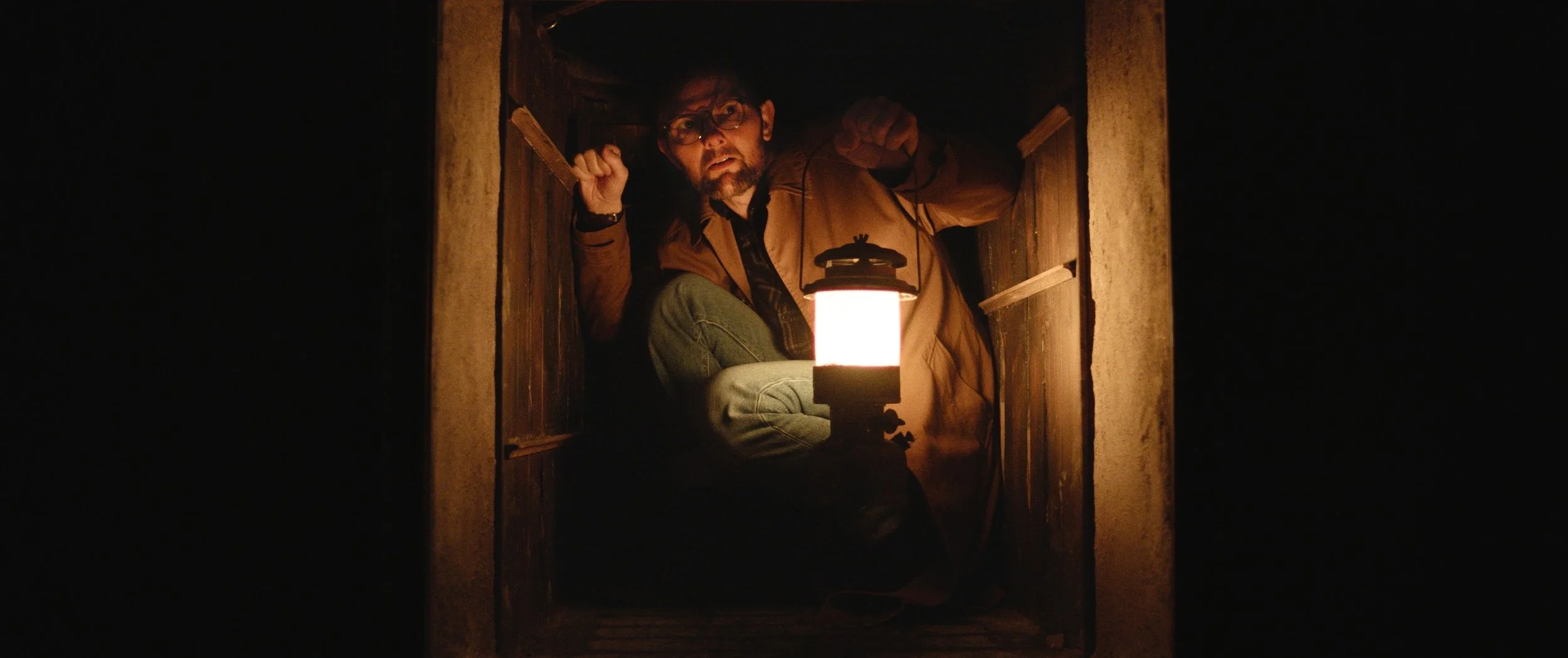
Anchored by a past childhood trauma that has informed his bleak, dour writing, Hokum’s horror author protagonist, Ohm Bauman (Adam Scott), fits neatly within a pantheon of writers-on-film that are forced to face horrific situations in order to confront their own demons. It’s nothing new, and neither is what lurks within the remote Irish inn that Ohm travels to to spread the ashes of his deceased parents. However, as much as Damian McCarthy’s supernatural haunted-house film may tread familiar, grief-stricken ground in its narrative, the presentation and execution remain the bedrock of the writer-director’s particular brand of atmospheric horror. While its narrative expansions to its simple premise are rickety at best, Hokum delivers a terrifying confrontation of trauma that gradually descends into an unshakeable darkness.
His mother, the victim of a terrible accident, and his father, the victim of alcoholism and grief, weigh immensely on Ohm. Every interaction he has from the moment he sets foot in The Bilberry Woods Hotel is laced with condescension and vitriol. Scott, who can play an asshole any day but is also known for his comedic wit and approachable demeanour, is not stressing the limits of his capabilities as an actor. It’s in Ohm’s past, which McCarthy only occasionally gives audiences a glimpse of, where Scott’s performance fleshes out the rationale behind Ohm’s childish behaviour. After spreading the ashes of his parents at a colossal Redwood tree in the woods near the hotel and skipping a Halloween party, Ohm finds himself drawn back to the hotel only to discover that one of the staff whom Ohm took a liking to, Fiona (Florence Ordesh), has gone missing. The police searched everywhere—except for the Honeymoon Suite that the front desk clerk, Mal (Peter Coonan), contends has been locked off and no one could be there.
What works about Hokum is not just that its single setting is colourfully embellished with stories of witches, locked suites, an Overlook Hotel vibe, and is surrounded by a seemingly never-ending forest populated only by a man, Jerry (David Wilmot), who stays high off the local mushrooms. It’s that Hokum justifies why a reclusive writer might feel enough pain about his past that descending into the depths of Hell might sound like a good idea. At the very least, he may be able to do some good in this world if he can find Fiona. McCarthy’s brand of terror is all about what lies beyond the boundaries of something terrifying, and Hokum’s crime angle is merely a gateway to the horrors that are suppressed by everyone—including Ohm.
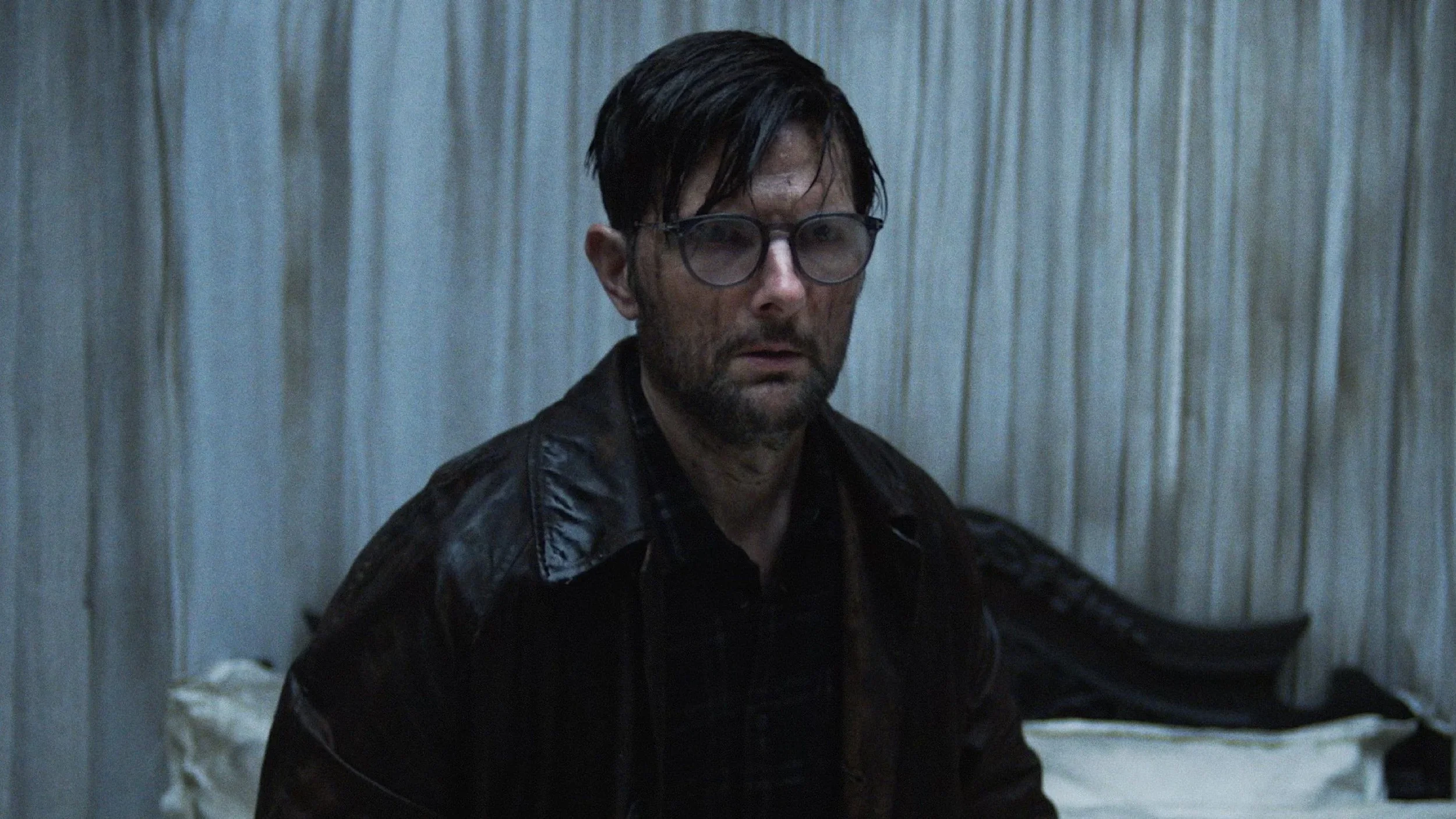
And oh, what wonderful horrors await. McCarthy has a knack for creating a suffocating dread out of very little. Oddity’s wooden golem became a central fixture and source of that film’s eeriness, not just because it was creepy but because it was always there. While Hokum doesn’t have a stationary presence that can recalibrate the film’s tension, it does have fixed rooms that provide their own source of anxiety. The production and set design particularly stand out in the film’s much-discussed honeymoon suite, which serves as the main setting for Hokum and Ohm’s investigation. As a result, it’s a room that audiences get extremely familiar with, so when scary things start going bump in the night, the layout of the room lingers in the back of your head. There’s an intentionality to how the film almost stops moving horizontally and settles into a constant vertical ascent and descent, making the act of staying in one place feel like a prison or a refuge.
Hokum is littered with clever technical achievements that fuel haunting imagery and further the film’s thematic potency more than other moments. The biggest gripe is the film’s bookending of Ohm’s Conquistador trilogy, which he is currently completing, and how poorly it feels integrated into the screenplay. Its thematic importance is obvious as a father-and-son story—even though McCarthy’s screenplay explores Ohm’s backstory so little. Yet, it still feels like something added after the fact to try to cement those ideas. It works in that regard, but the implementation is clunky. The same goes for some of the ways McCarthy bleeds Ohm’s past into his present, creating a skewering of innocence that sometimes feels natural—such as the film’s use of chalk—and other times gets a little too close to Panos Cosmatos’ Mandy and its silly Cheddar Goblin sequence. Some will have no problem with that, but here it just kind of feels… well, hokey.
Every attempt to expand its scope beyond merely a horror writer facing his demons in a haunted hotel is serviceable but ultimately underwhelming. The crime narrative that serves as the linchpin of the film’s excavation of evil lends it a brisk pace, but its resolution is unsatisfying. The same goes for the Conquistador trilogy, which underscores the film’s thematic intent but doesn’t really mesh as neatly with the atmosphere so finely tuned throughout. McCarthy is still consistently delivering inherently creepy premises that serve as the foundation to unnerving atmospheric horrors. However, much like his contemporary, Osgood Perkins, his films always seem just shy of reaching their full potential. Hokum’s struggle to go beyond its premise without feeling incongruent is a disappointment to an otherwise satisfying piece of suspenseful, spooky cinema.
