
‘Evil Dead Burn’ Review
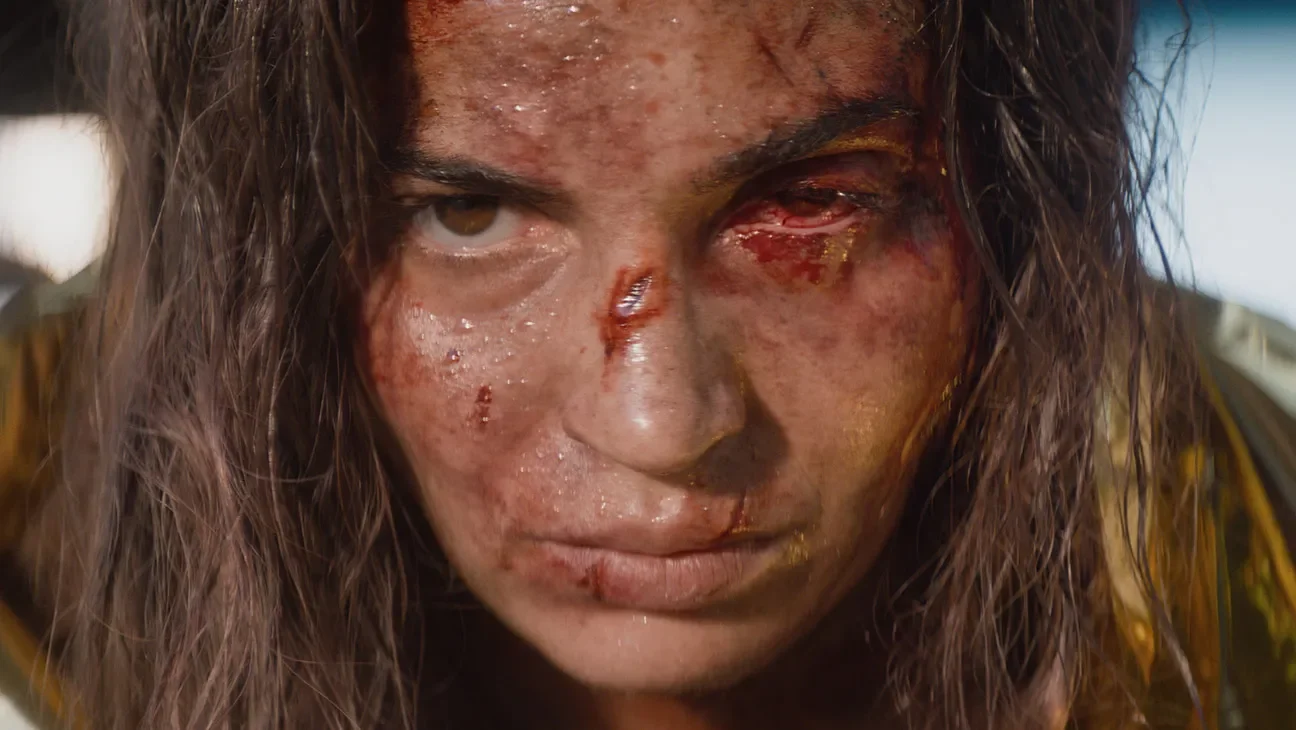
Since 2013’s Evil Dead reboot from director Fede Álvarez, the franchise has never been the same. The goofiness of Sam Raimi’s original trilogy of films varied in their approaches, leaving an odyssey of constant reinvention in its wake. Of course, elements must be retained between entries, but the way they are playfully brought into the fold feels more naturally incorporated. The series has since lost something crucial to its DNA. In an increasing effort to be the bloodiest, most savage films in theatres, Evil Dead has gradually turned away from the franchise’s charms and become more invested in references to the original material. The latest entry in the franchise, Sébastien Vanicek’s Evil Dead Burn, struggles to justify being called an Evil Dead movie more than any of the previous entries—however, it’s also one of the better ones to bear the name since Army of Darkness, committing to a New French Extremity execution that mainly falters when bumping against the expectations of what an Evil Dead movie should be.
The evil we choose to ignore until it’s too late provides Vanicek and Florent Bernard’s screenplay a license to lunge towards the depraved depths of humanity. Alice (Souheila Yacoub) has never felt more alone than in the wake of her husband Will’s (George Pullar) death. Her disconnect with Will’s parents, Susan and Edgar (played by Tandi Wright and Erroll Shand, respectively), is evident in how little they even want her present at Will’s funeral. Even she doesn’t want to be there, and it’s only Will’s brother Joseph (Hunter Doohan) and his girlfriend, Tina (Luciane Buchanan), who convince her to attend. However, when they arrive at the family’s old home, an ancient curse slowly begins tearing the family apart and revealing a history of violence that will no longer be brushed aside.
What transpires next is not only some of the most brutal horror that the series has ever seen, but also the bleakest. The impetus of it all is a cracked foundation that only Alice seems to acknowledge: men are capable of so much pain and suffering. Using only that as a launchpad for unrelenting carnage, Evil Dead Burn funnels a torrent of bloodshed in Will’s family’s direction. Like cutting a steak with a chainsaw, Vanicek justifies all of the gory mayhem with the thinnest of justifications. Every set piece is taken to extremes, making it increasingly difficult not to look away. Those unfamiliar with the New French Extremity movement will find themselves thrown headfirst into the genre when they see the new Evil Dead film.
There’s something to be said about Vanicek bringing his own distinct approach to the franchise—and I think the commitment to the depravity is exhausting in ways the genre usually is—but what’s frustrating is that it still attempts to hit the familiar beats of the series and can never seem to make any of it mesh. There’s some comedy, but outside of a few slight gags, it’s mostly relegated to an older member of Will’s family, Polly (Maude Davey), whose dementia and prejudices are clumsily played for comedic effect. When the Deadites are unleashed, it’s through silly lore building that the film keeps beating until there’s no doubt that this is the attempt to elevate Evil Dead to Alien franchise territory: make discrete movies similar in format, but start tying them into a world much greater in scope. Of course, someone reads from the Book of the Dead and other expected beats are struck, but Evil Dead Burn rarely seems interested in what any of those things mean for this film other than an excuse for more brutality.
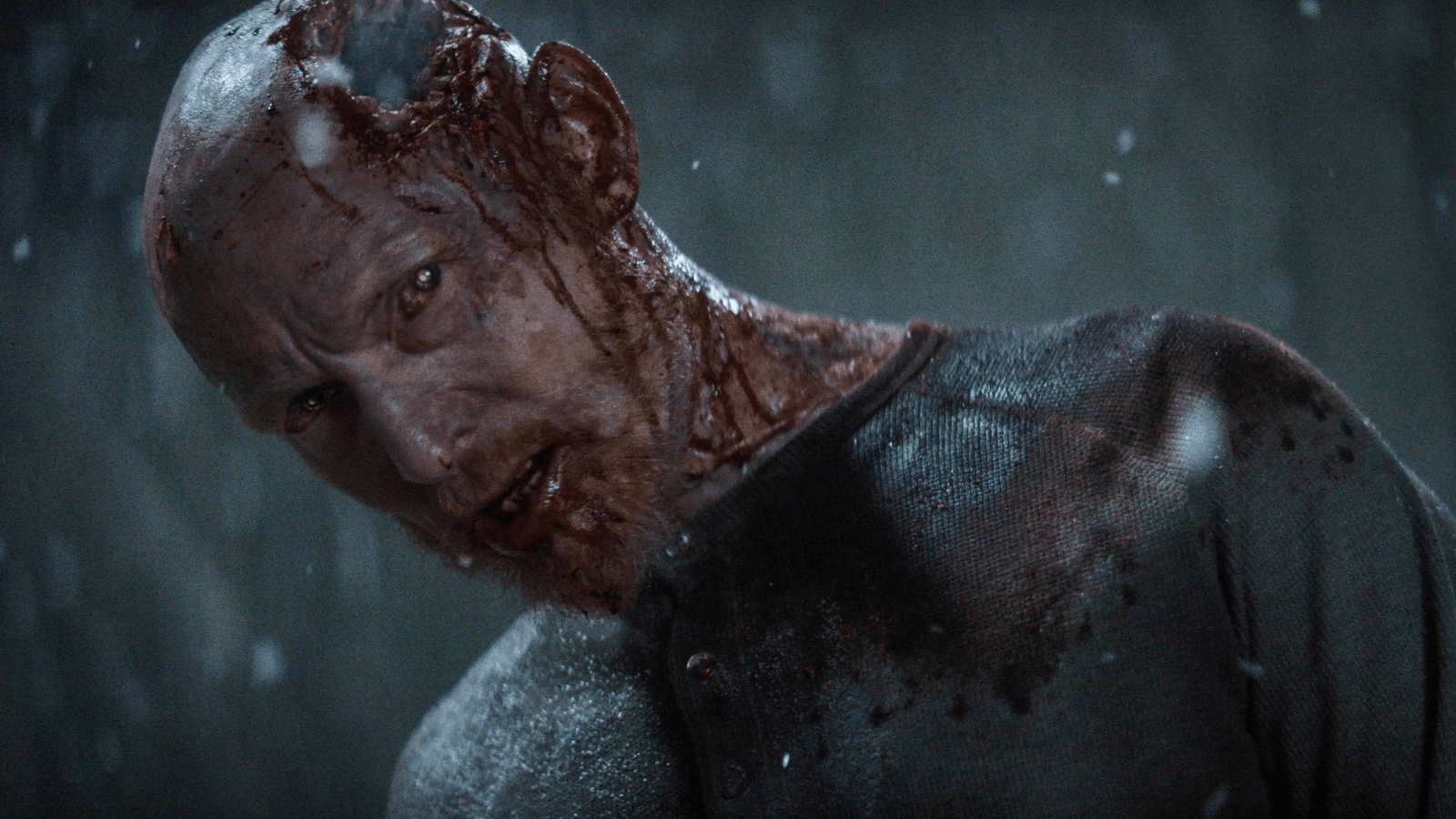
Perhaps its most ambitious pursuit is just how long it tries to keep up the breakneck pace. The Deadites are given a reason to be so relentless in this film—pursuing a magical dagger located where the family resides that, if destroyed, might allow Hell to walk on Earth—which makes for a very simple premise featuring a lot of illogical actions. It’s understandable why everyone seems reckless: had the film addressed those actions, it would have been significantly shorter. As it stands, Evil Dead Burn is the longest film in the series. It also takes a bit of time to set up its impending onslaught, but once it does, it never lets up and stretches every scene past its breaking point. Even the film’s conclusion feels like a bridge too far and adds unnecessarily to an already bloated runtime.
It’s par for the course with French Extremity, but the thematic material that usually comes with that genre is not as neatly explored here as it comes second to the violence. Part of this is because Alice is designed purely to embody an inner turmoil that everyone around her has accepted as her own burden. Characters see what others are capable of and try to prevent it, but only to a point and once it rears its ugly head in their direction, they abandon morality. Systemic violence is ultimately ignored until it’s embedded in the fabric of a family. In the case of the women in the film, they are forced to bear the brunt of that violence. It’s a topic that the Deadites even tease the characters about in between gratuitous bile and blood being spilled. Had they not been played as their usual snarky selves, it might have had a little more bite, but what’s there is an effective enough reflection for its characters as their violent deeds demonstrate the cruelty of man.
Simplistic characters designed purely to get at the same point can only get a film so far. Where Evil Dead Burn gets the most mileage from its simplicity is in the ensuing chaos and in how technically impressive the film is throughout. Philip Lozano takes lessons learned from the exercise of filming David Moreau’s MadS and applies them to more discrete sequences, including a dazzling single-take that more perfectly balances the silliness expected with unbridled destruction. There are many great moments thanks to the kinetic camerawork, all carrying the film forward through the madness. It’s an intense movie that also works within a confined setting, so the ability to convey that with such clarity is part of why Evil Dead Burn leaves an impression beyond its dreariness.
With Alvarez and Lee Cronin’s respective entries in the series, it was easy to see the direction that the franchise was headed, ultimately paving the way for Vanicek’s oppressive sophomore feature. It’s a direction that felt antithetical to what made Raimi’s films so charming, but given the current horror landscape, it’s clear that audiences are clamouring for something that pushes the boundaries of what’s generally seen in multiplexes. Evil Dead Burn does just that. By pushing itself to extremes with no other goal in mind, Vanicek crafts a gnarly endurance test where the only thing on the horizon is Hell itself. It mostly works in the moment, creating an atmosphere so unforgiving and cruel that you can’t help but commend the dedication. That will work for some audiences seeking something truly depraved on the big screen, but it’s a far cry from the tone that established the series’ success and might understandably ruffle some feathers as one wonders where the series goes from here.
