
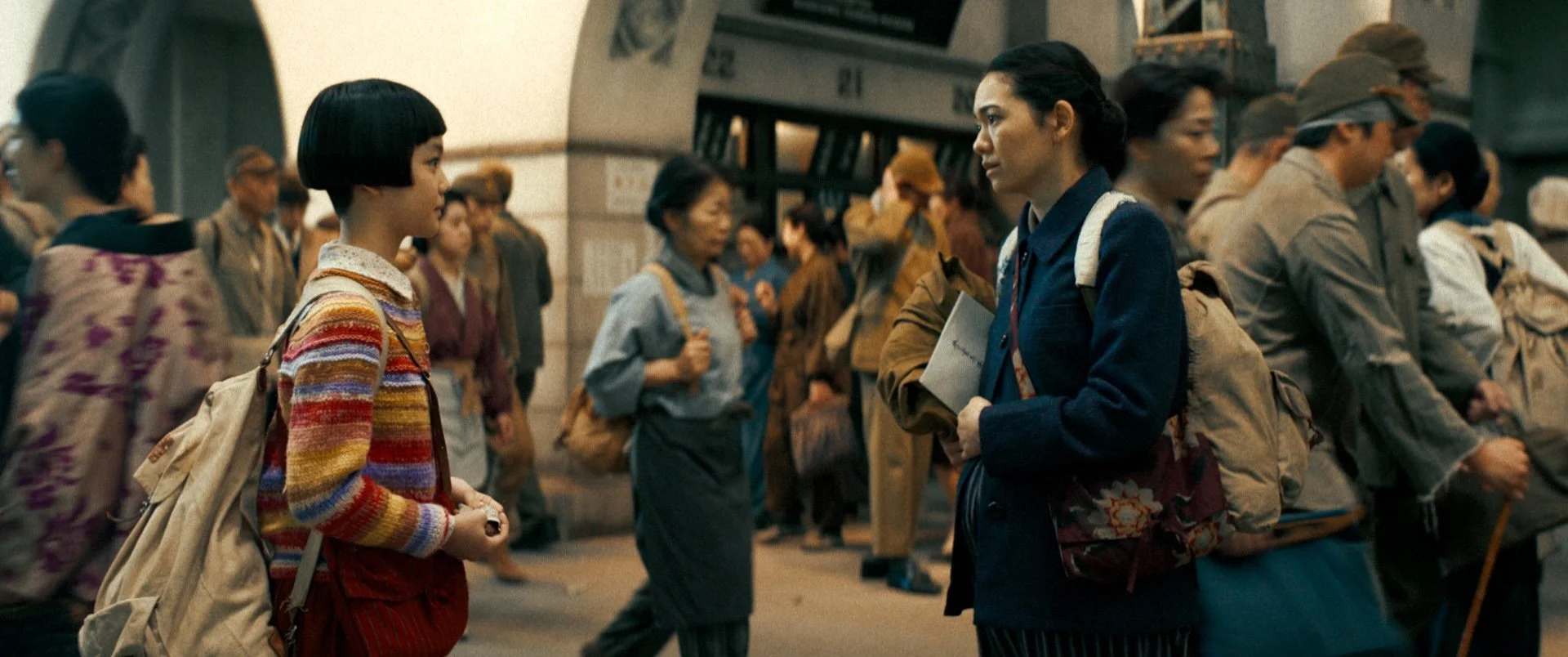
The shadow of war looms over Japan’s future in Miwa Nishikawa’s heartbreaking portrait of youth forced to rebuild in the wake of unimaginable loss. Novelistic in its approach, Children Untold traces the life of a handful of orphans left to fend for themselves in the wake of World War II. Much like Shinya Tsukamoto’s Shadow of Fire, Nishikawa’s latest focuses on a single child, Kotoko (Ami Koyae), as she navigates a post-war Japan struggling to acclimate to its heartbreaking reality. A film tenderly told, with incredible supporting performances that elevate a saddening tale of those left behind to rebuild the future. Children Untold refuses to gloss over its horrors while still crafting an approachable and moving document of Japan’s past.
With her parents declared dead and her brother missing, Kotoko’s future is uncertain. Forced to scavenge on the streets of Tokyo, she quickly realizes that being a young girl only opens her up to further potential harm in a city overrun by con artists, gangs and yakuza, all trying to take advantage of a country in ruins. Disguising herself as a boy, she joins a group of orphans who have also had their childhood ripped from them. The group is suddenly thrust into adulthood with no guidance, leaving Nishikawa’s film with little respite for its young characters. The hopeful thread that runs through Children Untold is Sone (Fumi Nikaidô), Kotoko’s former teacher, who is desperately searching for her, unbeknownst to Kotoko. Pleasing but brief performances from Kōji Yakusho and Yūko Tanaka add another layer of sympathy as two people on the other end of life leave behind a country in tatters.
Children Untold's novelistic approach—adapted from a forthcoming novel by Nishikawa—can feel unwieldy at times, especially with its running storyline of Sone trying to intensify an already heartbreaking series of misfortunes. The screenplay introduces ideas throughout that could have resonated more, but they feel underutilized. Kotoko’s pianist aspirations are decimated and left in shambles by World War II, but whenever music is introduced in the film, it feels like an afterthought. They are ideas that exist on the fringes of what really matters: a child forced to abandon their present and survive for the future. Children Untold never loses sight of that devastating reality: the unfortunate hand dealt to many youth in Post-WWII Japan, and the human spirit that keeps fighting even when it all seems hopeless.
The 51st Toronto International Film Festival takes place between September 10th and 20th. Children Untold celebrates its World premiere on September 10th as part of TIFF’s Platform program. You can find the full list of films selected for the festival here.
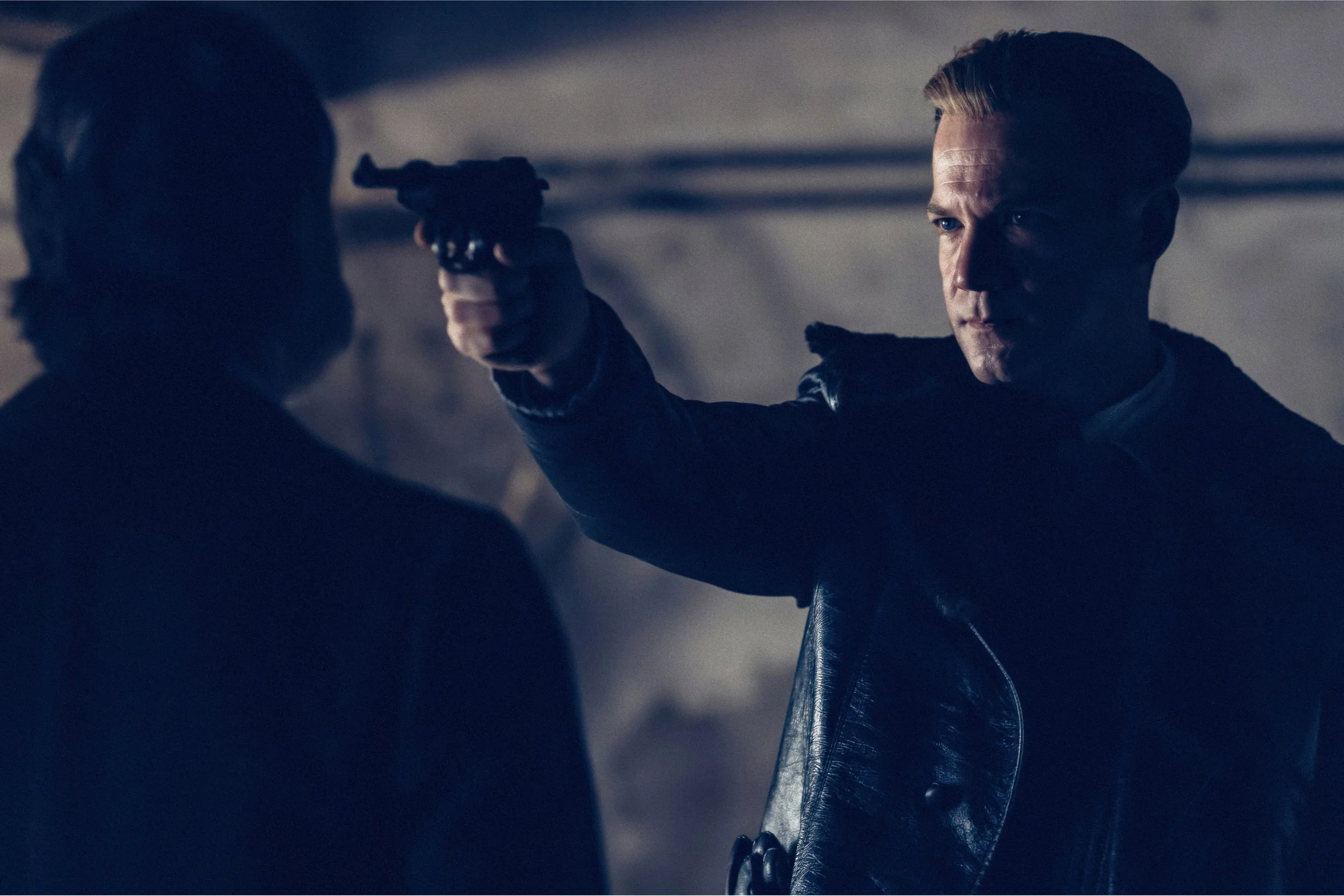
A genre-blending World War II film that turns from noir mystery to neowestern as the film’s characters slowly reveal themselves, Jan Holoubek’s Wild Wild East is entertaining up until it decides that it wants to be more than just a slick piece of cinema. A graphic novel introduction, a town keeping a secret from prying eyes, and the enigmatic German official looking into a missing stockpile of gold is enough to make for a fun romp through occupied Poland during the winter of 1943. However, Holoubek’s film hides secret intentions, and its genre inclinations clash violently with the stark contrast of its setting, creating an impressive genre piece that can’t bear the weight of its reality.
The arrival of German official Martin Wolff (Itay Tiran) to investigate a stockpile of gold left in the wake of a lawyer’s disappearance places an entire Polish community on edge. An outsider asking questions can have deadly consequences, especially when the extermination of European Jews is a very real problem, forcing everyone to walk on eggshells around German officials. Even with other German authorities surrounding him, Martin finds his mission surprisingly difficult as the townspeople keep their own secrets to survive, and trust is hard to come by. A web of duplicitous people and behaviours weaves itself, forcing Martin to hasten his investigation before his own secrets are discovered.
Wild Wild East looks fantastic, leaning into classic noir aesthetics with shadowy characters and moody lighting. Tiran is particularly striking as the stoic protagonist wading through the village's drab interiors and equally murky intentions of its inhabitants. Surrounded by a cast of colourful characters and performances, Tiran is the equalizer that keeps Holoubek’s film inviting while hinting at something more serious beneath the surface.
Unfortunately, the underlying weight of Aleksandra Takuska’s screenplay is hindered by Holoubek’s direction. While the genre switches are fun and give the film a unique flavour, they do bump against the final transition into what is supposed to be a realization and understanding of the conflict surrounding this single incident. Jan Komar’s score marries Holoubek’s direction with Takuska’s writing, but the final act remains hollow and unsatisfying. Where Wild Wild East excels is in its execution of a twisty, discrete event transpiring within the context of World War II-era Poland. That’s where it holds its power. The gradual unravelling of its protagonist is enriching enough that the film’s denouement feels more like a compulsory acknowledgement of suffering rather than a substantial resolution to its character’s arc.
The 51st Toronto International Film Festival takes place between September 10th and 20th. Wild Wild East celebrates its World premiere on September 14th as part of TIFF’s Platform program. You can find the full list of films selected for the festival here.
