
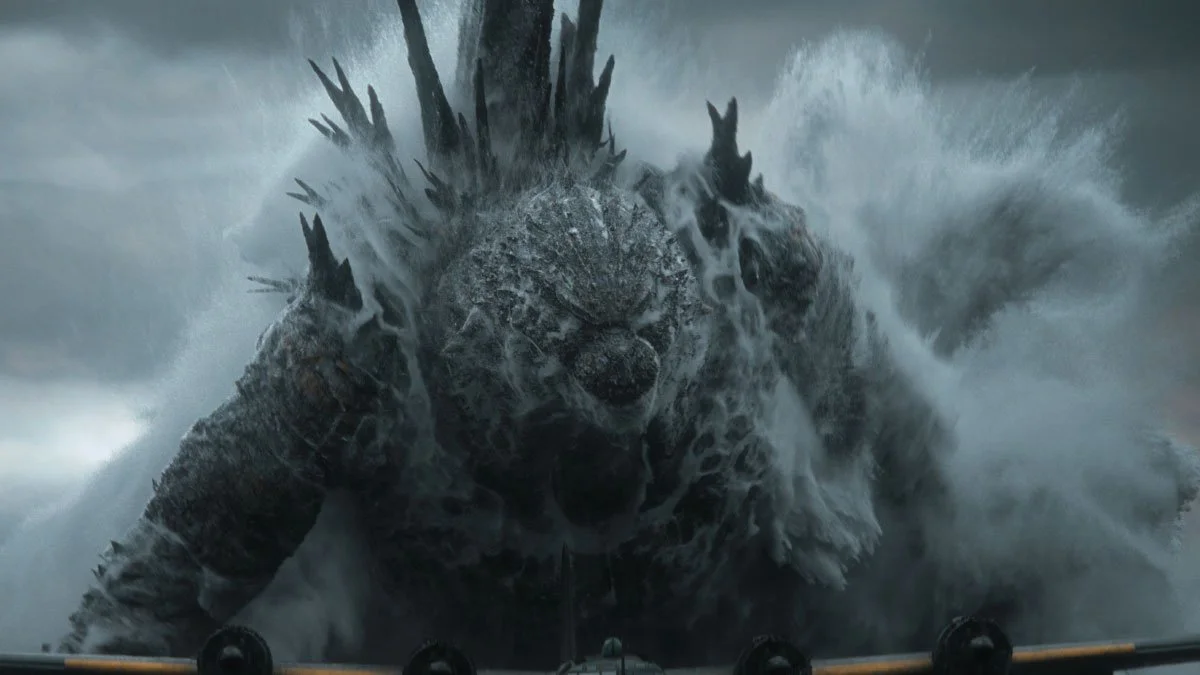
Throw two kaiju into an urban cityscape where they can wreak ultimate havoc, and you’ve pretty much met the bare-minimum expectation of a Godzilla sequel. Everything is expected to be escalated, from the number of kaiju onscreen to the emotional stakes that keep us invested from a human standpoint. Takashi Yamazaki’s return to the international success of Godzilla Minus One yields exactly the kind of movie one should have expected. Godzilla Minus Zero is a technical improvement over the Academy Award-winning effects of the first film, with two blistering set pieces that maintain the titular character as one of the best creatures to showcase the necessity of cinemas. Very few at home will experience the swelling music, deafening sound design, and immaculate visual effects and art in the same way as those in a movie theatre. As an unhinged blockbuster spectacle, Yamazaki’s latest is a testament to the format. Everywhere else, it’s diminishing returns.
The beauty of the Showa-era Godzilla sequels is that Godzilla and Japan were the connective tissue, but the characters could be easily interchanged to tell stories of a country deeply affected by various conflicts. The multiple kaiju introduced throughout the series served as metaphors of a post-war Japan wrestling with various offshoots of turmoil. In this film, Ghidorah now takes to the skies and is terrorizing Japan, and there seems to be very little that any military can do to stop it. Taking place after the events of the first film and the destruction of Godzilla, the fallout from Godzilla’s attacks has caused some citizens to mutate and die—something akin to radiation poisoning, though specifically tied to Godzilla. The only survivor who seems to be managing with the mutations is Noriko Oishi (Minami Hamabe), who has married Koichi Shikishima (Ryunosuke Kamiki) and adopted Akiko (Sae Nagatani) as their daughter. However, when scientist Kenji Noda (Hidetaka Yoshioka) seeks Koichi's guidance on their assault on Ghidorah, the couple is thrust back into the war effort.
Returning characters are one of the glaring issues with Godzilla Minus Zero because they add connective tissue that has always felt unnecessary in kaiju cinema. The American Monsterverse sequels from Adam Wingard have tried to make their characters feel important, but ultimately just serve as background noise to the main spectacle. With Yamazaki’s screenplay, that’s felt prominently here as Akiko returns and only ever appears on screen as a reminder of war’s effects on children (visit Shinya Tsukamoto’s Shadow of Fire or Miwa Nishikawa’s Children Untold for more incisive looks at that); Koichi seems to just be here because he’s the hero of the previous film; and Kenji takes on more responsibilities as the head of an anti-Kaiju organization, but most of his personality traits are replicated in a new meteorologist brought onto his team, Makoto Aoyama (Masami Nagasawa). Noriko is the only one who seems justified in being brought back, as her mutations represent more than just the damage done.
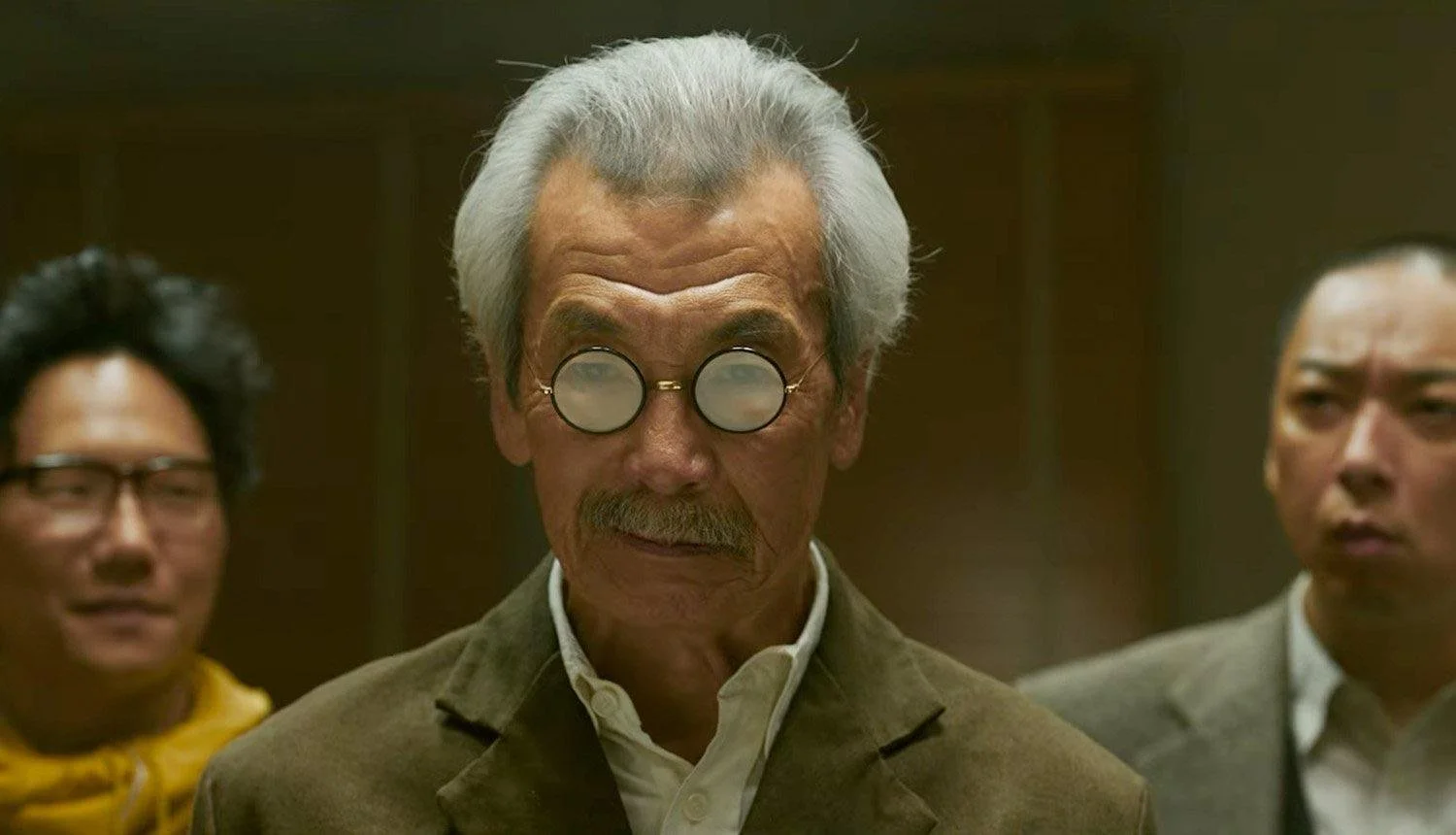
The travesty here is that Godzilla Minus Zero actually introduces characters who, left on their own for more than a few minutes, could have been vital additions. There’s a natural passing of the baton between Kenji and Makoto, but it also reflects a human desire to make right on past wrongs when the end of the world looms. Then there’s Professor Kanji Murakami (Min Tanaka), who survived the Hiroshima bombings and Godzilla’s attacks, and now channels his despair into a laser-focused quest for vengeance against America. He’s perhaps the greatest addition in terms of acting, but he also builds on the metaphor for a country seemingly trapped in a cycle of anguish at the hands of external forces. The major new characters have purpose, while leaning on Koichi again feels like a crutch.
The flippant disregard Americans have for helping Japan in its time of need, unless it advances their own technology, is tackled with the subtlety of a hammer. Throw it on the pile of themes running through Yamazaki’s film that seem haphazardly integrated but aren’t necessarily uninteresting on the surface. The orphans of war would have been a natural evolution of the first film’s ideas, taking the film into darker territory while showing how heroism and vengeance can have unintended consequences. That blind fury that bubbles up when everything is taken from you is also inherently interesting in the context of a Godzilla film, and how this one chooses to approach it with technology befitting the genre could have been fascinating if the film wasn’t also trying to inject hope into every action. The film’s final scene is about as emotionally manipulative as it gets, and it stays that way because it tries so unnaturally to leave on a brighter note.
Complaining about the emotional payoff of a Godzilla film might sound ridiculous, but Yamazaki clearly wants audiences to feel the same investment he achieved in the first film. Godzilla Minus Zero features two massive set pieces that integrate humans cleanly within the action. However, it’s the climax where Yamazaki reminds everyone why he’s incredible at this scale. The visual effects are somehow better than before, and the film’s cinematography from returning DP Kōzō Shibasaki captures every kaiju suplex and blinding laser beam with the kind of awe that leaves you shook. I still vividly remember getting emotional from the spectacle of Minus One, and this is no different—though it's dampened by some less affecting narrative beats, with more weight on the sheer magnitude of it all. The pacing is remarkable, and Ryūji Miyajima brings conciseness to Yamazaki’s epic scope with smart editing that moves the fight from up high to down low so every facet of the battle feels crucial to the other.
If the first film worked on you, it’s hard to imagine this not at least scratching an itch and then some. When the film fully realizes its kaiju showdown between Ghidorah and Godzilla, the film feels excited to approach the battle in fresh, inventive ways. If Godzilla Minus Zero had put that same excitement into exploring its human characters and their relation to a post-Godzilla society, then the minor gripes in the moment wouldn’t feel so gargantuan in hindsight. The action delivers with set pieces leaning more on quality than quantity. It’s impressive to be able to achieve higher highs than a predecessor, which is already widely considered one of the films for its iconic character, but to remain mostly satisfactory even with some reservations is a feat in and of itself. The disappointment is that the film falls back on a safety net for the part that was so surprisingly powerful before, and introduces so many themes that it can’t make any of them land with the same thunderous impact. It’d be a lie to say the melodrama doesn’t work, but it can’t help but feel a little redundant in the wake of Godzilla Minus One.
