
‘Hope’ Review
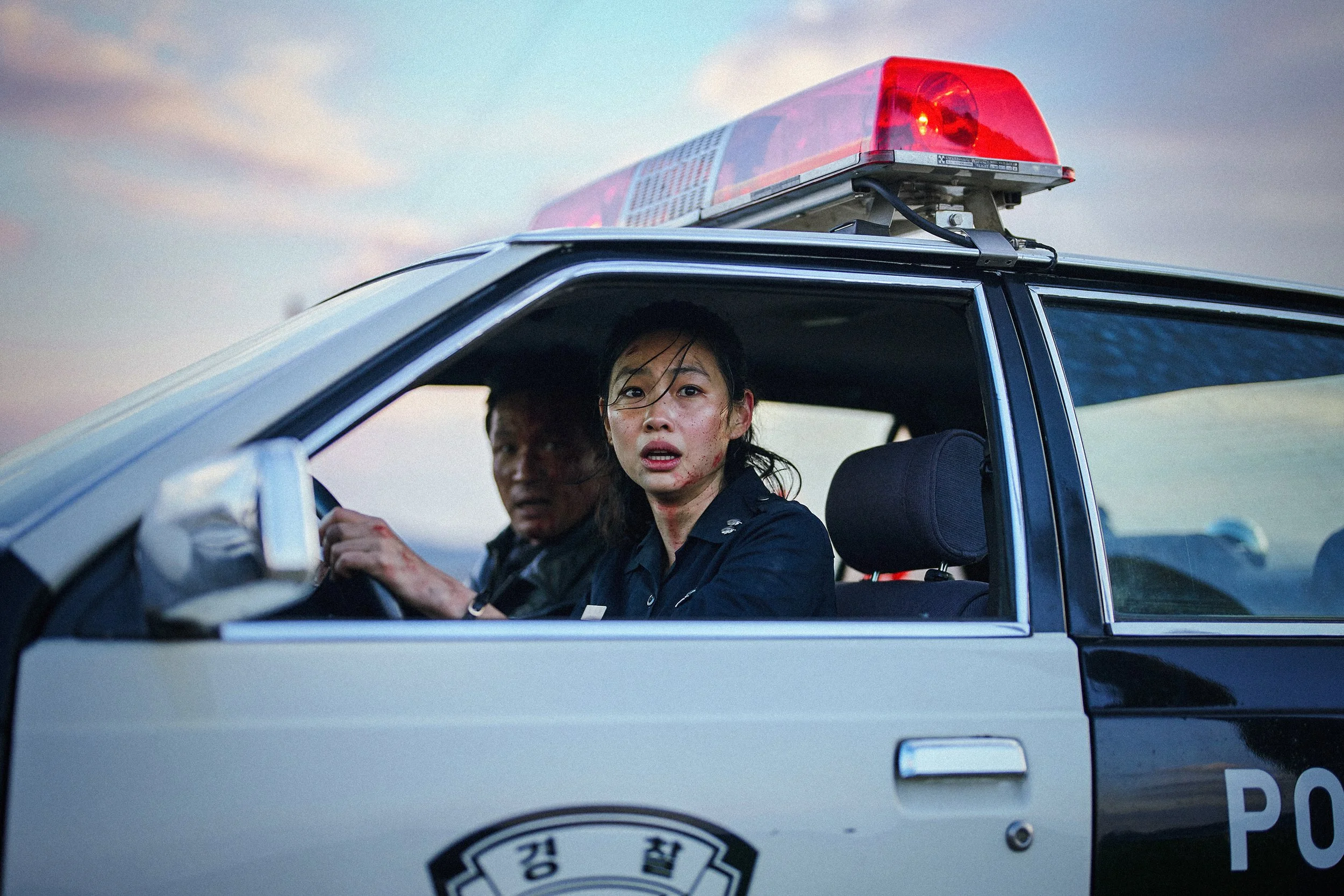
You’d be hard-pressed to find a more intricately layered, pulse-pounding opening hour of a movie this year than in Na Hong-jin’s Hope. Remaining mysterious to its very final moments, the Korean writer-director’s latest works best within the chaos of an unknown presence wreaking havoc on the small coastal town of Hope Harbor. Building out its lore and a world marked by fear of an invisible, invading force knocking on a nation’s doorstep at any point in time, Hope is not subtle in its metaphor. As it goes on, though, it begins to lose itself in a subpar science fiction narrative, made exciting only by burly action sequences strung together by a refusal to let its characters convey even a modicum of empathy. Na’s ambitious feature may slowly lose steam as its sci-fi trappings become more integral to its plot, but that doesn’t stop Hope from being a refreshing, propulsive action spectacle working overtime to leave an unforgettable impression.
It all builds on a tantalizing mystery: a hostile presence made apparent only through the corpses and livestock in its wake. For a significant chunk of Na’s film, local officer Bum-seok (Hwang Jung-min) is just following the destruction that begins with dead cattle seemingly clawed to death by what the locals assume to be a tiger from Siberia, having made its way through North Korea and now stalking the area outside Hope Harbour. While his second cousin, Sung-ki (Zo In-sung), puts together a team to explore the outskirts of the town for more clues, Bum-seok traces the trail of debris back to the town. Hope grips the audience tightly and doesn’t let go until well after its reveal of the culprit behind all the madness. It doesn’t take too long, though, for that mystery to give way to one of the best chase sequences in a movie since Mad Max: Fury Road.
There’s something compelling about a film that already feels like it has redeemed its shortcomings before it has even gotten to them. From the outset, Hope is firing on all cylinders. The political commentary that litters the first act is inherent to a town living next to the Korean Demilitarized Zone. Signs outside of a minefield state “Protect the Nation from Infiltration,” leaving no doubt in the audience’s mind what fears preoccupy the residents of Hope Harbor. That almost every citizen is armed to the teeth and ready to fight an unknown being at the drop of a hat furthers an anxiety that never goes away. There’s a comedy to Na’s screenplay that alleviates some of this fear, but even jokes about an officer blindly shooting before confirming what they’re shooting at are still laced with an understanding that fear drives everyone to violence. A comedic diatribe about trying to relieve one’s bowels without being detected in the woods remains compelling because the consequences are still felt. The story is told to police officer Sung-ae (Hoyeon), with an understanding that something larger-than-life will be revealed, and it’s extra funny that it’s one of the key moments of the film’s narrative.
All of that builds anxiety about what is destroying the coastal village. However, it’s clearly not a tiger, and as Bum-seok chases after it, he realizes as much. Na’s screenplay goes from the initial reveal of what is behind the destruction, and that’s where the film will most likely lose a lot of audiences. For starters, it’s a CG-heavy spectacle, and the main antagonist looks rough thanks to a lot of unflattering daytime shots. The digital effects and even creature design are akin to the effects and creatures in a lot of Yeon Sang-ho’s television output, from Hellbound to Parasyte: The Grey. While some of the creature design is slick and lends itself well to some brutal sequences, the CG drags down some otherwise creative set pieces. The use of varying frame rates for the creatures only is a neat flourish that obviously benefits from the decision to go digital, but it doesn’t justify how ugly the effects often look.
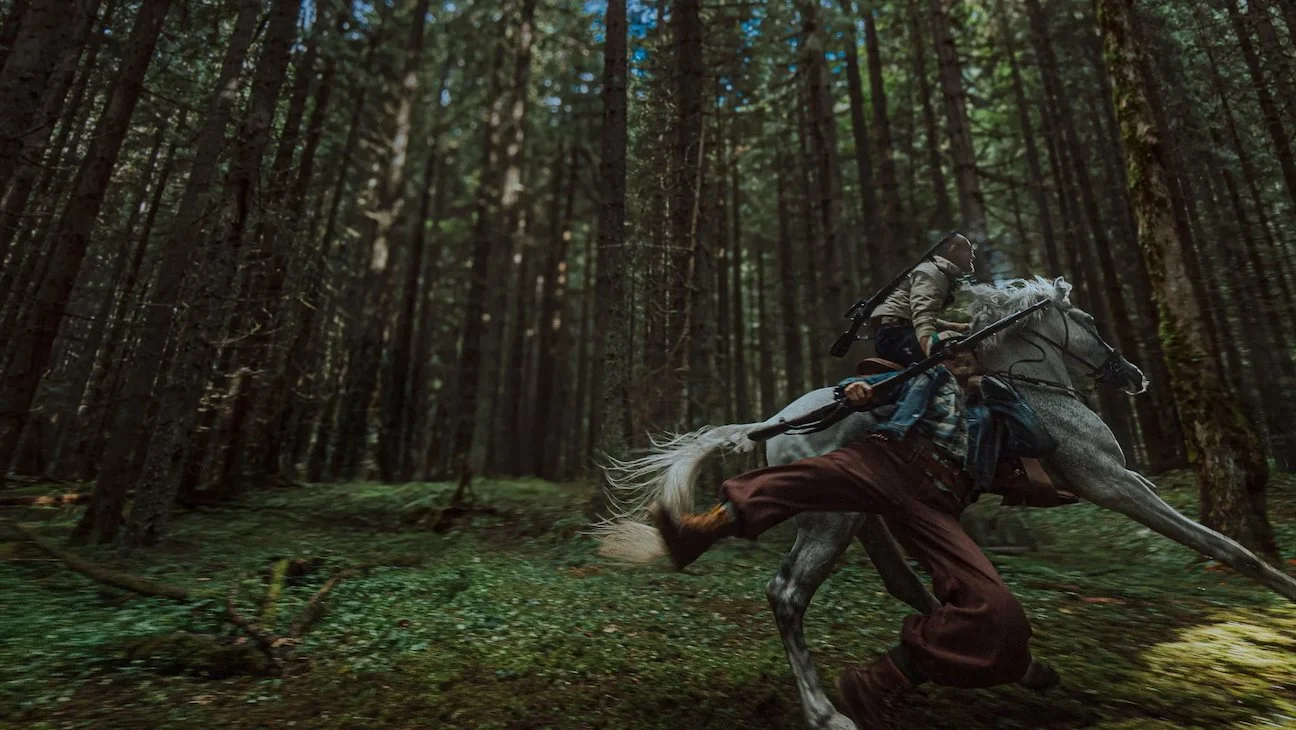
Exacerbating any woes about the creatures themselves is the film’s full-tilt lean into science-fiction nonsense that is compelling on a formal level but otherwise narratively uninteresting. There’s just not a lot there, and the film tries to humanize in the way that many monster movies have done in the past. For a director who has spent his career keeping audiences on their toes with narrative twists and turns, or shunning conventional genre structures, Hope is a bit disappointing. It moves at a beautiful pace and keeps the tension escalating thanks to Michael Abels’ impressive score and gargantuan set pieces that maintain a grittiness throughout, but the film rarely rises above its genre contemporaries except in these blistering action beats.
Where Hope has something important to say is how it justifies its action moving forward without much rumination. It’s a film about humans betraying their empathy out of fear. When the creatures attack, few actually question why, and those that do can easily put those questions aside if they feel threatened. The film shows that humans often lose nuance during times of conflict. The second half of the film is where that comes into play most often, but the chase sequence isn’t without those moments either. It’s a constant drum being beaten by Na, and no matter how much the film humanizes its antagonists, it’s almost impossible for the characters to really grasp more than the simple fact that they’re under attack. While the film almost always sustains the feeling of a genre exercise, the screenplay is a little smarter than just stringing together set pieces.
However, Hope loses a lot of steam in between its action beats. The performances are mostly great, with the obvious caveat that the more spoilery performances by Michael Fassbender, Alicia Vikander, and Taylor Russell probably should have been done by professional voice actors. There’s no reason for them, specifically, to be in the film, nor do they add much gravitas. It ultimately just feels like an attempt to lure Western audiences into a film mostly contending with Korean anxieties. Though the looming threat of conflict is more tangible than ever in today’s political climate, Hope leans more toward its own country’s fears than the world’s through its metaphorical and quite literal signposting.
Still, even with some downtime between action that doesn’t quite have the same impact, Hope is ambitious science fiction filmmaking that uses staggering set pieces as the backbone to its risky storytelling gambits. The basic science fiction trappings are almost a red herring to a more poignant examination of panic and modern-day anxieties surrounding a constantly shifting political landscape. However, Na’s film doesn’t dig into that deep enough to be satisfying; instead, Hope trails off whenever it veers away from its kinetic action or charismatic characters fighting for their lives against a terrifyingly unpredictable foe. That action is immersive, dynamic, and tense so often, though, that Hope remains another impressive genre export from South Korea that isn’t afraid to try something new within a familiar framework.
