
‘Atropia’ Review
Hailey Benton Gates’ directorial debut, Atropia, has a satirical edge to it that does what all the best satires aim to do: observe and isolate the absurdity of a situation. Its opening quote from Ambrose Bierce, “War is God’s way of teaching Americans geography,” isn’t just a snide comment on Americans' closed-mindedness and the need for conflict to stir interest in the rest of the world. Atropia expands on this as its 600,000-acre military training grounds shift to meet expectations of what overseas battlegrounds may look like, leaning into stereotypes and narrative storytelling techniques to create something close to immersive without blurring the lines between reality and artifice too effectively. Disaffected, young soldiers rush into towns populated with actors to play out scenarios of suicide bombers and hostage situations, all knowing it’s an illusion.
That acknowledgement of artifice makes for a compelling documentary on the titular Atropia—a real-life military exercise where soldiers can get the feel for what it’s like to go overseas before doing so. Think of it like a training simulation astronauts and pilots have to undertake, except in this case, it’s people going into war-torn nations where the pressure is at a fever pitch, and the risk of innocent lives being lost is incalculable. It’s a grand spectacle that acclimates soldiers to new surroundings while also recognizing the fine line between immersion and accuracy. The real-life ramifications of this feel like a dystopian version of Nathan Fielder’s The Rehearsal, where it’s not just one man’s quest to prepare for anything through infinite simulations but a sanctioned exercise by the government that prepares them for deadly encounters, where accounting for a variable in the simulation can mean life or death.
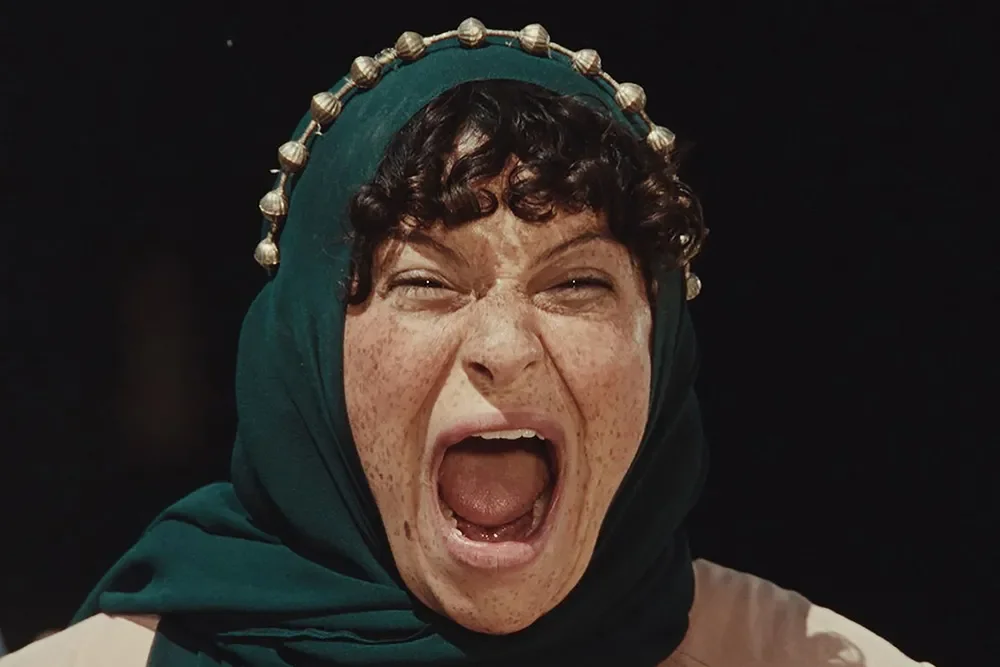
Atropia is, unfortunately, not a documentary. That fact comes through in the narrative's sudden detour into a romance that threatens to derail the lessons the soldiers in the Atropia exercise have learned. The film follows Fayruz (Alia Shawkat), an actress in Atropia who is currently playing the role of a mustard-gas chemist in one of the villages. Frequently trying to catch her big break, she records audition tapes in her free time while desperately seeking bigger roles in the training exercise overseen by Pina (Chloë Sevigny) and Hayden (Tim Heidecker). That big break comes in the form of a new insurgent, Abu Dice (Callum Turner), who helps train a new batch of soldiers using his experience in Iraq. The two form an unlikely relationship that undermines the entire purpose of Atropia.
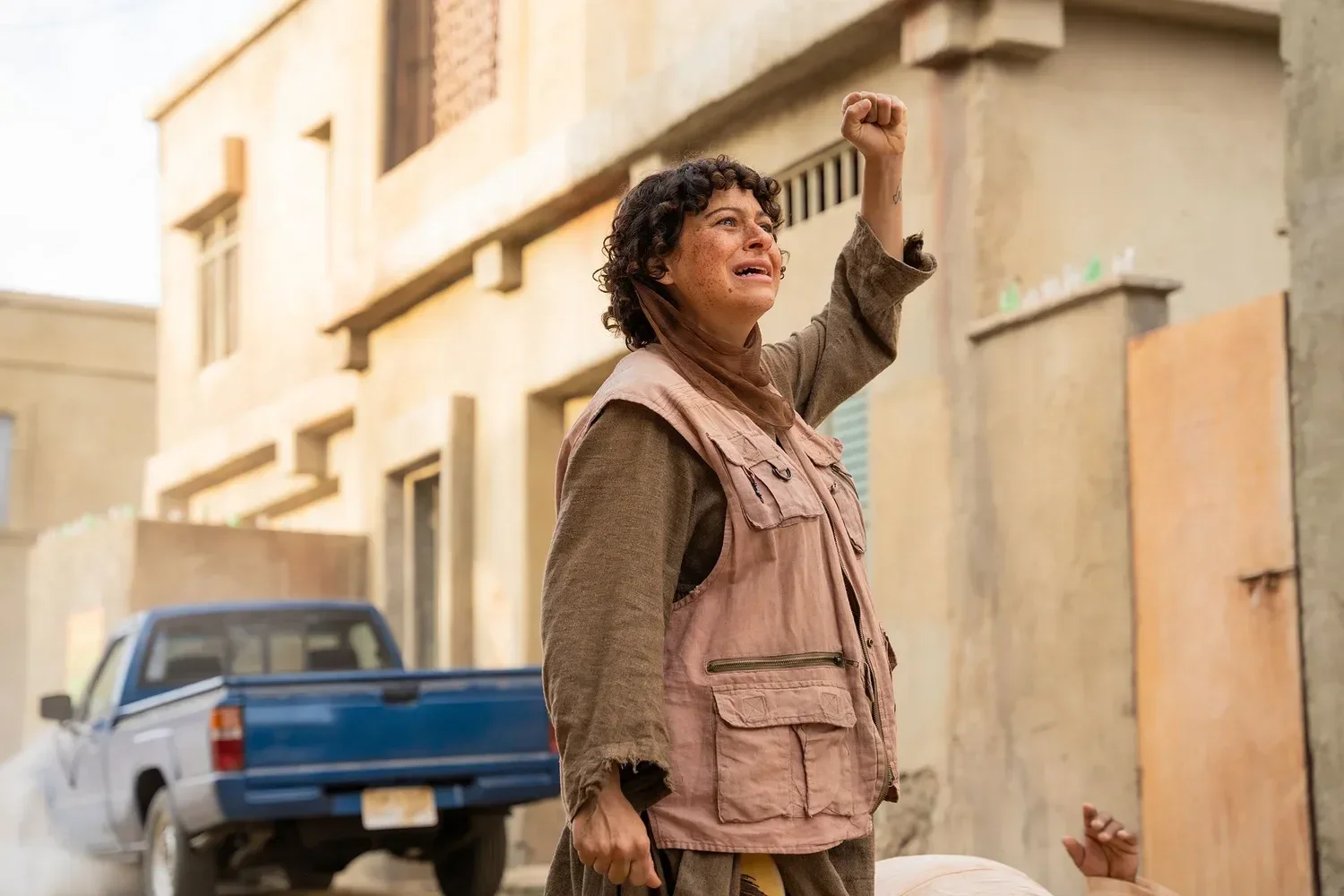
It’s the threat of emotion that turns Atropia on its head. By taking an interesting real-life experiment and showing how easily it can be cracked if the artifice is kept, but human nature takes control, Gates’ screenplay has to juggle an incisive commentary with side characters who have now taken center stage. The absurdity of The Box—the name for Atropia’s simulation grounds—runs out of steam quickly, and so the film needs to make that sharp turn into exploring the interiority of its participants to have anything meaningful to say that isn’t said alone in the premise. Atropia suffers slightly because it still reminds audiences of its absurdity rather than offering meaningful character development. Slight commentaries on the endless treadmill actors find themselves on, or on the value of authenticity and experience in performance, feel like minor diatribes that warrant more exploration. Instead, Atropia maintains a level of glibness that undercuts its brief moments of dramatic heft.
That fine line between authenticity and artifice is interesting territory to explore in a fictional film about a real-life exercise. Actors like Fayruz might see these role-playing scenarios as exciting opportunities to diversify their acting reels, while others might see them as a way to help prepare people for real-world conflicts. Atropia is mildly entertaining, but what stands out more is how Gates navigates the potential for everything fake to feel real—how that level of immersion can create a deeper connection to something temporary and fleeting. Shawkat brings a lot to the role with her performance, imbuing her character with a sad blend of vulnerability, hopefulness, and humour that goes a long way toward making the dedication to the craft somewhat tragic in the film. There’s an understated sadness to all the hijinks that ensue, which makes Atropia a compelling character study that might have been better suited to a documentary, but still works effectively enough here. After all, sometimes the truth is stranger than fiction.
