
‘Spider-Noir’ Review
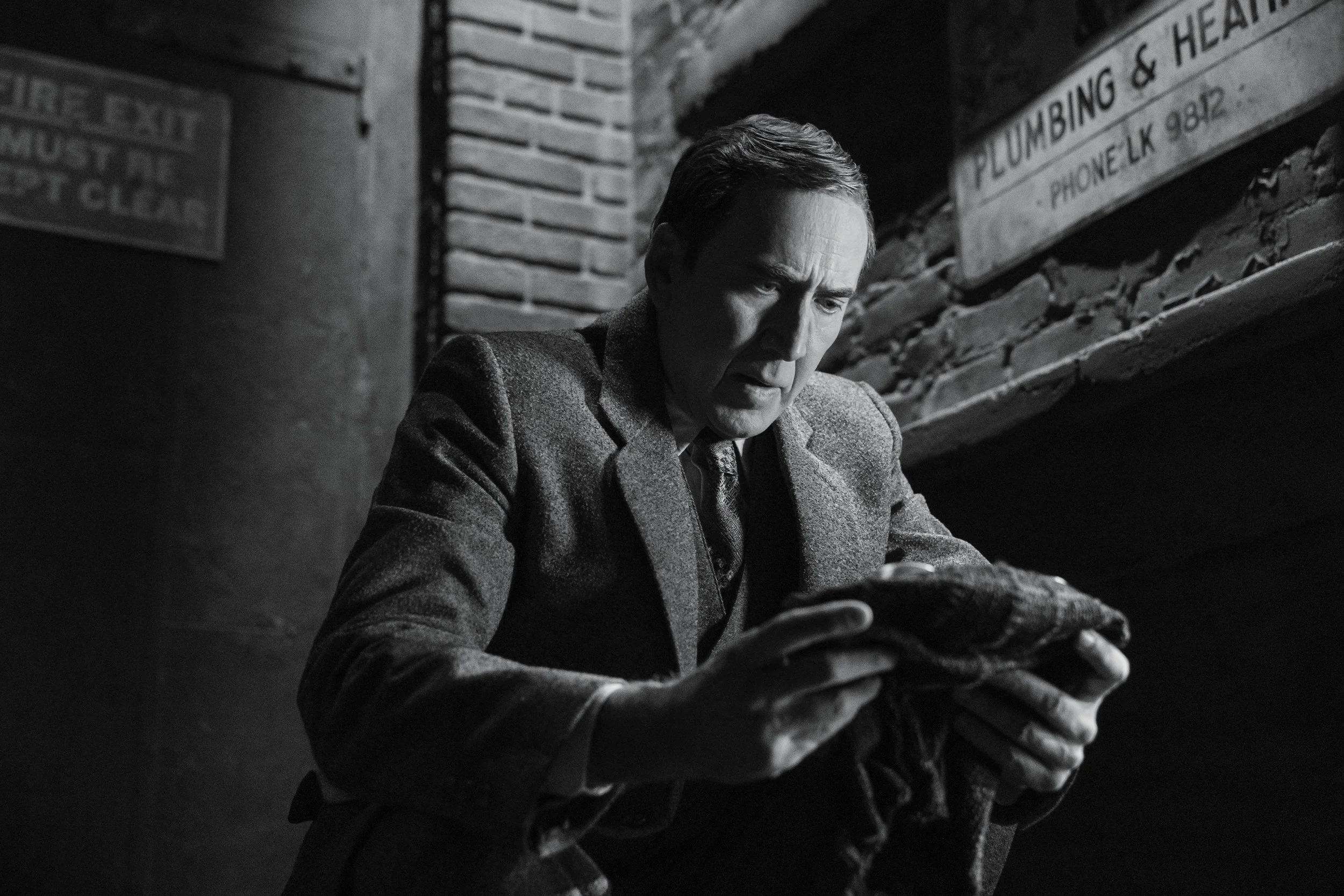
A spin-off from a film that featured a bounty of characters barely explored in film and television but containing pages upon pages of source material to adapt, Spider-Noir is perhaps the least surprising project to spring forth from the expansive characters introduced in Spider-Man: Into the Spider-Verse. Portrayed by Nicolas Cage and only appearing briefly as one of a few characters to help Miles Morales save the world, The Spider, as he’s referred to in his timeline, instantly clicked for audiences thanks to Cage’s hilariously bleak demeanour and delivery of noir-inflected dialogue amidst the chaotic action of his analogs from alternate universes. For Cage, who has publicly made it clear how much he loves superheroes, it seems like a dream come true to have embodied a comic book character so deeply influenced by film noir. It’s understandable then that Spider-Noir is the first TV project to lure the prolific actor from the big screen to the world of streaming.
His starring role comes with a few caveats, though, and the most notable is that those expecting the same kind of web-slinging adventures found in the Spider-Verse films will be sorely disappointed. You don’t hire Nicolas Cage to play Spider-Man, you hire him to play his real-life counterpart, Ben Reilly—a private investigator who must navigate New York City’s seedy underworld after taking a job that puts him in the crosshairs of the city’s resident kingpin, Silvermane (Brendan Gleeson). And while there are scenes with The Spider, the show is so indebted to its influences that what is mostly on display is cosplay of film noir, spearheaded by Cage's admirable impression of Humphrey Bogart. Surrounded by characters who fill specific archetypes of the style, Spider-Noir is at its best when the pastiche is fully realized and at its worst when it tries to make any of it tie into a Spider-Man narrative.
Unfortunately, Spider-Noir is rarely at peak form. The problem largely stems from how underwhelming every plotline feels, despite the characters facing myriad obstacles that could enrich the story. When we’re introduced to Reilly and his gang, it’s on the downswing as debts, grief, and alcohol have slowly picked away at the PI and his business, consisting solely of him and a witty secretary, Janet (Karen Rodriguez). An aspiring journalist, Robbie Robertson (Lamorne Morris), turns the duo into a trifecta as an investigation into a missing woman brings Reilly to Silvermane’s doorstep and ensnared in his own shady dealings. The centrepiece of it all is Cat Hardy (Li Jun Li)—a lounge singer hired by Silvermane and in love with one of his bodyguards, Flint (Jack Huston).
The Silvermane plot is uninteresting, but Reilly and the kingpin’s relationship allows for a little bit of light-hearted banter between the two characters. It seems to be the only time when either character feels lighter on their feet. Silvermane can’t trust anyone, while Reilly is still reeling from the loss of the love of his life that brought him to retire The Spider. Spider-Noir is more preoccupied with the mystery of superpowers that seem to be inviting chaos into New York, and what links these figures all together. Taking place post-World War I, the show seems to have thoughts about healthy young men heading into war and coming out broken and traumatized—manifesting as mutations. Though the link feels more coincidental than intentional. The show always seems to be approaching a critique of how America treats its veterans, as exemplified by the kinds of jobs available to them, the worlds they inhabit, and the tenuous relationships they foster.
However, it’s one too many threads for the series to maintain. It’s a noir made with reverence for the era, but while still trying to be modern and leaning heavily on its superhero source material to breathe life into dusty bones. The femme fatale storyline is embarrassingly simple, and most of the show’s attempts at tragic storytelling are so generic. The only interesting angle that the show manages to muster is in Reilly’s steadfast refusal to become The Spider in the wake of his own personal tragedy. Cage’s performance is appropriately sullen, only breaking free of that when immersed in detective mode, where quips are delivered with enough sardonic wit that it’s kind of just fun to see him verbally spar with others. There’s further narrative behind that, which casts the character in a somewhat unique light amid a sea of familiarity.
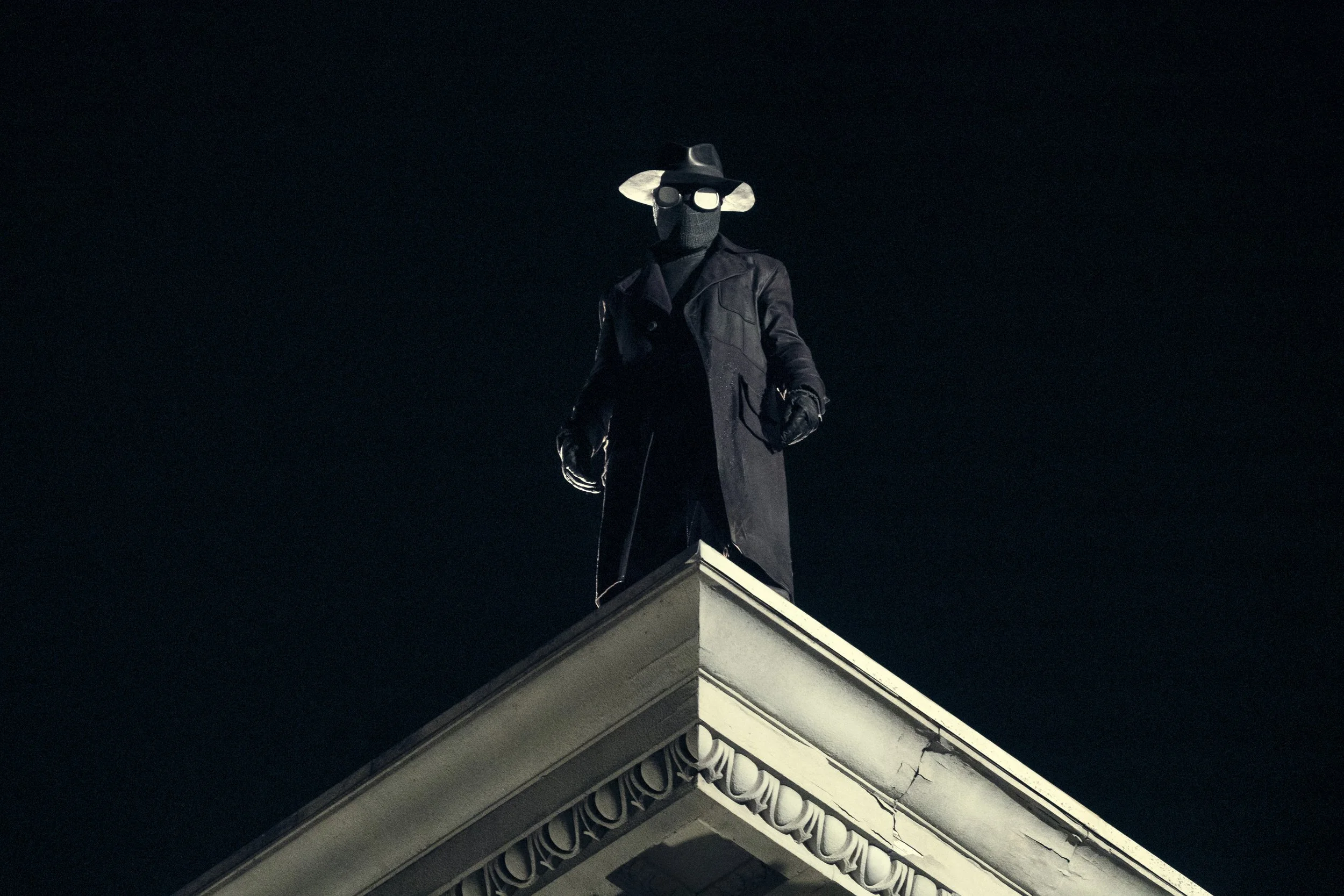
It’s a shame that Reilly seems to be the only character given as much attention as the detailed universe he inhabits. The noir aesthetic is so lovingly crafted that it makes sense why Spider-Noir can’t seem to break free of tropes and expectations of the genre. There’s an episode that stands out on its own as being a breath of fresh air while still working within the black-and-white photography. However, one of eight episodes is hardly worth writing home about, and the dramatic stakes never feel weighted enough. Still, after a lot of padding and unsatisfying narrative development, it’s the only episode that really feels like it introduces fresh ideas to well-worn territory.
Audiences have two ways to watch Spider-Noir: experience it in Authentic Black & White, or True-Hue Full Color. For a show so indebted to its era of Hollywood filmmaking and stylistic intent, it is confusing that this Prime Video series even entertains presenting it in anything other than black-and-white. It looks good in that format and is essential to immersing audiences in the era. The colour version is certainly vibrant and works better for certain sequences, but it makes all of the commitment to a certain style of filmmaking feel betrayed and significantly more hokey in execution. There’s a certain pop to it that will undoubtedly impress those unwilling to watch it in black and white, but from an artistic and creative standpoint, it seems antithetical to offer two options when one is clearly what the show is going for.
For those coming to Spider-Noir seeking a refreshing take on Spider-Man, there’s something here for you. It’s not very enriching and still reeks of content, but there’s some artistic intent that elevates the series above other lesser comic book adaptations. As someone who came into this looking for another excellent Cage performance, the impression of Bogart is effective enough, while the actor splices in a few signature tics that surprisingly weave neatly into the character itself. Unfortunately, everything involving Reilly and his relationship with The Spider is dampened by the uninspired narrative framework containing them. Spider-Noir never feels essential. It is an amalgamation of other works presented through a new filter, but it never adds anything to what came before.
